
Nature Communications
About Nature Communications
Nature Communications is an open access journal that publishes high-quality research from all areas of the natural sciences. Papers published by the journal represent important advances of significance to specialists within each field.
- Website: https://www.nature.com/ncomms/
News
18 Nov 2021
Hokkaido University
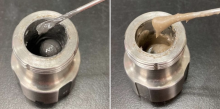
A new method for creating one of chemistry’s most widely used class of compounds could revolutionize industrial processes, making them cheaper, simpler and more environmentally friendly.

21 Oct 2021
Tohoku University
An international research team has discovered a monolayer Mott insulator that has strong heat and light resistance. The breakthrough potentially paves the way for realizing the control needed to induce superconductivity at room temperature.

13 Oct 2021
Springer Nature
The El Niño Southern Oscillation (ENSO) could impact child nutrition in many countries in the tropics, a new study in Nature Communications suggests.
04 Oct 2021
Hokkaido University
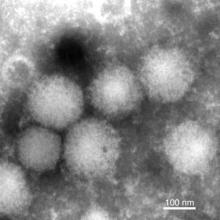
A previously unknown virus that can infect humans and cause disease has been identified by scientists in Japan. The novel infectious virus, named Yezo virus and transmitted by tick bites, causes a disease characterized by fever and a reduction in blood platelets and leucocytes.
27 Sep 2021
Hiroshima University
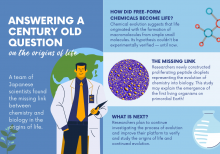
The missing link isn’t a not-yet-discovered fossil, after all. It’s a tiny, self-replicating globule called a coacervate droplet, developed by two researchers in Japan to represent the evolution of chemistry into biology.
24 Sep 2021
Tohoku University
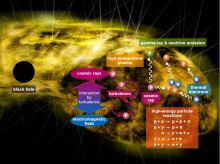
Energetic particles are ubiquitous across the universe but their origins are unexplained. Now, a research team has proposed that mellow black holes act as the source of high-energy cosmic particles.
21 Sep 2021
Hiroshima University
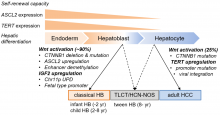
Genetic and epigenetic profiling of hundreds of hepatoblastoma tumors have revealed many of its secrets, long unknown to those researching and treating what is the most common type of liver tumor in children.

14 Sep 2021
City University of Hong Kong (CityUHK)
Similar to a magnet that always has both south and north poles, a kind of special quasiparticles in condensed matter called “Weyl Fermions” always appear in pairs with opposite chirality. There had been no experimental report that unpaired Weyl points exist in condensed matter until recently, a City University of Hong Kong (CityU) physicist observed the first unpaired singular Weyl magnetic monopole in a specific kind of single crystalline solid.
12 Jul 2021
Singapore University of Technology and Design
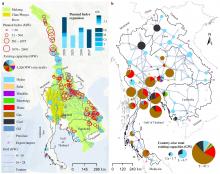
Scientists in Singapore are calling for revisions in planned hydropower expansions in light of the rapidly decreasing cost of solar photovoltaic systems
07 Jul 2021
Kanazawa University
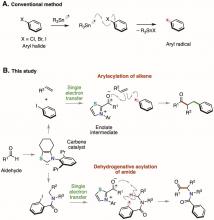
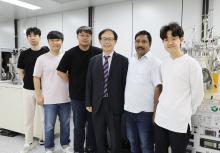
We have developed a groundbreaking chemical reaction using an N-heterocyclic carbene catalyst that has a low environmental impact to cleave the bond between the benzene ring of an aryl halide and a halogen atom to generate an aryl radical. Since aryl radicals can thus be easily generated from aryl halides that are widely used in organic synthesis, this is expected to be a powerful technology for precisely synthesizing medical and agricultural drugs and chemical materials.
05 Jul 2021
Daegu Gyeongbuk Institute of Science and Technology (DGIST)
Scientists used digital circuitry to manipulate and store label-free matters in order to study their unique characteristics

01 Jul 2021
Hokkaido University
Scientists show that an ocean-bottom seismometer deployed close to the calving front of a glacier in Greenland can detect continuous seismic radiation from a glacier sliding, reminiscent of a slow earthquake.
30 Jun 2021
Institute of Industrial Science, The University of Tokyo (UTokyo-IIS)
Researchers from The University of Tokyo Institute of Industrial Science and Fudan University experimentally interrogate a phenomenon that bridges diverse fields of science and engineering
28 May 2021
Ehime University
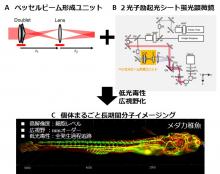
Contributing to embryogenesis and pathogenesis through long-term in vivo molecular imaging
1. Development of a two-photon excitation light-sheet microscope which achieves low phototoxicity, an extended field of view, and high resolution for the observation of the growth of living organisms
2. Applications of the microscope demonstrate long-term time-lapse observations for a three-day span of the embryonic development of medaka fish
27 May 2021
Tohoku University
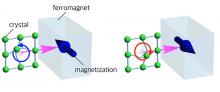
Schematic illustrations of magnetization control by the injection of phonon angular momentum.
21 May 2021
Duke-NUS Medical School
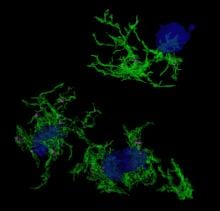
Single-cell gene studies are clarifying the roles of the brain’s specialised immune cell in Alzheimer’s disease and offer new avenues for treatment of this incurable condition.
19 May 2021
Tohoku University
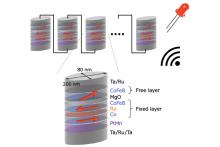
Researchers at the National University of Singapore and Tohoku University have demonstrated that an array of electrically connected spintronic devices can harvest a 2.4 GHz wireless signal, which can be used to power and charge small electronic devices and sensors.

12 May 2021
The Chinese University of Hong Kong (CUHK)
Printing electronic circuits could soon get easier and cheaper.

10 May 2021
Hokkaido University
Ice is melting at a surprisingly fast rate underneath Shirase Glacier Tongue in East Antarctica due to the continuing influx of warm seawater into the Lützow-Holm Bay.

22 Apr 2021
Duke-NUS Medical School
A mitochondrial peptide called MOCCI has a surprising sidekick, and they work together to regulate inflammation and immunity, Singapore researchers reveal.
15 Apr 2021
City University of Hong Kong (CityUHK)
Triple-negative breast cancer (TNBC) is an aggressive type of breast cancer with a high fatality rate. Currently, chemotherapy is the major treatment option, but the clinical result is unsatisfactory. A research team led by biologists at City University of Hong Kong (CityU) has identified and characterised a set of specific super-enhancers that stimulate the activity of the related critical cancer genes. The research has also discovered that the deletion of certain specific super-enhancers could reduce tumour cell growth. The latest findings may help discover new effective drug targets for TNBC patients to improve their survival chance.
19 Mar 2021
Osaka City University
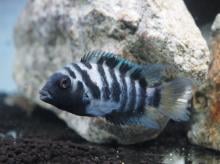
Through a series of prosocial choice tasks, researchers reveal prosocial and antisocial characteristics in male convict cichlid fish. The fish distinguish between female breeding partners, unknown females, and rival males by adjusting their actions to either provide food for both them and the females or avoid providing food for the rival males.
10 Mar 2021
City University of Hong Kong (CityUHK)
Energy-efficient light-emitting diodes (LEDs) have been used in our everyday life for many decades. But the quest for better LEDs, offering both lower costs and brighter colours, has recently drawn scientists to a material called perovskite. A recent joint-research project co-led by the scientist from City University of Hong Kong (CityU) has now developed a 2D perovskite material for the most efficient LEDs.
25 Feb 2021
Tohoku University
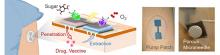
Researchers from Tohoku University have developed a biobattery-powered device capable of both delivering large molecule pharmaceuticals across the skin barrier and extracting interstitial fluid for diagnostic purposes.
12 Feb 2021
Kanazawa University
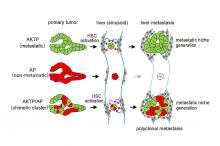
In a study published in Nature Communications, cancer researchers at Kanazawa University identify mechanisms by which malignant tumor cells extend their toxicity to distinct cell types and in turn help them spread.
10 Feb 2021
Institute of Industrial Science, The University of Tokyo (UTokyo-IIS)
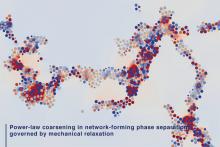
Researchers at The University of Tokyo discover a new law about how the complex network of phase-separated structures grows with time, which may lead to more efficient batteries and industrial catalysts
29 Jan 2021
Tohoku University
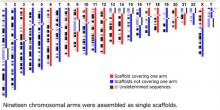
Although genome sequencing has come leaps and bounds over the past 20 years, there did not exist a reference genome specific to the Japanese. That is until now. Researchers at Tohoku University have completed and released the first Japanese reference genome by analyzing the genomes of three Japanese individuals using high coverage, long-read next-generation sequencing technologies.
20 Jan 2021
Hokkaido University
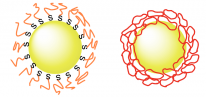
Hokkaido University scientists have found a way to prevent gold nanoparticles from clumping, which could help towards their use as an anti-cancer therapy.

12 Jan 2021
Institute for Integrated Cell-Material Sciences (iCeMS) at Kyoto University
An atomic switch is bringing us closer to highly effective solid-state batteries for electric vehicles.
24 Dec 2020
Tohoku University
Tohoku University scientists have, for the first time, provided experimental evidence that cell stickiness helps them stay sorted within correct compartments during development. How tightly cells clump together, known as cell adhesion, appears to be enabled by a protein better known for its role in the immune system. The findings were detailed in the journal Nature Communications.