

Nature Communications
About Nature Communications
Nature Communications is an open access journal that publishes high-quality research from all areas of the natural sciences. Papers published by the journal represent important advances of significance to specialists within each field.
- Website: https://www.nature.com/ncomms/
News

02 Aug 2023
Institute for Integrated Cell-Material Sciences (iCeMS) at Kyoto University
Soft metal-organic polymer networks can adsorb selected molecules from gas mixtures by opening pores when the molecules bind.
31 Jul 2023
Tohoku University
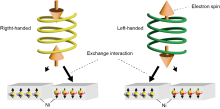
Enantioselection with neither chiral catalysis nor chiral ingredients (absolute enantioselection) has been one of the most active topics of interest but its experimental realizations have been challenging. A team led by researchers at the Institute for Molecular Science (IMS) demonstrated the enantioselectivity of helical supramolecules consisting only of achiral molecules solely by exploiting chiral-induced spin selectivity (CISS) effect. The helicity of the supramolecules is created not by microscopic molecular arrangements but by mesoscopically introduced dislocations. Now CISS effect has been revealed to be relevant for the wider class of chirality ranging from microscopic to mesoscopic length scales.

28 Jul 2023
Tohoku University
High-entropy alloys (HEA) have a unique chemical composition that makes them strong, ductile, and resistant to wear-and-tear even at high temperatures. Yet this chemical composition also makes them difficult to study. Now, a collaborative research team has created a new experimental platform that enables the control of the atomic-level structure of HEAs’ surfaces and the ability to test their catalytic properties.
04 Jul 2023
Daegu Gyeongbuk Institute of Science and Technology (DGIST)
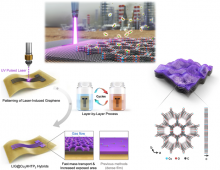
- A research team led by Professor Hyuk-jun Kwon, a DGIST Professor, successfully developed a graphene-metal organic framework hybrid structure with hierarchical porosity
- A technology capable of detecting extremely low concentrations of nitrogen dioxide at the level of one billionth in real-time... Expected to be applied to next-generation healthcare devices
30 Jun 2023
Tohoku University
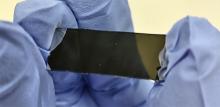
Topological materials’ unique properties make them a great choice for making next-generation devices. In order to exploit them, it was thought that crystalline materials, where atoms are highly ordered, were needed. But now, a research group has verified that even amorphous materials, where atoms are loosely arranged, can have these special properties.

28 Jun 2023
New findings from a cave in northern Laos add to a growing body of evidence that modern humans arrived in Southeast Asia over 80,000 years ago, tens of thousands of years earlier than previously thought.

13 Jun 2023
Tam Pà Ling, a cave in northern Laos, reveals new secrets about our earliest human journeys from Africa through to Australia.
01 Jun 2023
Institute for Integrated Cell-Material Sciences (iCeMS) at Kyoto University
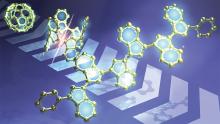
Fragments of spherical ‘Buckyball’ molecules have stable electron-accepting ability with great practical potential.

01 Jun 2023
Osaka Metropolitan University
Osaka Metropolitan University scientists investigated numerically the interaction between a quantized vortex and a normal-fluid. Based on the experimental results, researchers decided the most consistent of several theoretical models. They found that a model that accounts for changes in the normal-fluid and incorporates more theoretically accurate mutual friction is the most compatible with the experimental results.

29 May 2023
Tohoku University
Zinc is essential for our health. Our bodies must constantly regulate its zinc levels, otherwise fatal diseases such as cancers, growth failures, ad immunodeficiency can occur. Now, a research group has unearthed how zinc transporter complexes regulate zinc ion concentrations in different areas of the Golgi apparatus.
17 May 2023
The University of Osaka
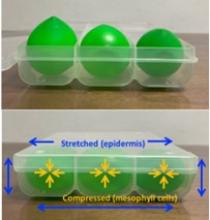
A research group led by Osaka University has found that plant cells may be able to detect mechanical forces to determine their own position within the leaf—whether they are on the surface or in the inner tissues—and therefore differentiate into appropriate cell types after damage. These findings reveal how plants regenerate the correct type of tissues when damaged, and may improve our understanding of the mechanisms underlying the high regeneration potential of plants.
11 May 2023
Daegu Gyeongbuk Institute of Science and Technology (DGIST)
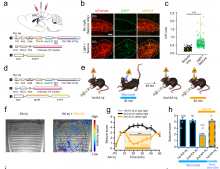
- Prof. Jung Ho Hyun’s research team at DGIST has developed a tool to verify the causal relationship between specific neurons and circuits and behavior
- This will provide new information for the development of treatments using light for neurological ad psychological disorders
11 May 2023
The University of Osaka
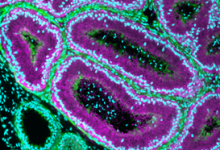
Researchers from Osaka University identified a new protein, NICOL, and described its crucial role in the maturation of sperm, which itself is necessary for male fertility. Mice who lacked this protein were sterile. Such a discovery may have implications for the development of male contraceptives.
25 Apr 2023
The University of Osaka
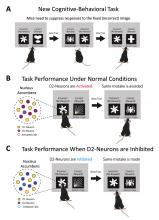
The Nobel prize winning physicist Niels Bohr once said, “An expert is a (person) that has made all the mistakes that can be made in a narrow field.” This idea that to master a skill we must learn from our mistakes and avoid making them in future has long been recognized; however, the brain mechanisms and pathways that control this ability have been poorly understood.
We revealed a specific brain pathway that allows us to identify and learn from our mistakes to guide better decision-making in future.
Our work is an important step towards understanding how the brain controls our daily choices and behavior. The identification of these cells as ‘mistake signalers’ may also help to guide new treatments for mental health conditions associated with impaired decision-making ability.

20 Apr 2023
Institute of Industrial Science, The University of Tokyo (UTokyo-IIS)
Researchers at the Institute of Industrial Science, The University of Tokyo use isotopically purified graphite to study the phenomenon of heat flowing like a fluid, which can lead to new heat-sink devices for electronics.

31 Mar 2023
Daegu Gyeongbuk Institute of Science and Technology (DGIST)
- The effect of the cycle of G proteins in real time on the two-step structural change of cell membrane receptors has been investigated
- This study is expected to be applied to pathologies related to G protein-coupled receptors and on research for their treatments
21 Mar 2023
Hokkaido University
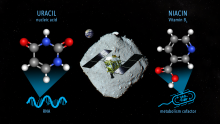
Samples from the asteroid Ryugu collected by the Hayabusa2 mission contain nitrogenous organic compounds, including the nucleobase uracil, which is a part of RNA.
20 Mar 2023
Hong Kong Baptist University (HKBU)
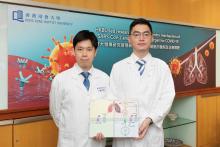
A study led by scientists from Hong Kong Baptist University (HKBU) has identified a protease called MT1-MMP that is a major host factor behind the infectivity of the SARS-CoV-2 virus in the human body, which leads to the infection of COVID-19 and multi-organ failure. By applying a humanised antibody called 3A2 that can inhibit the activity of MT1-MMP, the viral load of infected mice was reduced by almost 90%. The research team also demonstrated that the protease is a potential therapeutic target for COVID-19.
15 Mar 2023
Hokkaido University
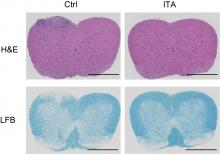
Researchers have revealed the modulatory effect of the anti-inflammatory metabolite itaconate on T helper and T regulatory cells, which may lead to new therapeutic approaches to treating some autoimmune diseases.

14 Mar 2023
Osaka Metropolitan University
Osaka Metropolitan University scientists succeeded in directly observing how LECs—which are attracting attention as one of the post-organic LEDs—change their electronic state over time during field emission by measuring their optical absorption via lamp light irradiation for the first time. This research method can be applied to all light-emitting devices, including not only LECs but also organic LEDs. This method is expected to reveal detailed electroluminescence processes and lead to the early detection of factors that reduce the efficiency of electroluminescence.
28 Feb 2023
Tohoku University
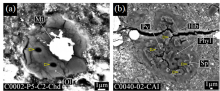
Researchers at Tohoku University have analyzed samples from asteroid Ryugu. They identified some of the oldest solids from the solar system to date, and their findings suggest that the asteroid initially formed in the outer reaches of the solar system.
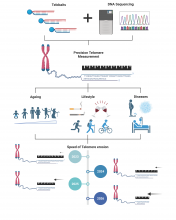
16 Feb 2023
Duke-NUS Medical School
A new approach that ‘baits’ the caps or telomeres protecting the ends of chromosomes could provide information on how rapidly we are ageing and what we need to do to slow it down.
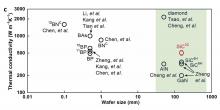
14 Feb 2023
Osaka Metropolitan University
A research group from the Graduate School of Engineering at Osaka Metropolitan University has shown that 3C-SiC exhibits high thermal conductivity equivalent to the theoretical value, based on thermal conductivity evaluation and atomic-level analysis, for the first time. They demonstrated that a 3C-SiC film on silicon substrate had a high thermal conductivity and expect that fabricating large-diameter wafers can be achieved at a low cost. The discovery should lead to improved heat dissipation in everyday electronic devices.
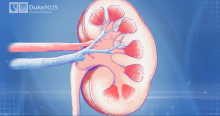
02 Feb 2023
Duke-NUS Medical School
Blocking an immune-regulating protein reverses the damage caused by acute and chronic kidney disease, a preclinical study suggests.
31 Jan 2023
City University of Hong Kong (CityUHK)
Pyroelectric catalysis (pyro-catalysis) can convert environmental temperature fluctuations into clean chemical energy, like hydrogen. However, compared with the more common catalysis strategy, such as photocatalysis, pyro-catalysis is inefficient due to slow temperature changes in the ambient environment. Recently, a team co-led by researchers at City University of Hong Kong (CityU) triggered a significantly faster and more efficient pyro-catalytic reaction using localized plasmonic heat sources to rapidly and efficiently heat up the pyro-catalytic material and allow it to cool down. The findings open up new avenues for efficient catalysis for biological applications, pollutant treatment and clean energy production.
31 Jan 2023
City University of Hong Kong (CityUHK)
Metal oxides are a promising catalyst for photoelectrochemical (PEC) water splitting to produce hydrogen as alternative energy. However, their effectiveness is restricted at low voltage. A research team led by scholars from City University of Hong Kong (CityU), Australia and Germany successfully mediated the poor charge carrier transport at low voltage by adding phosphorus to a metal oxide catalyst, which reduced energy losses during water splitting. The findings offer a potential option for achieving carbon neutrality.
28 Dec 2022
Hokkaido University
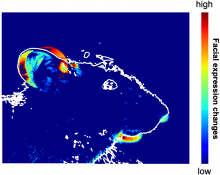
New insights into the opposing actions of serotonin-producing nerve fibres in mice could lead to drugs for treating addictions and major depression.
22 Dec 2022
City University of Hong Kong (CityUHK)
Clean hydrogen energy is a good alternative to fossil fuels and is critical for achieving carbon neutrality. Researchers around the world are looking for ways to enhance the efficiency and lower the cost of hydrogen production, particularly by improving the catalysts involved. Recently, a research team from City University of Hong Kong (CityU) developed a new, ultra-stable hydrogen evolution reaction (HER) electrocatalyst, which is based on two-dimensional mineral gel nanosheets and does not contain any precious metals. The catalyst can be produced in large scale and can help achieve a lower hydrogen price in the future.
20 Dec 2022
Hokkaido University
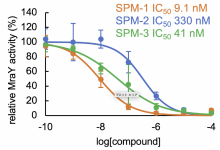
Researchers have designed and synthesized analogs of a new antibiotic that is effective against multidrug-resistant bacteria, opening a new front in the fight against these infections.

19 Dec 2022
Hong Kong Baptist University (HKBU)
A research team led by Hong Kong Baptist University (HKBU) has identified a molecular target for bone anabolic therapies using a selected aptamer that serves as an inhibitor of sclerostin, a protein that prevents bone growth. The discovery offers hope for the development of an effective next-generation treatment for osteoporosis and osteogenesis imperfecta that is free of cardiovascular risk compared to the marketed antibody drug.