

Nature Communications
About Nature Communications
Nature Communications is an open access journal that publishes high-quality research from all areas of the natural sciences. Papers published by the journal represent important advances of significance to specialists within each field.
- Website: https://www.nature.com/ncomms/
News
07 May 2024
The University of Osaka
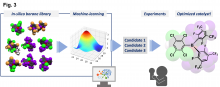
Researchers from Osaka University developed an in silico library comprising 54 potential triarylborane catalysts for the functionalization of amino acids and peptides with molecular hydrogen as a reductant. This library, together with chemometric machine learning, was used to identify the best candidates. Based on this process, an optimal catalyst was identified and found to promote the alkylation of aniline derivatives with exceptional functional group tolerance and produce only water as a coproduct.
29 Apr 2024
Hokkaido University
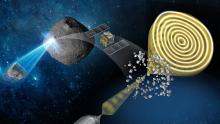
Samples reveal evidence of changes experienced by the surface of asteroid Ryugu, some probably due to micrometeoroid bombardment.

24 Apr 2024
Tohoku University
The enzyme PI3K plays a critical role in cell migration. Scientists have long understood this function. But researchers have recently unveiled that a subunit of this enzyme also has the ability to slam on the breaks to this process.
17 Apr 2024
Tohoku University
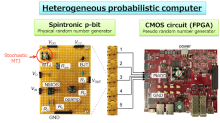
Researchers at Tohoku University and the University of California, Santa Barbara have unveiled a probabilistic computer prototype. Manufacturable with a near-future technology, the prototype combines a complementary metal-oxide semiconductor (CMOS) circuit with a limited number of stochastic nanomagnets, creating a heterogeneous probabilistic computer.

11 Apr 2024
Hokkaido University
Meandering ocean currents play an important role in the melting of Antarctic ice shelves, threatening a significant rise in sea levels.

11 Apr 2024
Institute of Industrial Science, The University of Tokyo (UTokyo-IIS)
Researchers from the Institute of Industrial Science, The University of Tokyo, find that providing lab-grown ‘cerebral organoids’ with connections similar to those in real brains enhances their development and activity
24 Mar 2024
Daegu Gyeongbuk Institute of Science and Technology (DGIST)
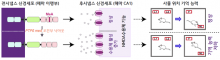
Revelation of the molecular code for constructing brain neural circuits
With identification of the characteristics of excitatory synapses and memory cognition regulation mechanisms mediated by synaptic gene microexons
- A research team led by DGIST Prof. Jaewon Ko has unearthed the microexon molecular code for the formation of synaptic signal patterns through the synaptic adhesion protein LAR-RPTP.
- This finding is expected to provide crucial clues for the development of new brain disease treatments targeting protein complexes.
22 Mar 2024
Tohoku University
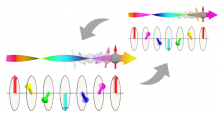
A team of researchers has proposed a new concept for magnet-based memory devices, which might revolutionize information storage devices owing to their potential for large-scale integration, non-volatility, and high durability.
27 Feb 2024
Kanazawa University
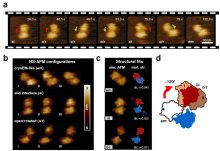
Researchers from Nano Life Science Institute (WPI-NanoLSI), Kanazawa University report in Nature Communications that TMEM16F, a transmembrane protein that facilitates the passive movement of phospholipids and ions across membranes, explores a larger conformational landscape than previously thought to perform its unique functions. The finding refines our molecular understanding of crucial physiological processes such as blood coagulation and COVID-19 pathogenesis, and highlights the importance of probing membrane proteins in native-like environments.

22 Feb 2024
Ehime University
Innovative technology for the comprehensive analysis of membrane protein extracellular interactions.
31 Jan 2024
Tohoku University
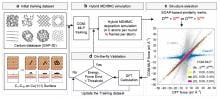
Carbon nanostructures could become easier to design and synthesize thanks to a machine learning method that predicts how they grow on metal surfaces. The new approach, developed by researchers at Japan’s Tohoku University and China’s Shanghai Jiao Tong University, will make it easier to exploit the unique chemical versatility of carbon nanotechnology.
26 Jan 2024
Daegu Gyeongbuk Institute of Science and Technology (DGIST)
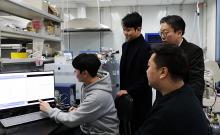
- Joint research team of DGIST (Prof. Dae-hyun Nam, Youn-gu Lee) - Sogang Univ. (Prof. Seo-in Back) developed a new catalyst for electrochemical reduction of carbon dioxide using “vitamin C boosting copper nanowire”
- Utilizing the jointly developed catalyst accelerates conversion from carbon dioxide to ethylene, enabling mass production of ethylene
- Findings published in the prestigious academic journal, “Nature Communications”
18 Jan 2024
Kanazawa University
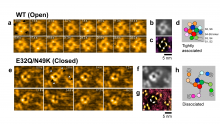
Researchers at Nano Life Science Institute (WPI-NanoLSI), Kanazawa University report in Nature Communications a high-speed atomic force microscopy study of the structural dynamics of sodium ion channels in cell membranes. The findings provide insights into the mechanism behind the generation of cell-membrane action potentials.
16 Jan 2024
The University of Osaka
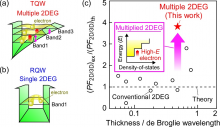
Researchers from Osaka University and collaborating partners have improved the efficiency of heat-to-electricity conversion in gallium arsenide semiconductor microstructures. By judicious spatial alignment of electrons within a two-dimensional electron gas system with multiple subbands, one can substantially enhance the power factor compared with previous iterations of analogous systems. This work is an important advance in modern thermoelectric technology and will benefit the global integration of the Internet of Things.
03 Jan 2024
Lingnan University
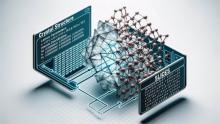
A research team led by Lingnan University's School of Interdisciplinary Studies Assistant Professor Xiao Hang recently devised a “crystal language” that enables artificial intelligence (AI) to create new materials with desired properties (Figure 1). This groundbreaking discovery holds the potential for creating the next revolutionary semiconductor material that makes solar energy abundant and affordable, and opens possibilities for the development of novel superconductors that effortlessly transport clean electricity with zero losses. The findings of this breakthrough research have been published in the prestigious academic journal Nature Communications, which is also the first time Lingnan University scholar published a lead-author paper on the esteemed Nature series.
14 Dec 2023
City University of Hong Kong (CityUHK)
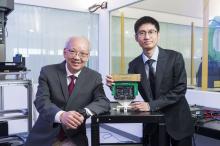
A research team led by Professor Chan Chi-hou, Chair Professor of Electronic Engineering at City University of Hong Kong (CityU), achieved an unprecedented advance in antenna technology by making possible the manipulation of all five fundamental properties of electromagnetic waves through software control.
12 Dec 2023
The University of Osaka
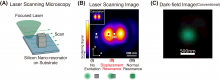
Researchers from Osaka University and collaborating partners have developed a new means of manipulating Mie scattering from nanostructures. By judicious choice of the laser illumination position with respect to the center of a nanostructure, one can strongly enhance optical responses that would not have been otherwise possible. This work is an important milestone in modern meta-photonics and will benefit computing and communication technologies.
30 Nov 2023
Singapore University of Technology and Design
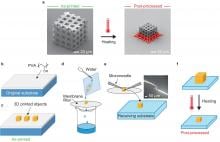
SUTD researchers refine two-photon polymerisation lithography to create high-precision, nanoscale features, advancing 3D printing to enable the production of intricate components for use in high-tech applications.
30 Nov 2023
Kanazawa University
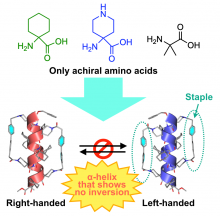
Researchers at Kanazawa University report in Nature Communications how they can control chirality inversion in α helical peptides.
27 Nov 2023
The University of Osaka
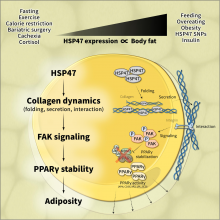
Researchers from Osaka University found that HSP47, a collagen-specific chaperone, is a key determinant of body fat levels. HSP47 expression levels are upregulated with obesity and greater food intake and decreased with fasting, exercise, calorie restriction, bariatric surgery, and wasting syndrome, suggesting that HSP47 modulation has a profound effect on fat storage.
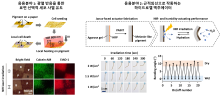
27 Oct 2023
Daegu Gyeongbuk Institute of Science and Technology (DGIST)
- This team developed the PAINT technology that controls the adhesive properties of new organic materials, analyzes melanin formation processes, and facilitates selective melanin formation.
- A research paper on the technology, which fabricates local patterns based on melanin-like pigments, was published in Nature Communications, an international academic journal.
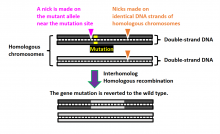
15 Sep 2023
The University of Osaka
Researchers led by Osaka University developed a novel genome editing technique known as NICER, which results in significantly fewer off-target mutations than CRISPR/Cas9 editing. The technique uses a different type of enzyme that makes single-stranded “nicks” in the DNA. Repair of these nicks is more efficient and accurate than repair of double-strand breaks caused by the current CRISPR/Cas9 editing. This technique represents a novel approach for the treatment of genetic diseases caused by heterozygous mutations.
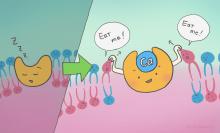
14 Sep 2023
Institute for Integrated Cell-Material Sciences (iCeMS) at Kyoto University
Scientists have found that extracellular calcium mediates the activation of a membrane protein that waves the flag signalling cell death

05 Sep 2023
DishBrain reveals how human neurons work together to process information. Living model of brain could give insights into the mechanisms of how we understand and experience the world.
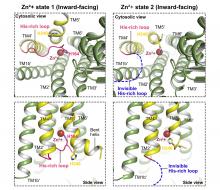
31 Aug 2023
Tohoku University
Roughly 10% of the proteins in our body rely on zinc. A group of researchers has unearthed the secrets behind a tiny but crucial protein that shuttles zinc ions within our bodies, offering a deeper understanding of how our cells maintain optimal health.
25 Aug 2023
Kanazawa University
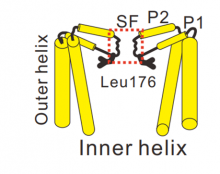
Researchers at Kanazawa University report in Nature Communications how calcium ions can block sodium ion channels located in cell membranes. Structural analysis and computer simulations made it possible to identify where and why calcium ions get stuck.

09 Aug 2023
City University of Hong Kong (CityUHK)
Viruses in man-made environments cause public health concerns, but they are generally less studied than bacteria. A recent study led by environmental scientists from City University of Hong Kong (CityU) provided the first evidence of frequent interactions between viruses and bacteria in man-made environments. It found that viruses can potentially help host bacteria adapt and survive in nutrient-depleted man-made environments through a unique gene insertion.

08 Aug 2023
Institute of Industrial Science, The University of Tokyo (UTokyo-IIS)
Researchers at the Institute of Industrial Science, The University of Tokyo use computer simulations of glass-forming particles to discover a new type of exotic ordering impacting the fate of the material.

08 Aug 2023
Institute of Industrial Science, The University of Tokyo (UTokyo-IIS)
Researchers from the Institute of Industrial Science, The University of Tokyo, provide physical insights into ion hydration in water-based solutions, which will aid electrolyte design for energy storage technologies.

03 Aug 2023
The University of Osaka
The researchers from Osaka University showed how bone erosion caused by cholesteatoma occurs. This study showed that a subset of cells called osteoclastogenic fibroblasts expresses a protein, activin A, which causes the breakdown of the bones. Because of this discovery, novel medical treatments can be developed as first-line management for cholesteatomas.