

Nature Communications
About Nature Communications
Nature Communications is an open access journal that publishes high-quality research from all areas of the natural sciences. Papers published by the journal represent important advances of significance to specialists within each field.
- Website: https://www.nature.com/ncomms/
News
15 Jul 2026
Institute of Industrial Science, The University of Tokyo (UTokyo-IIS)
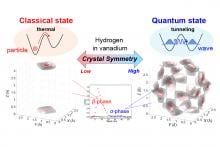
Researchers from the Institute of Industrial Science, The University of Tokyo reveal how crystal symmetry determines whether hydrogen follows the rules of quantum or classical physics
06 Jul 2026
National Taiwan University
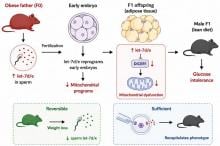
Researchers at National Taiwan University and the University of Southern Denmark show that obesity in male mice raises let-7 microRNAs in sperm, which silence the enzyme DICER1 and impair mitochondrial function in the fat tissue of their offspring. Weight loss reverses part of the effect in both mice and men.
01 Jul 2026
The University of Osaka
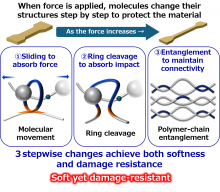
Researchers at the University of Osaka have synergistically combined three strategies for energy dissipation to enhance the toughness of elastomers. Rotaxane molecules with sacrificial bonds are incorporated into an elastomer. Under increasing external force, three mechanisms become sequentially activated: sliding of the rotaxane molecules, force-induced bond scission in the rings to form linear chains, and entanglement of the resulting chains. A polyurethane elastomer synthesized using this strategy was five times tougher than a conventional polyurethane.
24 Jun 2026
Hiroshima University
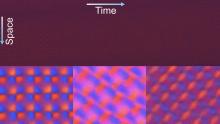
New experimental evidence demonstrates that discrete space-time crystals can be realized in classical soft-matter systems, thereby moving beyond the traditional complexities of quantum mechanics.
19 Jun 2026
Sungkyunkwan University
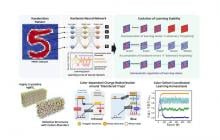
Using the color of light to strengthen or weaken an artificial synapse's memory
17 Jun 2026
Duke-NUS Medical School
Their study reveals that ageing muscles lose protective signals that help suppress tumour development, but exercise can restore this vital function.
11 Jun 2026
Osaka Metropolitan University
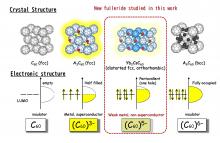
An international research collaboration, including OMU, IJS, NIST and AUT, has unveiled a robust metallic state in the molecular material ytterbium cesium fulleride (Yb₂CsC₆₀) that directly tests conventional theories of electron behavior. Normally, strong interactions between electrons are expected to suppress their movement and turn materials into insulators through a process called a Mott transition. However, Yb₂CsC₆₀ represents a case where metallicity survived, suggesting that the material’s electrons were continuing to move collectively, stabilized by a different mechanism. The discovery is of relevance to future research in fields such as superconductivity, quantum matter, and next-generation electronic technologies.
08 Jun 2026
National Taiwan University
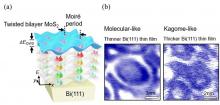
By engineering a bismuth thin film / twisted bilayer MoS2 heterostructure, the research work achieved precise bidirectional electron confinement without any applied voltage. Moiré potential controls horizontal electron localization; Bi film thickness tunes vertical effective mass - switching electron configurations between a trimer and a Kagome-like arrangement. The voltage-free confinement mechanism offers a material foundation for charge qubits and ultra-low-power semiconductors.
13 May 2026
National Taiwan University
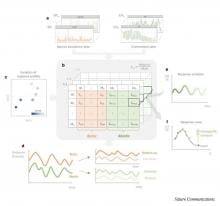
An international research team led by National Taiwan University has developed a new analytical framework based on Empirical Dynamic Modeling. This framework can quantify how response diversity varies over time using time-series data. Published in Nature Communications, the study offers the first direct empirical evidence that greater response diversity helps stabilize total community biomass. This breakthrough addresses a longstanding methodological challenge in ecology: measuring the response diversity of natural communities solely from observational data.
13 May 2026
Tohoku University
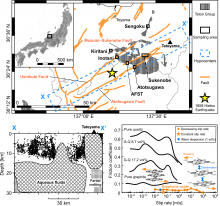
Many secrets lie deep beneath the Earth’s surface. Researchers from Tohoku University uncovered one of them when they discovered a hidden natural lubricant inside an active fault. Their findings may explain why the Atotsugawa Fault System produces surprisingly few large earthquakes despite being located in a tectonically active region.
23 Apr 2026
The University of Osaka
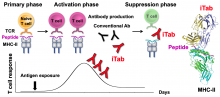
Researchers from The University of Osaka have discovered a new class of antibodies, called iTabs, that naturally suppress specific immune responses by blocking immune cell activation. These antibodies can reduce autoimmune disease severity in mice, suggesting a new way to treat conditions like multiple sclerosis without weakening the immune system overall.
15 Apr 2026
Tohoku University
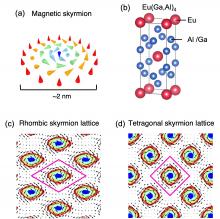
A once-theoretical structure is now shaping the future of computing. Researchers have uncovered key properties of magnetic skyrmions, ultra-stable, 2 nm vortex-like structures that could enable next-gen memory with extremely low power consumption. Even more surprising? They can form in materials once thought impossible.
14 Apr 2026
The University of Osaka
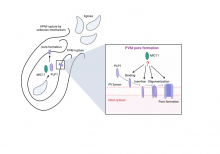
Researchers from The University of Osaka have shown that the MIC11 gene of Toxoplasma gondii is essential for the parasite to egress, or exit, the host cell, a key part of the lifecycle. Deletion of MIC11 caused parasites to be unable to permeabilize host cell membranes and prevented egress. This study identifies potential new therapeutic targets for human diseases caused by parasites, such as toxoplasmosis and malaria, which represent a major global health problem.

07 Apr 2026
YOKOHAMA National University
New framework shows how body size, lifespan and mobility can help predict winners and losers in nature
07 Apr 2026
National Taiwan University
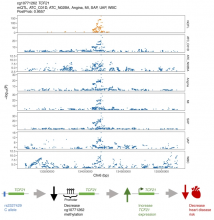
Researchers have mapped how genetic switches are regulated in East Asian populations, identifying tens of thousands of unique markers linked to complex diseases. This massive dataset bridges a crucial diversity gap in genetics, paving the way for more inclusive translation of genetic discovery worldwide.
30 Mar 2026
City University of Hong Kong (CityUHK)
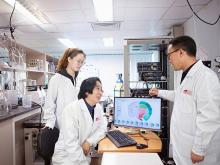
Scientists at CityUHK achieved a breakthrough in recent months with the discovery a novel compound, named MF-8. The compound and its associated pharmaceuticals demonstrate significant potential to provide safer, more effective treatments for psychiatric and neurological disorders, such as memory impairment, depression and anxiety, while effectively mitigating the side effects associated with existing medications.
30 Mar 2026
Daegu Gyeongbuk Institute of Science and Technology (DGIST)
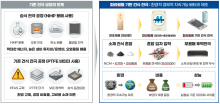
- DGIST Professor Kim Jinsoo’s team has developed dry-electrode technology for batteries using paraffin material
- Achieving a primer-free, solvent-free process… Stable charge-discharge performance for over 1,000 cycles
- 95% reduction in costs compared to conventional fluorine-based binders, with a global warming potential of 0.05%
24 Mar 2026
Osaka Metropolitan University
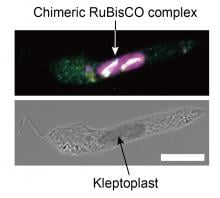
A single-celled predator maintains stolen chloroplasts with its own proteins, linking the host cell and stolen organelles at the molecular level. This process, now supported by biochemical evidence, may offer clues to early steps in the evolution of plant cells.
18 Mar 2026
National Taiwan University
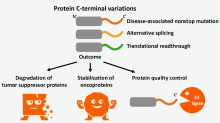
C-terminal variations, arising from mutations and regulatory processes, can either stabilize or destabilize proteins, challenging the traditional view that aberrant termini primarily trigger degradation.

06 Mar 2026
Kanazawa University
Researchers at the Cancer Research Institute and the Nano Life Science Institute (WPI-NanoLSI), Kanazawa University, have uncovered a critical mechanism that enables gastric cancer to spread to distant organs. Their study shows that cancer cells stimulate Wnt signaling in surrounding stromal fibroblasts to produce hyaluronan, creating a supportive microenvironment that promotes metastasis.
These findings provide new insight into how metastatic tumors establish themselves and suggest promising strategies to prevent gastric cancer progression.
05 Mar 2026
National Taiwan University
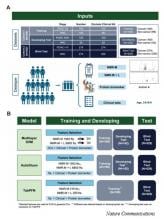
A team of researchers from Taiwan has developed PanMETAI, an AI-powered platform that analyses metabolic fingerprints in a simple blood sample to detect pancreatic cancer at its earliest stages—when treatment is most effective—achieving up to 94% diagnostic accuracy.

05 Mar 2026
Duke-NUS Medical School
Testing air and surfaces can detect dangerous viruses earlier and more comprehensively than testing birds alone
03 Mar 2026
The University of Osaka
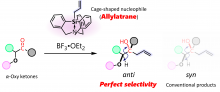
Diastereomers are molecules with identical structures that are not mirror images of each other, described as anti or syn for molecules without rings. Researchers at The University of Osaka developed a strategy for using a rigid cage-like molecule to produce an anti-diastereomer in high yield. This diastereomer can only be obtained as a minor byproduct by traditional methods. The strategy is expected to become a key technology for making medicines and other bioactive substances.

03 Mar 2026
Tohoku University
A team led by researchers at Tohoku University have taken the first step toward developing antiferromagnetic technology. They detected a liquid-crystal phase that may change the game for spintronic devices.
26 Feb 2026
The University of Osaka
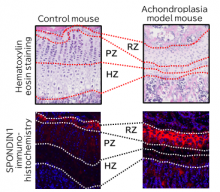
Researchers from The University of Osaka have developed a mouse model for achondroplasia. The model identified the importance of a signaling molecule called FGFR3 and a pathway called CREB in regulating bone growth. This pathway is also at least partially responsible for the pathology associated with achondroplasia and impaired bone growth. Their findings advance our understanding of the process of bone growth and provide novel therapeutic targets for achondroplasia.
18 Feb 2026
The University of Osaka
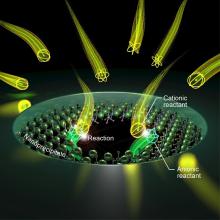
Researchers at The University of Osaka have developed a method to reproducibly form subnanometer pores within a solid-state nanopore. A voltage-driven chemical reaction produces a precipitate that fills and closes the nanopore, while dissolution reopens conductive pathways. This process forms many subnanometer-sized pores, whose effective size can be tuned by changing reactant composition and pH. These ultrasmall pores mimic biological ion channels and enable studies of ion transport in confined spaces.
26 Jan 2026
Daegu Gyeongbuk Institute of Science and Technology (DGIST)
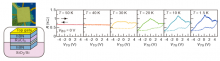
- DGIST Professor Youngwook Kim’s research team uncovers a new principle for “ultralow-power memory” without artificial deformation
- Presents a novel physical principle for the realization of next-generation low-power electronic devices and quantum memory

18 Jan 2026
Kanazawa University
An international team from Kanazawa University (Japan), Tohoku University (Japan), LPP (France), and partners has demonstrated that chorus emissions, natural electromagnetic waves long studied in Earth’s magnetosphere, also occur in Mercury’s magnetosphere exhibiting similar chirping frequency changes. Using the Plasma Wave Investigation instrument aboard BepiColombo’s Mercury orbiter Mio, six Mercury flybys between 2021 and 2025 detected plasma waves in the audible range. Comparison with decades of GEOTAIL data confirmed identical instantaneous frequency changes. This provides the first reliable evidence of intense electron activity at Mercury, advancing understanding of auroral processes across the solar system.
12 Jan 2026
Institute of Industrial Science, The University of Tokyo (UTokyo-IIS)
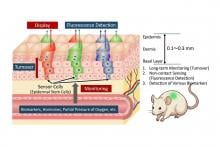
Japanese researchers have developed a living sensor display that turns engineered skin into a biological monitor, visually indicating internal inflammation without requiring blood sampling.