
Nature Communications
About Nature Communications
Nature Communications is an open access journal that publishes high-quality research from all areas of the natural sciences. Papers published by the journal represent important advances of significance to specialists within each field.
- Website: https://www.nature.com/ncomms/
News
18 Sep 2017
The Agency for Science, Technology and Research (A*STAR)
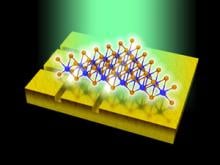
The key to ultrathin high-efficiency sensors and solar cells could be materials covered with tiny trenches.
15 Sep 2017
University of Malaya
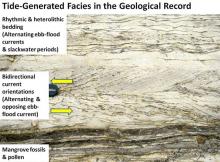
A study on 22–18 million-year-old tidal deposits reveals insights on the significance of mangrove organic carbon sequestration in the South China Sea at geological time scales.

05 Sep 2017
Tohoku University
A new heating method for certain metals could lead to improved earthquake-resistant construction materials.
05 Sep 2017
National Institute for Basic Biology (NIBB)
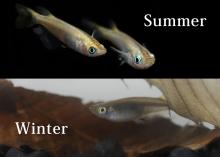
A research group from the National Institute for Basic Biology and Nagoya University in Japan found that color perception of Medaka, a small fish inhabiting rice fields and streams, varies greatly according to seasonal changes.
21 Aug 2017
The Agency for Science, Technology and Research (A*STAR)
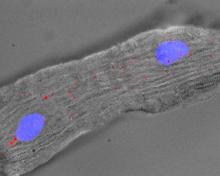
Researchers discover a new molecule, ‘Singheart’, that may hold the key to triggering the regeneration and repair of damaged heart cells.
10 Aug 2017
Daegu Gyeongbuk Institute of Science and Technology (DGIST)
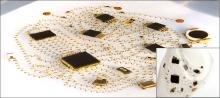
A soft, stick-on patch collects, analyzes and wirelessly transmits a variety of health metrics from the body to a smartphone.
25 Jul 2017
Tohoku University
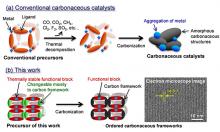
Researchers have developed a new synthesis route for alternative catalysts of noble metals.
24 Jul 2017
Institute for Integrated Cell-Material Sciences (iCeMS) at Kyoto University
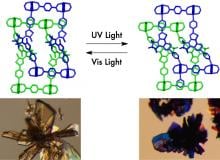
A new flexible material changes its porous nature when exposed to light.
17 Jul 2017
Ulsan National Institute of Science and Technology (UNIST)
South Korea's Ulsan National Institute of Science and Technology has introduced new low cost, high efficiency hydrocarbon fuel cells.
16 Jul 2017
King Abdullah University of Science and Technology (KAUST)
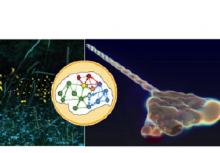
KAUST researchers predict that synchronized emissions from new on-chip lasers can produce artificial neural networks at low cost
06 Jul 2017
Daegu Gyeongbuk Institute of Science and Technology (DGIST)
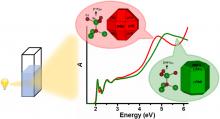
Korean researcher Sung Jun Lim suggests easy analysis method to identify the structure of semiconductor nanoparticles in solution only by measuring absorption spectrum. It is expected to present a new direction for the studies of the structure and the properties of nanoparticles.
04 Jul 2017
Tohoku University
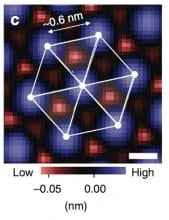
Researchers have applied advanced scanning methods to visualize the previously unexplored surface of a superconductor: lithium titanate.
03 Jul 2017
Ulsan National Institute of Science and Technology (UNIST)
South Korea's Ulsan National Institute of Science and Technology (UNIST) has introduced, for the first time, the organelle-localized self-assembly of a peptide amphiphile as a powerful strategy for controlling cellular fate.
09 Jun 2017
Daegu Gyeongbuk Institute of Science and Technology (DGIST)
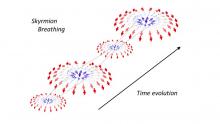
DGIST-KIST collaborative research team identified the breathing movement of skyrmion, which up to now had only been theoretical.
The future development of next generation communication devices with ultra-low power and ultra-high frequency based on skyrmion are expected.
09 Jun 2017
Ulsan National Institute of Science and Technology (UNIST)
A research team, led by South Korea's Ulsan National Institute of Science and Technology (UNIST) has proposed a new method that might be used to detect nuclear hazards from up to a few hundred meters away.
07 Jun 2017
King Abdullah University of Science and Technology (KAUST)
The movement of DNA molecules seemingly explained by random motion conceals a more orderly march.
06 Jun 2017
Tohoku University
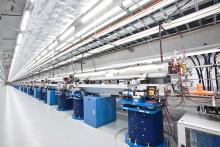
Chemical reactions could be probed in even greater detail using a method invented by Imperial researchers that better characterises ultrafast x-rays.
26 May 2017
Tohoku University
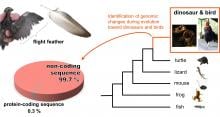
Tohoku University researchers and their international collaborators have identified a possible genetic mechanism underlying the evolution of birds, according to a recently published study in Nature Communications.
16 May 2017
King Abdullah University of Science and Technology (KAUST)
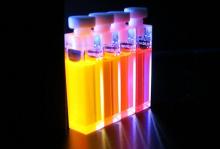
Conjugated polymers designed with a twist produce tiny, brightly fluorescent particles with broad applications.
04 May 2017
Ulsan National Institute of Science and Technology (UNIST)
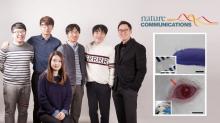
A research team, led by South Korea's Ulsan National Institute of Science and Technology (UNIST) has proposed the possibility of in situ human health monitoring simply by wearing a contact lens with built-in wireless smart sensors.
14 Apr 2017
Hokkaido University
Scientists have identified the gene responsible for generating acylceramide, the key lipid in forming the skin barrier that protects us from pathogens, allergens and other harmful substances. This finding could prove crucial in developing medicines for treating atopic dermatitis and ichthyosis.
07 Apr 2017
Institute of Transformative Bio-Molecules (WPI-ITbM), Nagoya University
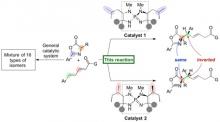
Minimal structural change in catalyst enables stereochemical inversion for the synthesis of amino acid derivatives

06 Apr 2017
Ulsan National Institute of Science and Technology (UNIST)
A new study, affiliated with South Korea's Ulsan National Institute of Science and Technology (UNIST), developed a transistor-type active-matrix pressure sensor using foldable substrate and air-dielectric layer.
29 Mar 2017
Hokkaido University
A new method uncovers a four-decade mystery about metallic glass that could allow researchers to fine-tune its properties to develop new materials.
27 Mar 2017
Hong Kong Baptist University (HKBU)
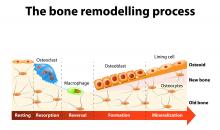
A non-coding RNA molecule, which sends chemical messages from bone-absorbing to bone-forming cells, could be playing a role in osteoporosis.
09 Mar 2017
Institute of Transformative Bio-Molecules (WPI-ITbM), Nagoya University
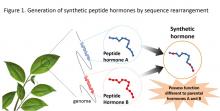
A group of plant biologists and theoretical chemists at ITbM, Nagoya University, has rearranged the amino acid sequence of plant hormones to generate a synthetic peptide hormone that can alter plant shape.
27 Feb 2017
The Agency for Science, Technology and Research (A*STAR)
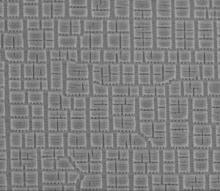
Scientists find a way to control the way cracks form and spread to make a coating for electrochromic materials.
14 Feb 2017
Institute for Integrated Cell-Material Sciences (iCeMS) at Kyoto University
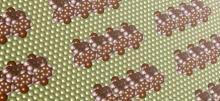
A new computational method may improve the control of nanomaterial fabrication.

08 Feb 2017
King Abdullah University of Science and Technology (KAUST)
Researchers in Saudi Arabia show the close association between corals and bacteria that may help protect the coral animal from heat stress.