

Big Data
News
22 Sep 2022
Hokkaido University
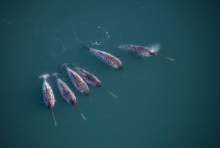
Chaos theory improves understanding of Arctic narwhal behavior, with the aim of helping efforts to protect this vulnerable species.

13 Sep 2022
Duke-NUS Medical School
A commentary in Nature Medicine advocates the proper application of artificial intelligence in healthcare and warns of the dangers when machine learning algorithms are misused.
08 Aug 2022
Hokkaido University
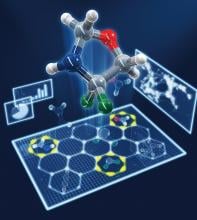
Reaction design framework proposed by computations leads to the discovery of a wealth of reactions, opening new paths for drug development.

01 Jul 2022
Singapore University of Technology and Design
SUTD research on predicting vocal tract geometry from spectral information opens doors to diagnosing vocal disorders non-invasively

22 Jun 2022
Asia Research News
New dinosaur species used claws to graze along the coast, More accurate rainfall predictions, Magnetism helps futuristic cell research, Do compression garments facilitate muscle recovery? Science journalism and why it matters for democracy and our Image of the month. Read all in the June's Editor's Choice and this month's Asia Research News 2022 magazine pick - Lessons from the dead.

12 May 2022
The Education University of Hong Kong (EdUHK)
The Education University of Hong Kong has received four silver medals and two bronze at the 48th International Exhibition of Inventions of Geneva in March 2022. The exhibition is a renowned event to showcase innovations and inventions from all over the world. The award-winning inventions cover a variety of areas: behavioural and cognitive therapy, music education, environmental detection, image captioning and product search engines.

29 Apr 2022
Asia Research News
Asia Research News monitors the latest research news in Asia. Some highlights that caught our attention this week are data-storing diamonds, motivated honeybees, and meteorites that contain the building blocks of life.
02 Mar 2022
National Supercomputing Centre (NSCC) Singapore
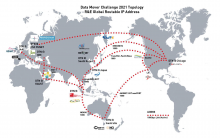
The SupercomputingAsia Conference recognised key HPC pioneer-leaders with its annual SCA22 Awards. The winning teams from Asia, Australia and the US were also announced at the awards ceremony for the international Data Mover Challenge 2021 (DMC21) competition.

31 Jan 2022
Institute of Policy Studies of Sri Lanka
Sovereign debt restructuring can be pre-emptive or post-default. A default is inherently costly as it can result in a sustained loss of access to capital markets. That leaves pre-emptive restructuring when a country deems itself unable to service outstanding debt.

20 Jan 2022
Singapore University of Technology and Design
A specific deep neural network model called Bidirectional Long-Short-Term Memory can use cough sounds to distinguish sick from healthy children, paving the way for preliminary screening.

01 Oct 2021
Daegu Gyeongbuk Institute of Science and Technology (DGIST)
Scientists propose an advanced network architecture that promises to overcome the drawbacks of traditional networks.
24 Sep 2021
DOST Advanced Science and Technology Institute
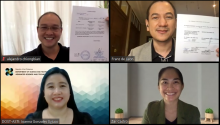
As part of its aim to improve business and government agency efficiencies through the use of Information and Communications Technology (ICT), the Advanced Science and Technology Institute (DOST-ASTI), a research and development institute of the Department of Science and Technology, has signed a 3-year partnership with Bizooku Philippines on 27 August 2021.
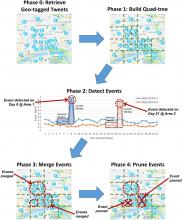
24 Sep 2021
Singapore University of Technology and Design
An algorithm that detects events occurring across different time and geographical scales on social media could enable a more timely response to emerging events.
20 Aug 2021
Daegu Gyeongbuk Institute of Science and Technology (DGIST)
Scientists create a new process control model to protect systems from assailants and natural fluctuations
04 Aug 2021
Daegu Gyeongbuk Institute of Science and Technology (DGIST)
Combining two magnetic effects can manipulate the magnetic behaviours of a device, offering a novel opportunity for the next generation IT technologies.

30 Jul 2021
Daegu Gyeongbuk Institute of Science and Technology (DGIST)
Scientists design an innovative file system that overcomes current performance bottlenecks when using solid state drives

29 Jul 2021
Daegu Gyeongbuk Institute of Science and Technology (DGIST)
M.S. Student Sejin Kim & Jungwoo Kim, won the “Outstanding Paper Award” at the largest computer society conference
27 Jul 2021
Ehime University
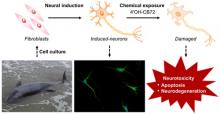
Using neurons directly reprogrammed from tissues of stranded whales to assess brain health
A research team of the Center for Marine Environmental Studies (CMES) of Ehime University, Japan succeeded for the first time in direct reprogramming of whale somatic cells to neuronal cells, and conducted a neurotoxicity test using these cells. Exposure to a metabolite (4′OH-CB72) of polychlorinated biphenyls, ubiquitous environmental pollutants, caused apoptosis in the reprogrammed neurons. Transcriptome analysis of 4′OH-CB72-treated whale neurons showed altered expressions of genes associated with oxidative phosphorylation, chromatin degradation, axonal transport, and neurodegenerative diseases.
21 Jul 2021
Daegu Gyeongbuk Institute of Science and Technology (DGIST)
Recognized for its Research Outcome Related to PIM-based AI Processor Using TSMC’s Multi-bit RRAM
04 May 2021
Daegu Gyeongbuk Institute of Science and Technology (DGIST)
New algorithms are much better at estimating the security level of encrypted data.

28 Apr 2021
National Supercomputing Centre (NSCC) Singapore
The National Supercomputing Centre (NSCC) Singapore has awarded the tender for the development of the next generation national supercomputer system plus upgrades to the national storage and research network infrastructure. The new system is expected to provide up to 10 Petaflops (10 PFLOPS) of computing capacity and is eight times more powerful than the current supercomputer. The new supercomputer is the first in a series of systems that will form the backbone of the nation’s future supercomputing resources which will support research in areas like climate change, biomedical science and smart nation activities.
08 Mar 2021
Daegu Gyeongbuk Institute of Science and Technology (DGIST)
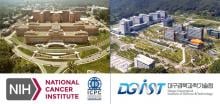
DGIST, NCI, and Kyung Hee Univ. signed a joint research agreement for clinical proteogenomic cancer research
04 Mar 2021
Daegu Gyeongbuk Institute of Science and Technology (DGIST)
New approach to detect and recover from sophisticated cyberattacks in real time
02 Mar 2021
National Supercomputing Centre (NSCC) Singapore
The SupercomputingAsia 2021 (SCA21) conference reflects this spirit of collaboration with a number of initiatives. These include the signing of a Memorandum of Understanding (MOU) that will create a new
link between Singapore entities and Finland’s CSC-IT Centre for Science, the launch of the inaugural
HPC Centre Leaders Forum, and the first EU-ASEAN-Japan Symposium.
31 Dec 2020
Daegu Gyeongbuk Institute of Science and Technology (DGIST)
A brain-inspired computing architecture speeds up complex data processing by running its algorithms inside its memory, significantly saving time and energy.
30 Nov 2020
National Supercomputing Centre (NSCC) Singapore
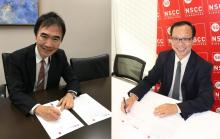
New collaboration between Japan’s RIKEN Center for Computational Science (R-CCS), Research Organization for Information Science and Technology (RIST) and National Supercomputing Centre (NSCC) Singapore, will allow Singapore scientists to directly tap on Japan’s Fugaku supercomputer to do ground breaking research, enhance educational activities and develop talent in high performance computing (HPC).
20 Nov 2020
Ulsan National Institute of Science and Technology (UNIST)
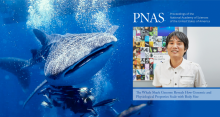
A research team, affiliated with South Korea's Ulsan National Institute of Science and Technology (UNIST) has presented the whole-genome sequence and analyses of the endangered whale shark (Rhincodon typus), the largest extant fish on Earth.

20 Nov 2020
Ulsan National Institute of Science and Technology (UNIST)
A research team, affiliated with South Korea's Ulsan National Institute of Science and Technology (UNIST) has been selected as the recipient of a large-scale Social Science Korea (SSK) project of the National Research Foundation of Korea.
20 Nov 2020
Ulsan National Institute of Science and Technology (UNIST)
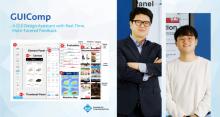
A research team, affiliated with South Korea's Ulsan National Institute of Science and Technology (UNIST) has developed a deep learning-based AI system that can provide design recommendations regarding the best layouts through the assessment of graphical user interfaces (GUIs) of the mobile application.
18 Nov 2020
National Supercomputing Centre (NSCC) Singapore
Thirty Teams Across the Asia Pacific Region Participated in the Six-Month Competition that Trains Student Teams to Practice and Produce Solutions using HPC and AI Platforms.
Events
Sorry, no events coming up for this topic.
Researchers
Sorry, no researchers coming up for this topic.
Giants in history
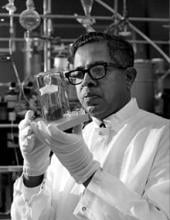
Cyril Andrew Ponnamperuma (16 October 1923 – 20 December 1994) was a Sri Lankan chemist who was interested in the origins of life on Earth. His research in chemical evolution showed how inanimate molecules may have given rise to the building blocks of life – a process known as abiogenesis.
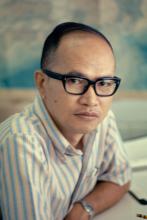
Research by Filipino plant scientist Benito Vergara (23 June 1934 – 24 October 2015) on the physiology of rice led to the development of deep-water and cold-tolerant rice varieties. Vergara also made several contributions to expanding public awareness of rice science.
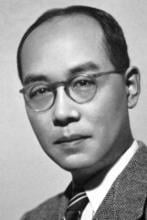
Hideki Yukawa (23 January 1907 – 8 September 1981) was awarded the Nobel Prize in Physics in 1949 for predicting the existence of the pi meson subatomic particle. Japan’s first Nobel laureate, Yakawa also expressed his support for nuclear disarmament by signing the Russell–Einstein Manifesto in 1955.