

Materials
News
19 Apr 2021
Osaka City University
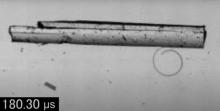
Researchers discovered, while exploring the photomechanical properties of diarylethene, that under irradiation with UV light the crystal of the compound peels off into micrometer sized crystals at a world’s fastest speed of 260 microseconds. As the material returns to its former molecular structure when exposed to visible light, the exfoliation method positions itself as a candidate for photoactuator manufacturing.
16 Apr 2021
National Institute for Materials Science (NIMS)
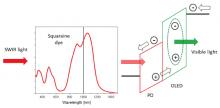
Devices that can see shortwave infrared light, which is invisible to the naked eye, could soon become cheaper and more accessible to a broader consumer base.
14 Apr 2021
Institute of Industrial Science, The University of Tokyo (UTokyo-IIS)
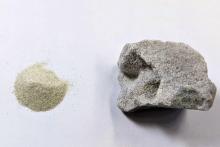
Researchers at the Institute of Industrial Science at The University of Tokyo examined a new method of producing concrete via direct bonding of sand particles, which may help reduce greenhouse emissions and even construct a Moon base.
06 Apr 2021
Tohoku University
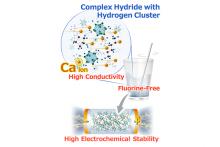
Scientists from Tohoku University have developed a new fluorine-free calcium (Ca) electrolyte based on a hydrogen (monocarborane) cluster that could potentially realize rechargeable Ca batteries.
01 Apr 2021
City University of Hong Kong (CityUHK)
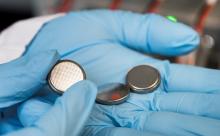
The promotion of electric cars has dramatically increased the demand for lithium-ion batteries. However, cobalt and nickel, the main cathode materials for the batteries, are not abundant. If the consumption continues, it will inevitably elevate the costs in the long run, so scientists have been actively developing alternative materials. A joint research team co-led by a scientist from City University of Hong Kong (CityU) has developed a much more stable, manganese-based cathode material. The new material has higher capacity and is more durable than the existing cobalt and nickel cathode materials - 90% of capacity is retained even when the number of charging-recharging cycles doubled. Their findings shed lights on developing low cost and high efficiency manganese-based cathode materials for lithium-ion batteries.
30 Mar 2021
Tohoku University
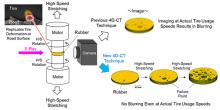
Sumitomo Rubber Industries, Ltd (SRI) and Tohoku University teamed up to increase the speed of 4-Dimensional Computed Tomography (4D-CT) a thousand-fold, making it possible to observe rubber failure in tires in real-time.
29 Mar 2021
National Institute for Materials Science (NIMS)
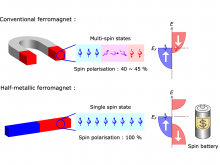
A review on the latest research of the various types of Heusler alloys summarizes the field’s main achievements up to 2020.
26 Mar 2021
Hokkaido University
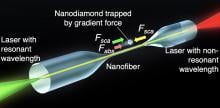
Scientists have developed a method to use lasers to control the movement of nanodiamonds with fluorescent centers.
11 Mar 2021
Hiroshima University
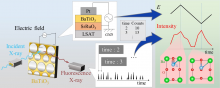
The fine structure of barium titanite, a potential alternative to lead titanite, has been revealed by researchers employing a novel technique over the extremely short time period that the ferroelectric phenomena experienced by these materials occur. The investigation should assist further exploration of how to replace lead titanate with other materials, so that its widespread applicability may be enjoyed while avoiding its role in lead pollution.

10 Mar 2021
National Institute for Materials Science (NIMS)
A nanoparticle’s size is fine-tuned to offer high-resolution images before and during surgical procedures.
18 Feb 2021
Osaka Prefecture University
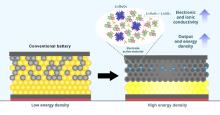
Lithium ion batteries use liquid electrolytes that have several drawbacks, which can be overcome by all-solid-state lithium secondary batteries (ASSBs). However, it is important to find efficient electrode materials for ASSBs. A research team from Japan has recently developed a novel electrode material for ASSBs by combining lithium sulfate and lithium ruthenate, which results in improved performance. The scientists hope that their novel approach will guide future research and the eventual commercialization of such high-capacity batteries.
18 Feb 2021
Ehime University
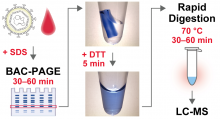
Polyacrylamide gel electrophoresis enables high-resolution separation of proteins extracted from biological samples, but it requires more than one day of pretreatment to recover the separated proteins trapped inside the gel for detection by mass spectrometry. BAC-DROP, our novel electrophoresis technology, uses a dissolvable form of polyacrylamide gel, which allows sample pretreatment to be completed in about 5 hours. The developed technology will enable the rapid diagnosis of viruses and disease protein markers.
11 Feb 2021
National Institute for Materials Science (NIMS)
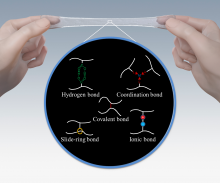
Molecular interactions within gels and rubbers can be controlled to fabricate stronger and more elastic materials.
10 Feb 2021
Nagoya University
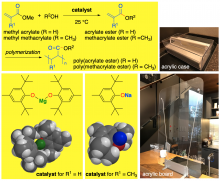
Scientists have found catalysts that improve an important industrial reaction and make it more eco-friendly.
03 Feb 2021
Nagoya University
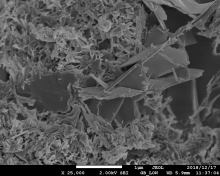
Nagoya University scientists find a rare mineral in nuclear power plant walls, significantly improving their strength following years of full operation.
25 Jan 2021
National Institute for Materials Science (NIMS)
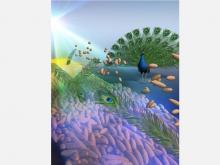
Materials inspired by the colour changes in a peacock’s feather could lead to anti-counterfeit and sensing applications.
25 Jan 2021
International Islamic University Malaysia (IIUM)
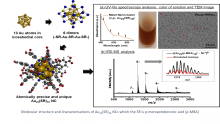
Noble metal nanoparticles, such as gold and silver, are well known in the research field of catalysis and biomedical applications. For example, gold and silver nanoparticles can be good catalysts for various chemical transformations, such as hydrogenation and oxidation. They can also be used for bioimaging, and as drug carriers and radiosensitizers in cancer therapy due to their optical properties and biocompatibility. Silver nanoparticles have been widely researched and used in commercial products for their antimicrobial activity towards a broad spectrum of microorganisms.

20 Jan 2021
Hokkaido University
Hokkaido University scientists have found a way to prevent gold nanoparticles from clumping, which could help towards their use as an anti-cancer therapy.

12 Jan 2021
National Institute for Materials Science (NIMS)
Accurate measurements of crystalline deformation should help engineer stronger components for more energy-efficient turbines.

12 Jan 2021
Institute for Integrated Cell-Material Sciences (iCeMS) at Kyoto University
An atomic switch is bringing us closer to highly effective solid-state batteries for electric vehicles.

08 Jan 2021
City University of Hong Kong (CityUHK)
Diamond is the hardest material in nature. But out of many expectations, it also has great potential as an excellent electronic material. A joint research team led by City University of Hong Kong (CityU) has demonstrated for the first time the large, uniform tensile elastic straining of microfabricated diamond arrays through the nanomechanical approach. Their findings have shown the potential of strained diamonds as prime candidates for advanced functional devices in microelectronics, photonics, and quantum information technologies.
23 Dec 2020
Osaka City University
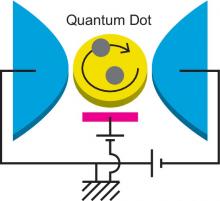
Osaka City University scientists have developed mathematical formulas to describe the current and fluctuations of strongly correlated electrons in quantum dots. Their theoretical predictions could soon be tested experimentally.

17 Dec 2020
Institute of Industrial Science, The University of Tokyo (UTokyo-IIS)
A researcher at The University of Tokyo develops a method for recharging used N95 masks with a van de Graaff generator, which may greatly alleviate the lack of high-quality personal protective equipment during the COVID-19 pandemic
15 Dec 2020
Seoul National University researchers build a non-volatile magnetic memory prototype.
14 Dec 2020
Institute of Industrial Science, The University of Tokyo (UTokyo-IIS)
Scientists at The University of Tokyo study aluminosilicate glass to determine its complex local structure with unprecedented detail. This work may lead to tougher and more inexpensive glass for touchscreens and solar arrays

11 Dec 2020
City University of Hong Kong (CityUHK)
A joint research led by City University of Hong Kong (CityU) has built an ultralow-power consumption artificial visual system to mimic the human brain, which successfully performed data-intensive cognitive tasks. Their experiment results could provide a promising device system for the next generation of artificial intelligence (AI) applications.

10 Dec 2020
Daegu Gyeongbuk Institute of Science and Technology (DGIST)
A polymer electrode gets an electrical boost for use in E-skin devices.
09 Dec 2020
Hiroshima University
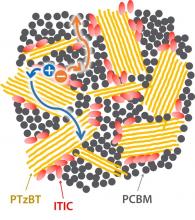
Researchers at Hiroshima University in Japan have blended together various polymer and molecular semiconductors as photo-absorbers to create a solar cell with increased power efficiencies and electricity generation.

23 Nov 2020
Institute for Integrated Cell-Material Sciences (iCeMS) at Kyoto University
A chance discovery leads to a simple process that can introduce ‘oxygen-missing layers’ into perovskite oxynitrides, changing their properties.
20 Nov 2020
Ulsan National Institute of Science and Technology (UNIST)
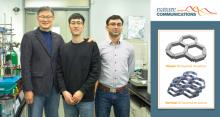
A research team, affiliated with South Korea's Ulsan National Institute of Science and Technology (UNIST) has designed and synthesized a vertical two-dimensional (2D) layered structure to develop materials that exhibit excellent performance in terms of gas storage and for the removal of toxic substances.
Events
Sorry, no events coming up for this topic.
Researchers
Sorry, no researchers coming up for this topic.
- « first
- ‹ previous
- 1
- 2
- 3
- 4
Giants in history

Abdus Suttar Khan (c. 1941 – 31 January 2008) was a Bangladeshi engineer who spent a significant part of his career conducting aerospace research with NASA, United Technology and Alstom.

Lin Lanying (7 February 1918 – 4 March 2003) was a Chinese material engineer remembered for her contributions to the field of semiconductor and aerospace materials. Lanying was born into a family who did not believe in educating girls and she was not allowed to go to school.