

Materials
News

20 Nov 2020
Ulsan National Institute of Science and Technology (UNIST)
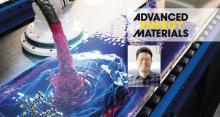
A research team, affiliated with South Korea's Ulsan National Institute of Science and Technology (UNIST) has succeeded in patterning the two-dimensional (2D) metal electrode into desired shapes on the 4-inch diameter silicon substrate.
20 Nov 2020
Ulsan National Institute of Science and Technology (UNIST)
A recent study, affiliated with South Korea's Ulsan National Institute of Science and Technology (UNIST) has unveiled a novel technology that can improve the efficiency of quantum dot solar cells to 11.53% has been unveiled.

20 Nov 2020
Tohoku University
By controlling the curvature, researchers have successfully retained the electrical properties of 2D graphene in a 3D structure.
19 Nov 2020
Osaka City University
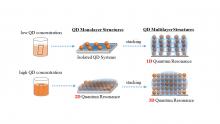
Scientists have found a way to control an interaction between quantum dots that could lead to more efficient solar cells.
19 Nov 2020
Ulsan National Institute of Science and Technology (UNIST)
A research team, affiliated with South Korea's Ulsan National Institute of Science and Technology (UNIST) has succeeded in synthesizing 1T‐phase TMDs via molten‐metal‐assisted intercalation (MMI).
19 Nov 2020
Ulsan National Institute of Science and Technology (UNIST)
A research team, affiliated with South Korea's Ulsan National Institute of Science and Technology (UNIST) has proposed a new physical phenomenon that promises enhanced storage capacity of a fingernail-sized memory chip by 1,000 times.
19 Nov 2020
Ulsan National Institute of Science and Technology (UNIST)
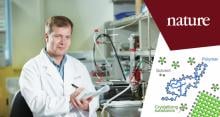
A recent study, affiliated with South Korea's Ulsan National Institute of Science and Technology (UNIST) has demonstrated that in the presence of polymers (preferably, polyionic liquids), crystals of various types grow in common solvents, at constant temperature, much bigger and much faster when stirred, rather than kept still.

19 Nov 2020
Ulsan National Institute of Science and Technology (UNIST)
A recent study, affiliated with South Korea's Ulsan National Institute of Science and Technology (UNIST) has unveiled a new water-splitting hydrogen catalyst, namely Ru@MWCNT.
09 Nov 2020
Tohoku University
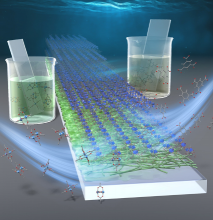
A research team has developed a new method for creating metal-organic framework (MOF) thin films that can be applied to sensors and electric devices.
04 Nov 2020
Institute of Industrial Science, The University of Tokyo (UTokyo-IIS)
The University of Tokyo introduced a system of gold nanorods that acts like a tiny light-driven motor, with its direction of motion is determined by the orientation of the motors. This work may lead to smaller and more precise nanomachines.
29 Oct 2020
Institute of Industrial Science, The University of Tokyo (UTokyo-IIS)
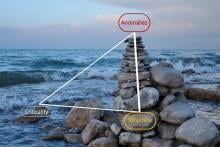
Scientists at The University of Tokyo use a two-state model based on the formation of tetrahedral structures to explain water’s anomalous properties and the surprising liquid–liquid transition of water.
29 Oct 2020
Tohoku University
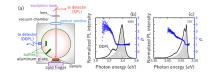
Tohoku University researchers have revealed more details about omnidirectional photoluminescence (ODPL) spectroscopy - a method for probing semiconducting crystals with light to detect defects and impurities.
25 Sep 2020
Osaka City University
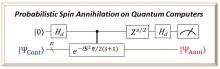
Researchers at Osaka City University create a quantum algorithm that removes spin contaminants while making chemical calculations on quantum computers. This allows for predictions of electronic and molecular behavior with degrees of precision not achievable with classical computers and paves the way for practical quantum computers to become a reality.
25 Sep 2020
Tohoku University
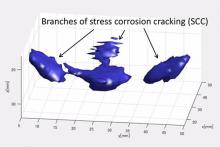
A two-in-one technology provides 3D images of structural defects, such as those that can develop in aircraft and power plants.

24 Sep 2020
City University of Hong Kong (CityUHK)
While the power conversion efficiency of perovskite solar cells (PVSCs) – a future of solar cells – has already greatly improved in the past decade, the problems of instability and potential environmental impact are yet to be overcome. Recently, scientists from City University of Hong Kong (CityU) have developed a novel method which can simultaneously tackle the leakage of lead from PVSCs and the stability issue without compromising efficiency, paving the way for real-life application of perovskite photovoltaic technology.
24 Sep 2020
City University of Hong Kong (CityUHK)
Because of their unique physical, chemical, electrical and optical properties, two-dimensional (2D) materials have attracted tremendous attention in the past decades. After revealing the realistic strength and stretchability of graphene, nicknamed “black gold”, researchers from City University of Hong Kong (CityU) have carried forward the success by unveiling the high defect tolerance and elasticity of hexagonal boron nitride (h-BN), another 2D material known as “white graphene”. This follow-up study will promote future development and applications of strain engineering, piezoelectronics and flexible electronics.
11 Sep 2020
Osaka City University
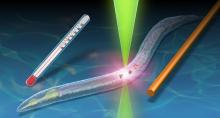
Measuring the temperature of objects at a nanometer-scale has been a long challenge, especially in living biological samples, because of the lack of precise and reliable nanothermometers. An international team of researchers has realized a quantum technology to probe temperature on a nanometer-scale, and have observed a ‘fever’ in tiny nematode worms under pharmacological treatment. This strengthens the connection between quantum sensing and biology and ushers in novel thermal imaging technologies in biomedical research.
11 Sep 2020
City University of Hong Kong (CityUHK)
Face masks have become an important tool in fighting against the COVID-19 pandemic. However, improper use or disposal of masks may lead to "secondary transmission". A research team from City University of Hong Kong (CityU) has successfully produced graphene masks with an anti-bacterial efficiency of 80%, which can be enhanced to almost 100% with exposure to sunlight for around 10 minutes. Initial tests also showed very promising results in the deactivation of two species of coronaviruses. The graphene masks are easily produced at low cost, and can help to resolve the problems of sourcing raw materials and disposing of non-biodegradable masks.
27 Aug 2020
Tohoku University
A team at Tohoku University have perfected a new heat treatment technique with rapid heating and asymmetrical cooling processes in metallic glass. This technique enabled the team to induce a gradient of local glassy structure, bringing an apparent work hardening behavior.

21 Aug 2020
Tohoku University
A team at Tohoku University has succeeded in growing large single crystals of tin monosulfide, a material used in next generation solar cells.
10 Aug 2020
Hiroshima University
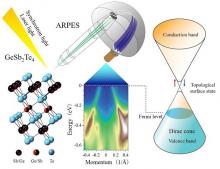
Researchers have found electrons that behave as if they have no mass, called Dirac electrons, in a compound used in rewritable discs, such as CDs and DVDs. The discovery of “massless” electrons in this phase-change material could lead to faster electronic devices.
04 Aug 2020
Ehime University
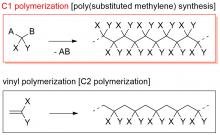
The research team directed by H. Shimomoto and E. Ihara in Ehime University synthesized pH-responsive dendronized polymers by C1 polymerization of dendron-containing diazoacetates, and demonstrated a unique pH-responsive behavior of the resulting polymers. These achievements will contribute to progress in the field of polymer chemistry and will allow us to develop new types of smart soft materials.

31 Jul 2020
National Institute for Materials Science (NIMS)
An artificial intelligence approach extracts how an aluminum alloy’s contents and manufacturing process are related to specific mechanical properties.
29 Jul 2020
City University of Hong Kong (CityUHK)
Intermetallic alloys potentially have high strength in a high-temperature environment. But they generally suffer poor ductility at ambient and low temperatures, hence limiting their applications in aerospace and other engineering fields. Yet, a research team led by scientists of City University of Hong Kong (CityU) has recently discovered the disordered nanoscale layers at grain boundaries in the ordered intermetallic alloys. The nanolayers can not only resolve the irreconcilable conflict between strength and ductility effectively, but also maintain the alloy’s strength with excellent thermal stability at high temperatures. Designing similar nanolayers may open a pathway for the design of new structural materials with optimal alloy properties.
27 Jul 2020
Hokkaido University
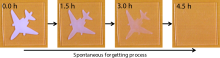
Hokkaido University researchers have found a soft and wet material that can memorize, retrieve, and forget information, much like the human brain. They report their findings in the journal Proceedings of the National Academy of Sciences (PNAS).
24 Jun 2020
Ulsan National Institute of Science and Technology (UNIST)
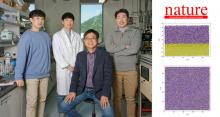
A recent study, affiliated with South Korea's Ulsan National Institute of Science and Technology (UNIST) has unveiled a novel material that could enable major leaps in the miniaturization of electronic devices.
18 Jun 2020
National Institute for Materials Science (NIMS)
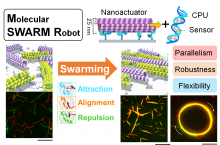
Scientists are looking for ways to make millions of molecule-sized robots swarm together so they can perform multiple tasks simultaneously.
08 Jun 2020
Hokkaido University
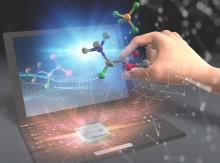
Hokkaido University scientists have succeeded in synthesizing an α,α-difluoroglycine derivative, a type of α-amino acid, based on a reaction path predicted by quantum chemical calculations. This novel method, combining experimental chemistry and computational chemistry, could innovate the development of new chemical reactions.
05 Jun 2020
Hokkaido University
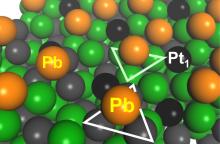
A group of Japanese scientists has developed an ultrastable, selective catalyst for dehydrogenate propane – an essential process to produce the key petrochemical substance of propylene – without deactivation, even at temperatures of more than 600°C.
03 Jun 2020
Hong Kong Baptist University (HKBU)
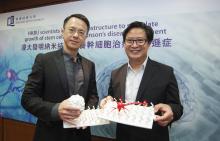
Researchers from Hong Kong Baptist University (HKBU) have invented a nanostructure that can stimulate neural stem cells to differentiate into nerve cells. They found that the transplantation of these nerve cells into rats with Parkinson's disease progressively improved their symptoms, with the new cells replacing damaged nerve cells around the transplantation site. This novel invention provides promising insights into stem cell therapies and offers hope of a new treatment for Parkinson's disease.
Events
Sorry, no events coming up for this topic.
Researchers
Sorry, no researchers coming up for this topic.
- « first
- ‹ previous
- 1
- 2
- 3
- 4
Giants in history

Abdus Suttar Khan (c. 1941 – 31 January 2008) was a Bangladeshi engineer who spent a significant part of his career conducting aerospace research with NASA, United Technology and Alstom.

Lin Lanying (7 February 1918 – 4 March 2003) was a Chinese material engineer remembered for her contributions to the field of semiconductor and aerospace materials. Lanying was born into a family who did not believe in educating girls and she was not allowed to go to school.