
People
News
03 Sep 2021
Hokkaido University
Social vulnerabilities of coastal communities and their reliance on blue carbon ecosystem services may be improved by addressing three major factors, according to a study led by Hokkaido University researchers.
25 Aug 2021
Hokkaido University
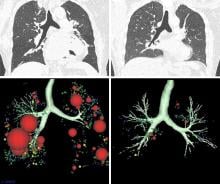
A novel CT scan-based approach has revealed significant changes in a parameter indicating lung destruction in some asthmatics. This finding could lead to more personalized treatments for asthma accompanied by persistent airflow limitation.
23 Aug 2021
Daegu Gyeongbuk Institute of Science and Technology (DGIST)
Dr. Hyunki Lee's team selected for developing a system that precisely measures human movements
02 Aug 2021
Lingnan University
A recent study conducted by Lingnan University (LU) in Hong Kong confirms a positive association between educational attainment and life satisfaction at the individual level. However, once labour market outcomes and especially income levels are accounted for, this positive relationship disappears.
27 Jul 2021
Tohoku University
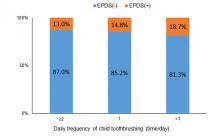
Researchers have shown that postpartum depression can inhibit a mother’s ability to instill healthy tooth brushing habits in children. The study demonstrates the need to foster greater mental support and management for mothers and incorporate these factors when assessing children’s oral health.
22 Jul 2021
Hokkaido University
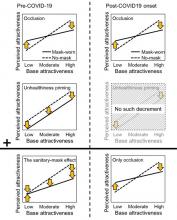
The Covid-19 pandemic has improved perceptions of facial attractiveness and healthiness of people wearing face masks in Japan.
12 Jul 2021
Daegu Gyeongbuk Institute of Science and Technology (DGIST)
- Gowoon Son, DGIST, to earn a Doctorate from Maastricht University

28 Jun 2021
International Islamic University Malaysia (IIUM)
Researchers at The International Islamic University Malaysia (IIUM) have developed an algorithmic approach to predict progression of a condition called pterygium, which involves abnormal tissue growth across the eye.

25 Jun 2021
Daegu Gyeongbuk Institute of Science and Technology (DGIST)
- 7 Graduate Students in 3 Departments including Department of Emerging Materials Science
- Entitled to Support Needed for Conducting Independent Research for 2 Years

23 Jun 2021
Lingnan University
Productive ageing is an internationally clear direction of social policy development. A recent survey conducted by the Institute of Policy Studies (IPS) of Lingnan University (LU) in Hong Kong confirmed that an age-friendly city framework would help to promote the productive engagement of older adults in Hong Kong. The research team recommended that the Hong Kong Government to enact policies and programmes improving intergenerational communication and interaction, promoting inclusivity to address ageism for positive engagement leading to healthy and productive ageing.
27 May 2021
Tohoku University
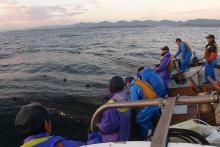
The 2011 Great East Japan Earthquake and Tsunami devastated fishing communities along the Miyagi coast. A Tohoku University anthropologist carried field research in the small fishing community in Isohama. Here he found elements of competitive and collective behavior ensuing following the earthquake.
25 May 2021
Lingnan University
A recent survey conducted by Lingnan University (LU) and the Education University of Hong Kong (EdUHK) finds that 11 to 14 per cent of older adults eligible for the current three cash welfare subsidies do not claim them, mainly because of the complexity of application procedures, high transaction costs and perceived stigma. The research team suggests the Government should reduce administrative burdens, and re-brand welfare subsidies for older adults.
18 May 2021
The Education University of Hong Kong (EdUHK)
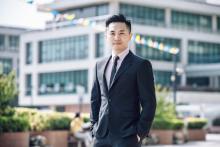
Dr Li Jianbin, Assistant Professor at the Department of Early Childhood Education of The Education University of Hong Kong, was presented with the Rising Star Award by the Association for Psychological Science (APS) in February 2021. The award recognises outstanding APS members in the earliest stages of their research career.

14 May 2021
Asia Research News
Inspirational figures from our ongoing Giants in History series are featured in the Asia Research News 2021 magazine. Because role models matter.
14 May 2021
International Development Research Centre (IDRC)
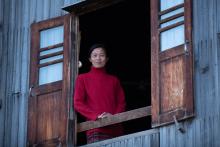
Many hurdles remain to achieve gender equality in Myanmar politics and society at large. Research supported by Canada’s Knowledge for Democracy Myanmar Initiative is identifying opportunities to close the gap.
13 May 2021
Lingnan University
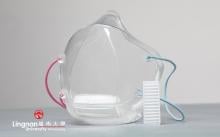
Everyone has to wear a mask to curb the spread of COVID-19. However, this is an additional communication barrier for people with a hearing impairment as they cannot read lips or facial expressions behind a mask. Invited by The Hong Kong Society for the Deaf, the Lingnan Entrepreneurship Initiative of Lingnan University in Hong Kong (LU) recently designed a transparent ASTM Level 3 face mask based on the needs of hearing-impaired people, and its fully transparent and anti-reflective design makes lip-reading easier.
12 May 2021
Lingnan University
A survey conducted by Lingnan University in Hong Kong's (LU) Department of Cultural Studies finds 65 per cent of lesbian and bisexual female respondents perceived a glass ceiling in financial services in Hong Kong. The research team noted an urgent need for employers to build inclusive workplaces for LGBT+ (lesbian, gay, bisexual, transgender and related communities) employees.

11 May 2021
Earth-Life Science Institute (ELSI), Tokyo Institute of Technology
“By looking at substances in volcanos, lakes and hotsprings, you can start to see the ecosystems that existed billions of years ago,” says Mayuko Nakagawa, a microbiologist and specially-appointed assistant professor at the Earth-Life Science Institute (ELSI) based at the Tokyo Institute of Technology, Japan. She analyses components left by microorganisms with colleagues from various disciplines, while as a lab manager, she looks after cutting-edge equipment and visitors from different countries.

11 May 2021
Earth-Life Science Institute (ELSI), Tokyo Institute of Technology
火山や湖、温泉の物質からは数十億年前に存在した微生物の生態系が見えてくると語るのは、東京工業大学・地球生命研究所(ELSI)の中川麻悠子特任助教。異分野の研究者たちと共に微生物の作り出した成分を解析する傍ら、ラボマネージャーとして国内外の訪問者サポートや最先端の機材の管理などを行っている。

11 May 2021
Earth-Life Science Institute (ELSI), Tokyo Institute of Technology
Earth scientist Hitoshi Gomi investigates how plants are made by studying materials from the deep Earth, while creating a hospitable workplace at the Earth-Life Science Institute (ELSI) at the Tokyo Institute of Technology, Japan. He shared his research and the role of a lab manager with Asia Research News.

11 May 2021
Earth-Life Science Institute (ELSI), Tokyo Institute of Technology
地球の中心部の物質を研究しながら、共に研究をしている仲間が働きやすい環境を作るのが五味斎特任助教の日常だ。所属先の東京工業大学・地球生命研究所(ELSI)で地球科学者として行う研究活動と、ラボマネージャーの役目について、お話しを伺った。
11 May 2021
Earth-Life Science Institute (ELSI), Tokyo Institute of Technology
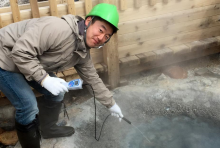
Tomohiro Mochizuki tracks down viruses inside single-cell organisms thriving in boiling hot springs. His fieldwork is conducted in relatively extreme environments and, despite the significance of his investigations, he doesn’t need many fancy gadgets back at his lab at Japan’s Earth-Life Science Institute (ELSI). ARN asked Mochizuki about his virus-hunting exploits and what they involve.
11 May 2021
Earth-Life Science Institute (ELSI), Tokyo Institute of Technology
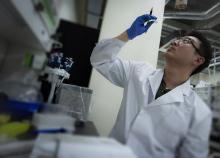
Tony Z. Jia is a specially-appointed assistant professor and lab manager at Japan’s Earth-Life Science Institute (ELSI), based at the Tokyo Institute of Technology. He is an astrobiologist and shared highlights from his dual research/management role.
29 Apr 2021
Lingnan University
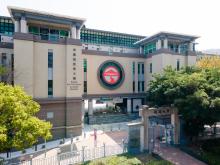
The COVID-19 pandemic has disrupted personal lives and created a great deal of uncertainty, imposing additional pressure as well as new challenges at work. However, a survey of healthcare professionals in Wuhan during the COVID-19 lockdown conducted by the Faculty of Business of Lingnan University in Hong Kong (LU) found that individual employees with proactive personality do well in the face of challenging circumstances. The research suggests that individual employees also play critical roles in managing crisis and uncertainty, thus maintaining effective organisational functions.
14 Apr 2021
Daegu Gyeongbuk Institute of Science and Technology (DGIST)
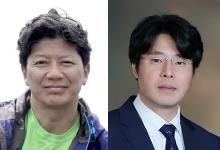
Prof. June.M. Kwak, and Prof. Chang-Hee Cho are selected for the research funds granted by Samsung Science & Technology Foundation
07 Apr 2021
Daegu Gyeongbuk Institute of Science and Technology (DGIST)
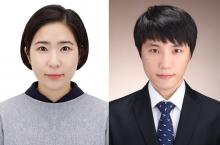
- Research Professor Kyung Ah Han of the Department of Brain and Cognitive Sciences and postdoctoral researcher Heejin Lim of the Department of New Biology selected for the program

31 Mar 2021
Osaka City University
Researchers reveal through a systematic review of 158 articles detailing quality improvements in pediatric intensive care units mainly throughout North America and the U.K. that despite having a median score of 11.0 on the Quality Improvement Minimum Quality Criteria Set, only 17% of them were considered high quality by achieving a 14-16 score, and only 5% cited Standards for QUality Improvement Reporting Excellence (SQUIRE) guidelines for reporting quality improvement works.
19 Mar 2021
Osaka City University
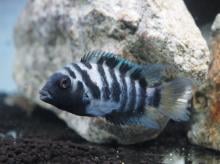
Through a series of prosocial choice tasks, researchers reveal prosocial and antisocial characteristics in male convict cichlid fish. The fish distinguish between female breeding partners, unknown females, and rival males by adjusting their actions to either provide food for both them and the females or avoid providing food for the rival males.
09 Mar 2021
Hokkaido University
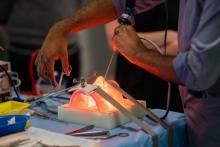
The world’s first international online training session utilizing advanced 3D sinus models and a telemedicine system has taken place, highlighting a new mode of medical training in Covid-19 era.
09 Mar 2021
Hokkaido University
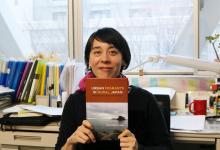
Susanne Klien is an associate professor at Hokkaido University’s Modern Japanese Studies Program (MJSP). Having explored intangible cultural heritage across Japan, Klien has been expanding her research in area studies and anthropology on rural Japan. During her previous work for a research institute in Tokyo, she observed a unique migration pattern that has been taking place in Japan: more young people are relocating from big cities to rural areas, for example to the Tohoku area, the northeastern portion of Japan’s main island of Honshu.
Researchers
Sorry, no researchers coming up for this topic.
- « first
- ‹ previous
- 1
- 2
- 3
Giants in history

Vietnamese surgeon Tôn Thất Tùng (10 May 1912 – 7 May 1982) developed a pioneering technique that reduced the risks and mortality rate of liver operations.
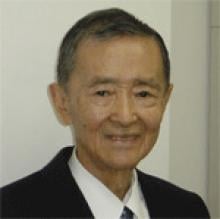
Michiaki Takahashi (17 February 1928 – 16 December 2013) was a Japanese virologist who developed the first chickenpox vaccine.

Maggie Lim (5 January 1913 – November 1995) was a Singaporean physician who promoted family planning and expanded the access to clinics to improve the quality of life for mothers and children in Singapore’s early days.

The founder of the Adyar Cancer Institute in India, Muthulakshmi Reddy (30 July 1886 – 22 July 1968), fought to uplift women and girls from impoverished situations.

Through her iconic stories featuring fictional scenes from the history of the Philippines, language teacher and academic Genoveva Matute (3 January 1915 – 21 March 2009) helped strengthen the Filipino identity.

Rajeshwari Chatterjee (24 January 1922 – 3 September 2010) was the first female engineer from Karnataka in India.
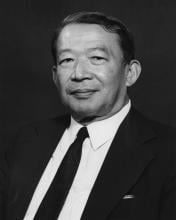
U Hla Myint (1920 – 2017) was a celebrated economist from Myanmar. Considered a prodigy, he was admitted to Rangoon University to study economics when he was just 14 years old. He went on to earn a Ph.D. at the London School of Economics (LSE).
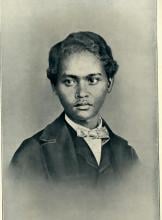
Little is known about Ali, a teenager from Sarawak, Malaysia, who was chief assistant to the famous naturalist Alfred Wallace. Most of what is known comes from Wallace’s writings. Ali accompanied Wallace on expeditions throughout the Malay Archipelago from December 1855 to February 1862.
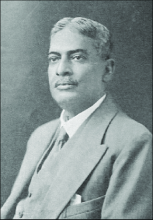
Indian scientist and physician Upendranath Brahmachari (19 December 1873–6 February 1946) is best known for creating a drug called Urea Stibamine, used to safely and reliably treat visceral leishmaniasis (or Kala-azar), a severe infection caused by the Leishmania parasite.

Sir Mokshagundam Srinivasa Shastry Vishveshwarayya (15 September 1860 – 14 April 1962) is widely regarded as India’s most outstanding engineer. In a career that spanned almost his entire life, Vishveshwarayya played a pivotal role in several engineering projects, including designing the Krishnarajasagara dam that is still the source of irrigation and drinking water for parts of Karnataka today.
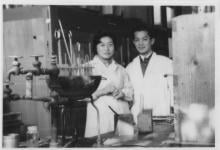
Tsuneko (7 June 1933) and Reiji Okazaki (8 October 1930 – 1 August 1975) were a Japanese couple who discovered Okazaki fragments – short sequences of DNA that are synthesized during DNA replication and linked together to form a continuous strand.