

People
News

14 Dec 2005
International Center for Agricultural Research in the Dry Areas (ICARDA)
One of the most important findings of the research is that about half of supplemental irrigation amounts currently applied may be saved with only 10-15 % yield loss.

11 Dec 2005
International University of Business Agriculture and Technology
Why do power sector problems persist in Bangladesh? What can be done to solve them? This report assesses the barriers to accelerated electrification - in particular the barriers to rural electrification – and puts forward practical recommendations.

07 Dec 2005
Asia Research News
First International Conference on Nutrigenomics, 11th Biennial Symposium on Literature and Cultures of the Asia-Pacific and 8th Sustainable Development Conference.
07 Dec 2005
International Center for Agricultural Research in the Dry Areas (ICARDA)
The studies reveal that even in the dry areas, which are characterized by water scarcity, available water is not used efficiently for agricultural production due to farmers’ practices and prevailing policies on water.

04 Dec 2005
Divan Enterprise (indianjournals.com)
In this paper, we use South Africa as a case study to discuss the relationship between access to finance, economic growth, and sustainable development.
13 Nov 2005
Divan Enterprise (indianjournals.com)
The General Agreement on Trade in Services and poor people's right to water
09 Nov 2005
International University of Business Agriculture and Technology
There are about 36 million labors working in agriculture sector in the country, who are not covered by pensions. Similarly migrant workers do not receive any pension.
09 Nov 2005
Divan Enterprise (indianjournals.com)
Despite the improvement in newborn health care services neonatal and infant mortality rate has not significantly declined. In India 26 million babies are born every year, out of which 1.2 million die before completing the first four weeks of life.
30 Oct 2005
Divan Enterprise (indianjournals.com)
This study was formulated with an objective of studying the factors influencing the utilization of health services in the spectrum of antenatal, intranatal and postnatal periods of a mother.
26 Oct 2005
Divan Enterprise (indianjournals.com)
Voltage fluctuations have been minimized, greater supply made available, and costs reduced. All this was achieved through the ABT (availability-based tariff) introduced in 2000.
23 Oct 2005
Divan Enterprise (indianjournals.com)
Mining is carried out in India in different geological, topographical, and climatological settings. As a result, a variety of environmental management practices, suitable for individual mineral deposits and locations have been developed.

18 Oct 2005
Keio University
Prof Setsuko Aoki, Dr Ken Jimbo and Prof. Naoyuki Agawa from Keio University, Japan
18 Oct 2005
Nature Publishing Group
High-resolution satellite images of the recent earthquake in Pakistan have been pulled from the websites of international agencies and relief organizations.
16 Oct 2005
Divan Enterprise (indianjournals.com)
A study was conducted in 96 females suffering from PMS. Behavioral symptoms appearing during PMS were noticed. It was found that there is a substantial link between PMS and behavior alterations. Depression, aggression, irritability etc.
16 Oct 2005
Divan Enterprise (indianjournals.com)
Young boys were allegedly kidnapped and kept under illegal custody for months together. After demoralization had set in due to prolonged confinement, surgery was done on their private parts and female hormones were given to the persons.
12 Oct 2005
International University of Business Agriculture and Technology
Between 1996 to 2002 about 3.24 million Bangladeshis migrated for overseas employment who remitted 23.7 billion dollars during this period.
12 Oct 2005
Divan Enterprise (indianjournals.com)
Males preferred poisoning and hanging whereas females preferred self-immolation (burns) to end their own lives.

09 Oct 2005
Nanyang Technological University
Dr Rohan Gunaratna is the Head of Terrorism Research, Institute of Defence and Strategic Studies, Singapore, and the author of Inside Al Qaeda: Global Network of Terror (Columbia University Press, New York)
09 Oct 2005
Asia Research News
Prof. Dr M.A. Miyan is the founder of South Asian Disaster Management Center (SADMC); Prof. Dr. Mohammed Nasimul Islam worked for the UN as a forensic pathologist; Prof. Masahiro Fukaya is a Professor in the Faculty of Policy Management
09 Oct 2005
Sustainable Development Policy Institute (SDPI)
The paper develops a criterion for choosing a financing system that takes into account factors like ease of use of the system, revenue generating ability, effects on service provision, and community participation in the socio-economic context of Pakistan.
05 Oct 2005
Asia Research News
Islamic movements, Security in Asia-Pacific, Global Security, Space law and International Law, U.S.-Japan Relations
05 Oct 2005
Veterinary Research Institute
This paper discusses the measures that were put in place before, during and after the peak period of bird flu outbreaks in East Asia in early 2004.
28 Sep 2005
Nature Publishing Group
Would-be suicide bombers are encouraged to carry out their plans because they tend to live in small groups with fervent political opinions, say the authors of a Correspondence in this week's Nature.

28 Sep 2005
National University of Singapore
SEforum 2005 triggered an environment for social agencies, youth and budding entrepreneurs to embark on socially motivated business projects.
28 Sep 2005
Divan Enterprise (indianjournals.com)
Poisoning is one of the major causes of morbidity and mortality in pediatric population. Majority of the patients were toddlers between the ages of 1 and 3.
25 Sep 2005
M.S. Swaminathan Research Foundation
The work of MSSRF over a decade has generated innovative concept schools like Biovillage, Village Knowledge Centres, Virtual Academy, Village gene, seed, grain and food banks to address compelling issues of the poor and provide remedies.
25 Sep 2005
Asia Research News
The theme of this year's conference is "Shadow Lines", which has to do with movement across borders, borders that may be understood in many different ways and in many different contexts.
25 Sep 2005
Divan Enterprise (indianjournals.com)
Farmers who own tube wells and enjoy unlimited access to groundwater, are not fully confronted with the opportunity cost of using water due to heavily subsidized electricity, and divert the water for growing crops that are economically inefficient.
21 Sep 2005
Divan Enterprise (indianjournals.com)
In the scenario of imminent energy crises fuelled by huge import bills and rising prices of petro-based products, biofuels seem to be options of the future.
21 Sep 2005
Population Council
Older adults in Cambodia have survived decades of political and social volatility including civil war and genocide. This analysis looks at a basic measure of health among a population that until recently has been isolated from the rest of the world.
Researchers
Sorry, no researchers coming up for this topic.
- « first
- ‹ previous
- 1
- 2
- 3
Giants in history
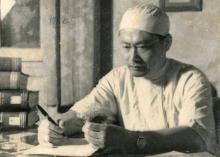
Vietnamese surgeon Tôn Thất Tùng (10 May 1912 – 7 May 1982) developed a pioneering technique that reduced the risks and mortality rate of liver operations.
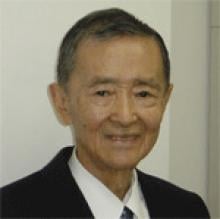
Michiaki Takahashi (17 February 1928 – 16 December 2013) was a Japanese virologist who developed the first chickenpox vaccine.

Maggie Lim (5 January 1913 – November 1995) was a Singaporean physician who promoted family planning and expanded the access to clinics to improve the quality of life for mothers and children in Singapore’s early days.
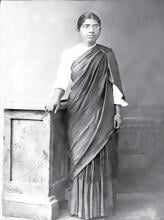
The founder of the Adyar Cancer Institute in India, Muthulakshmi Reddy (30 July 1886 – 22 July 1968), fought to uplift women and girls from impoverished situations.

Through her iconic stories featuring fictional scenes from the history of the Philippines, language teacher and academic Genoveva Matute (3 January 1915 – 21 March 2009) helped strengthen the Filipino identity.
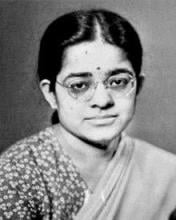
Rajeshwari Chatterjee (24 January 1922 – 3 September 2010) was the first female engineer from Karnataka in India.
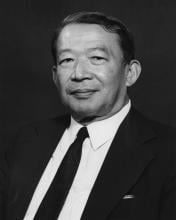
U Hla Myint (1920 – 2017) was a celebrated economist from Myanmar. Considered a prodigy, he was admitted to Rangoon University to study economics when he was just 14 years old. He went on to earn a Ph.D. at the London School of Economics (LSE).
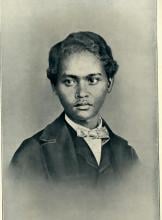
Little is known about Ali, a teenager from Sarawak, Malaysia, who was chief assistant to the famous naturalist Alfred Wallace. Most of what is known comes from Wallace’s writings. Ali accompanied Wallace on expeditions throughout the Malay Archipelago from December 1855 to February 1862.
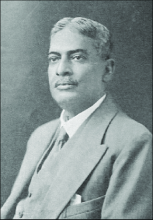
Indian scientist and physician Upendranath Brahmachari (19 December 1873–6 February 1946) is best known for creating a drug called Urea Stibamine, used to safely and reliably treat visceral leishmaniasis (or Kala-azar), a severe infection caused by the Leishmania parasite.
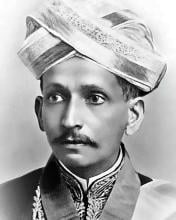
Sir Mokshagundam Srinivasa Shastry Vishveshwarayya (15 September 1860 – 14 April 1962) is widely regarded as India’s most outstanding engineer. In a career that spanned almost his entire life, Vishveshwarayya played a pivotal role in several engineering projects, including designing the Krishnarajasagara dam that is still the source of irrigation and drinking water for parts of Karnataka today.
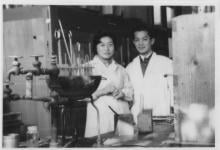
Tsuneko (7 June 1933) and Reiji Okazaki (8 October 1930 – 1 August 1975) were a Japanese couple who discovered Okazaki fragments – short sequences of DNA that are synthesized during DNA replication and linked together to form a continuous strand.