

People
News

27 Jun 2006
Asia Research News
18th June 2006 marked the beginning of a unique radio programme called 'Kishor Vani'- the voice of adolescents. 'Kishor Vani' is a weekly half an hour radio magazine being created entirely by a group of rural boys and girls between the age of 12-19 years.

21 Jun 2006
Universiti Malaysia Sarawak
The Old Kayan Religion and The Bungan Religious Reform, Mapping the People of Sarawak, Life In The Malay Kampongs Of Kuching, Fifty Years Ago, Changing Borders And Identities In The Kelabit Highlands, Voices Of The Crocker Range Indigenous Communities Sabah

20 Jun 2006
Universiti Sains Malaysia
This research aims to evaluate the effectiveness of the integration-inclusion programme offered by the Ministry of Education for students with learning difficulties (LD). The ultimate goal is to improve and provide quality education for children with special needs.

20 Jun 2006
Universiti Utara Malaysia (UUM)
Vacancies available for experienced (native-speaker) Foreign Language Teachers in English, Mandarin, Japanese, Spanish, German, Korean, Arabic, Thai, French and Dutch.

16 Jun 2006
Keio University
The Development of Film Policy in Canada and Japan- From Cultural to Economic, The Impact of Ownership on Human and Budget Allocation: A Study of Local Japanese Newspapers, One Journey Through, Across and Around Communication and many others

13 Jun 2006
International Islamic University Malaysia (IIUM)
Shares in the Modern Corporation : A Comparison Between Malaysian Companies Act 1965 and the Islamic Perspective; The Right of Return : Its Application to Palestinian Refugees; Genetics And Law : Protecting Genetic Privacy....
11 Jun 2006
Divan Enterprise (indianjournals.com)
Social sector spending in India includes poverty reduction interventions, expenditures in the fields of health, education and nutrition and social assistance and social welfare. Despite the fact that these programmes in India have a long history and are well established, it is particularly vulnerable to budget cuts for a number of reasons.
07 Jun 2006
Nature Publishing Group
Both the terrorist attacks of 11 September 2001 and the Indian Ocean tsunami of December 2004, left lasting scars on national psyches. But forensic tools developed because of these disasters could soon be put to use for a happier purpose: to help to reunite Jewish families shattered by the Holocaust
07 Jun 2006
Divan Enterprise (indianjournals.com)
IASSI Quarterly, an interdisciplinary social science journal, seeks to draw upon all social sciences in the application of available social knowledge to the solution of outstanding national and other problems

29 May 2006
International Center for Agricultural Research in the Dry Areas (ICARDA)
The International Center for Agricultural Research in the Dry Areas (ICARDA) is seeking a Personnel Manager
25 May 2006
Northern Illinois University
This is an international youth exchange project on inter-ethnic dialogue and conflict resolution for Muslim, Christian and indigenous cultures in the southern Philippines.
25 May 2006
Northern Illinois University
A capacity building institute and study tour for government, NGO, religious and women leaders from the Autonomous Region of Muslim Mindanao, funded by U.S. Department of State.
18 May 2006
International Center for Agricultural Research in the Dry Areas (ICARDA)
Dr Guido Gryseels, an agricultural economist and Director General of the Royal Museum for Central Africa, Tervuren, Belgium, takes over as the new Chair of ICARDA Board of Trustees.
13 May 2006
International Center for Agricultural Research in the Dry Areas (ICARDA)
The unsaturated zone records shows, compared with the ice core records, that a large-scale climate difference took place between mountain regions and the desert during the 20th century.
09 May 2006
International Center for Agricultural Research in the Dry Areas (ICARDA)
Dr Mahmoud Mohamed Bachir El-Solh assumed office on 8 May as the new Director General of ICARDA, taking over from Prof. Dr Adel El-Beltagy, who retired after serving as the Director General of the Center for more than 11 years.
04 May 2006
International Center for Agricultural Research in the Dry Areas (ICARDA)
The time is 33 B.C., and the place is China. The Western Han emperor, in order to secure a treaty with the Huns, sent one of his many wives, a beauty named Wang Chao-chun (also known as Ming Fei), to the Hun leader, Hu Han-yeh (r. 49-33 B.C.).
02 May 2006
International Center for Agricultural Research in the Dry Areas (ICARDA)
Land degradation (including desertification in drylands) is estimated to affect at least one-third of the 328 mha geographical area in India.
02 May 2006
International Center for Agricultural Research in the Dry Areas (ICARDA)
This study focuses on understanding the oasis desertification process over the last 2000 years, using multi-methods such as historical document, archaeology, remote sensing and GIS. The result shows that the human activities in Minqin Basin can be dated back to the Shajing Culture, a Neolithic culture at around 2600 years ago.
28 Apr 2006
International Islamic University Malaysia (IIUM)
Intellectual Discourse is an academic, refereed journal, published twice a year by the International Islamic University. The journal publishes analytical/theoretical articles, review articles, and research notes on all aspects of Islam and the Muslim World.
27 Apr 2006
Universiti Malaysia Sarawak
The design of buildings in this new campus, which is the focal point of the "Education Enclave” of Sarawak, depicts 21st century architecture, incorporating a timeless, modern and progressive outlook.
24 Apr 2006
International Center for Agricultural Research in the Dry Areas (ICARDA)
Aeolian desertification is land degradation characterized by wind erosion mainly resulting from the excessive human activities in arid, semiarid and part of sub-humid regions in North China. The research on aeolian desertification has been underway for more than 5 decades leading to the establishment and development of China’s desert science.
24 Apr 2006
International Center for Agricultural Research in the Dry Areas (ICARDA)
Since 1993 FEDA has worked in Rosetta (coastal area), Wadi Natroun (desert area) and Gamalia district (historic part of Cairo). These fragile ecosystems are well known for their cultural heritage. Both Gamalia and Rosetta have some of the most important Islamic monuments, while Wadi Natroun is known for its famous Coptic Christian monasteries.
24 Apr 2006
International Center for Agricultural Research in the Dry Areas (ICARDA)
Nearly 50% of the arid regions globally, including one-quarter of the irrigated land, one-half of the rainfed cropland and three-quarters of the rangeland, are estimated to be degraded. Unless this trend is checked, the food security of the people in the dry areas will continue to be under threat.
20 Apr 2006
International Center for Agricultural Research in the Dry Areas (ICARDA)
Soil & water conservation & degradation; Dust-storm process; Range management; Forage & livestock production; Biodiversity & Ethnobotany; Stress physiology; Renewable energy; Indigenous/traditional knowledge & heritage; Sustainable development of oasis; desert communities & socioeconomic studies; & role of NGO’s; Application of new...
17 Apr 2006
Keio University
The Center follows the university’s overall research policy as authorized by the Organization for Research Advancement and Administration (ORAA). It also acts as a primary point of contact for any inquires concerning future industry-government-academia collaboration with Keio University.
28 Mar 2006
University of the Philippines Jorge B. Vargas Museum & Filipiniana Research Center
Filipinas is a series of thirty photographs of a select group of women representing the arts, education, civil society and politics.
24 Mar 2006
Journal of Research Practice (JRP)
Volume 2, Issue 1, 2006 (Open Access) - Immaculateness and Research Practice; Auto-Photography as Research Practice: Identity and Self-Esteem Research; Being Bilingual: Issues for Cross-Language Research and many more
24 Mar 2006
Keio University
The latest projects at KIEAS are Globalism, Regionalism and Localism in Asia, Influences of America’s Judicial Review in Asia, One Hundred Year since the Russo-Japanese War and Political Order in Southeast Asia; The Fukuzawa Center is a research institute to study modern Japanese history placing Yukichi Fukuzawa or Keio Gijuku in the eyesight.
16 Mar 2006
International Development Research Centre (IDRC)
The BAIF Development Research Foundation, in partnership with IDRC and nine Indian nongovernmental organizations, and with the financial support of the Canadian International Development Agency, has been exploring women's empowerment processes through a five-year, multi-institution, multi-state initiative, the Swayamsiddha project.

06 Mar 2006
De La Salle University
Government agencies involved in poverty alleviation efforts can use the findings of this study as a take-off point in setting-up microfinance projects which will enhance the earning capabilities of women in poor communities
Researchers
Sorry, no researchers coming up for this topic.
- « first
- ‹ previous
- 1
- 2
- 3
Giants in history
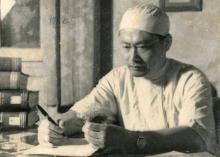
Vietnamese surgeon Tôn Thất Tùng (10 May 1912 – 7 May 1982) developed a pioneering technique that reduced the risks and mortality rate of liver operations.
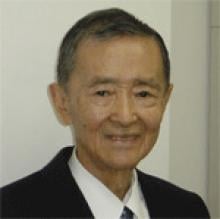
Michiaki Takahashi (17 February 1928 – 16 December 2013) was a Japanese virologist who developed the first chickenpox vaccine.

Maggie Lim (5 January 1913 – November 1995) was a Singaporean physician who promoted family planning and expanded the access to clinics to improve the quality of life for mothers and children in Singapore’s early days.
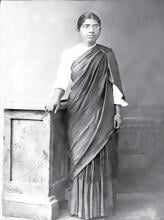
The founder of the Adyar Cancer Institute in India, Muthulakshmi Reddy (30 July 1886 – 22 July 1968), fought to uplift women and girls from impoverished situations.

Through her iconic stories featuring fictional scenes from the history of the Philippines, language teacher and academic Genoveva Matute (3 January 1915 – 21 March 2009) helped strengthen the Filipino identity.
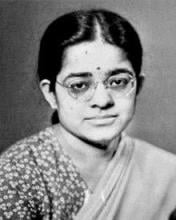
Rajeshwari Chatterjee (24 January 1922 – 3 September 2010) was the first female engineer from Karnataka in India.
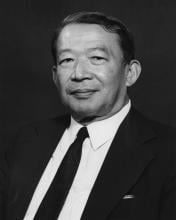
U Hla Myint (1920 – 2017) was a celebrated economist from Myanmar. Considered a prodigy, he was admitted to Rangoon University to study economics when he was just 14 years old. He went on to earn a Ph.D. at the London School of Economics (LSE).
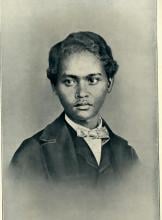
Little is known about Ali, a teenager from Sarawak, Malaysia, who was chief assistant to the famous naturalist Alfred Wallace. Most of what is known comes from Wallace’s writings. Ali accompanied Wallace on expeditions throughout the Malay Archipelago from December 1855 to February 1862.
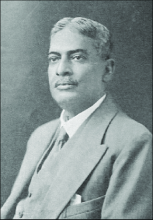
Indian scientist and physician Upendranath Brahmachari (19 December 1873–6 February 1946) is best known for creating a drug called Urea Stibamine, used to safely and reliably treat visceral leishmaniasis (or Kala-azar), a severe infection caused by the Leishmania parasite.
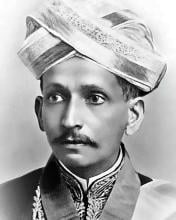
Sir Mokshagundam Srinivasa Shastry Vishveshwarayya (15 September 1860 – 14 April 1962) is widely regarded as India’s most outstanding engineer. In a career that spanned almost his entire life, Vishveshwarayya played a pivotal role in several engineering projects, including designing the Krishnarajasagara dam that is still the source of irrigation and drinking water for parts of Karnataka today.
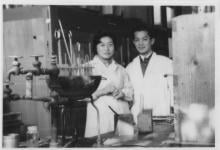
Tsuneko (7 June 1933) and Reiji Okazaki (8 October 1930 – 1 August 1975) were a Japanese couple who discovered Okazaki fragments – short sequences of DNA that are synthesized during DNA replication and linked together to form a continuous strand.