

People
News
18 Jun 2007
International Development Research Centre (IDRC)
Have you ever heard of a town where the public phone booth was installed before people received water to their houses? This is the true story of the suffering from severe water shortage of the people of the Lebanese village of Tannoura in Rashaya Caza.
18 Jun 2007
International Development Research Centre (IDRC)
For IDRC, sharing the results of its research is a corporate imperative as much as a programming choice. Through this two-CD set, we extend the reach of our research programs and publications, including to regions of the world with low, unreliable, or nonexistent Internet access. Free copies available to order.
18 Jun 2007
International Development Research Centre (IDRC)
This book presents conceptual and methodological issues related to the use of participatory development communication to facilitate participation amongst stakeholders in a variety of natural resource management initiatives. Each chapter presents in-depth experiences from Asia and Africa.
18 Jun 2007
International Development Research Centre (IDRC)
Political, economic, and social change can allow research to inform change. IDRC shares its experience in eight countries - Algeria, Burma, Cambodia, Kenya, South Africa, the Southern Cone, Vietnam, and the West Bank and Gaza.

13 Jun 2007
Universiti Utara Malaysia (UUM)
Japanese learners of English have suffered from an inability to become competent communicators despite their large vocabulary and good grammar. This paper details an approach used to overcome this. The 2nd paper is on a project which puts into practice the principles underlying vocabulary learning.
13 Jun 2007
UNDP Asia-Pacific Development Information Programme
ICT is used in almost all phases of the disaster management process. In the disaster mitigation and preparedness process, ICT is widely used to create early warning systems. This APDIP publication gives examples of its use in disaster management.
13 Jun 2007
UNDP Asia-Pacific Development Information Programme
This publication, with a foreword by Executive Director of UNIFEM, Noeleen Heyzer, looks at information and communications technology (ICT) for development through a gender lens and discusses ICT within a gender equality framework.

06 Jun 2007
Gulf Research Center
This is a book that provides a detailed account of the Islamic Resistance Movement in Palestine -- better known as Hamas -- from a Hamas perspective.

06 Jun 2007
Universiti Sains Malaysia
Penang, Malaysia - Muslim countries have been urged to increase cooperation and research links, particularly in improving the management quality of hajj.
06 Jun 2007
Universiti Teknologi MARA (UiTM)
Minangkabau, West Indonesia - UiTM (University Technology MARA, Malaysia) and Universitas Andalas, Padang, West Sumatera, have signed a memorandum of understanding (MOU) that outlines plans for cooperation on a various areas.
01 Jun 2007
International Development Research Centre (IDRC)
The program is aimed at candidates who, have shown interest in the creation and utilization of knowledge from an international perspective. Candidates can be Canadians, permanent residents, or citizens of developing countries, who are either currently registered in a Master's Program or have completed a Master's Degree.
01 Jun 2007
International Development Research Centre (IDRC)
The research must be located in a disadvantaged region in one of the following four RPE priority regions: the Sahel Belt of West Africa; the Nile Basin; South Asia; the Mekong Delta; or the Philippines. The deadline is Friday June 29, 2007
27 May 2007
Universiti Utara Malaysia (UUM)
The ‘localization’ of the English language has caused fear among educators and professionals especially the native speakers that English has turned into a corrupt language. This paper highlights the nature of local variations in Malaysian English

23 May 2007
Keio University
This study explores how community radio plays a role in revitalizing local communities in Japan.

22 May 2007
Universiti Putra Malaysia (UPM)
An accounting educational computer-based learning courseware, GenerReS was developed as an innovative pedagogical tool for financial accounting.

21 May 2007
International University of Business Agriculture and Technology
John Richards, IUBAT overseas faculty member, led a roundtable on the problems of school quality in Bangladesh. The roundtable was organized to release the latest monograph of the IUBAT Centre for Policy Research. The monograph title is “What Parents Think of their Children’s Schools”.
21 May 2007
International Development Research Centre (IDRC)
Book Review - The Palestinian refugee issue remains a central component of the Arab-Israeli conflict. This timely book, brings together the most cutting-edge research from various disciplines and explores the demographic and developmental challenges that the return of refugees to a future Palestinian state would generate.
16 May 2007
Universiti Utara Malaysia (UUM)
This paper suggests code mixing as a strategy to improve English speaking skills while the 2nd paper attempts to understand the writer-reader relationship in academic writing and the 3rd paper examines effective communication through e-learning.

11 May 2007
University of the Philippines Diliman
The publication “Finding the Missing Women: Trade Issues from a Gender Perspective” tackles the effects of trade liberalization and promotes gender perspective in its analysis in order to recognize the roles and needs of women in the industry.
06 May 2007
Universiti Utara Malaysia (UUM)
The 1st paper suggests new literatures in English from many Asian countries can sensitise students towards other cultures and should be included in English textbooks. The 2nd paper asseses the attitudes of Singaporean students towards “Singlish” and the relationship between language and national identity, an issue facing Singaporean society.

04 May 2007
International Institute for Environment and Development (IIED)
The International Institute for Environment and Development has published a short guide to ways forestry can contribute to poverty reduction and sustainable development.

02 May 2007
The World Academy of Sciences (TWAS)
Trieste, Italy, 26 April 2007. An eminent Mexican biologist, whose research helped to spur the creation of the first genetically modified plants, and an internationally renowned Indian chemist, whose innovative laboratory techniques have led to the synthesis of more than 50 natural products, have been awarded the Trieste Science Prize for 2007.
30 Apr 2007
The World Academy of Sciences (TWAS)
The G8, a network of the world's largest industrialized countries, and the United Nations Educational, Cultural and Scientific Organization (UNESCO) will hold a World Forum on Education, Research and Innovation in Trieste, Italy, 10-12 May.
27 Apr 2007
Gulf Research Center
It is well understood in Japan, like in most parts of economically-resurgent Asia, that the oil market would increasingly become a sellers' market. As a major oil consumer, Tokyo realizes the importance of maintaining a tangible presence in the Middle East.
27 Apr 2007
Universiti Utara Malaysia (UUM)
Teaching of English to students in the tourism industry, results of an experiment using suggestive symbols to improve native Thai student's pronunciation of English and what local learners of English perceive as a useful learning tool?
26 Apr 2007
International Development Research Centre (IDRC)
The IDRC Digital Library provides full access over the Internet to IDRC’s rich research archive. In addition to making information more freely available, this initiative provides IDRC-funded researchers with a much-needed outlet to publish and showcase their work.
22 Apr 2007
Keio University
Winter Sonata is the highly-popular South Korean television series. The super hit program paved the way for hanryu, the craze for South Korean popular culture. This study analyses how this phenomenon has affected Zainichi Koreans in Japan
22 Apr 2007
International Development Research Centre (IDRC)
Saraswati Adhikari has reason to be proud: 16 times the Nepali farmer and her husband Surya Nath have successfully improved local varieties of rice by cross-breeding, in the process helping to conserve agricultural biodiversity.
18 Apr 2007
Nature Publishing Group
In the week of the first round of France’s presidential elections, Nature takes a unique look at what the incoming president will mean for French research.
Researchers
Sorry, no researchers coming up for this topic.
- « first
- ‹ previous
- 1
- 2
- 3
Giants in history
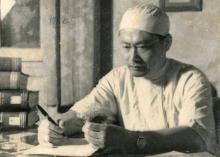
Vietnamese surgeon Tôn Thất Tùng (10 May 1912 – 7 May 1982) developed a pioneering technique that reduced the risks and mortality rate of liver operations.
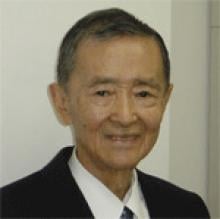
Michiaki Takahashi (17 February 1928 – 16 December 2013) was a Japanese virologist who developed the first chickenpox vaccine.

Maggie Lim (5 January 1913 – November 1995) was a Singaporean physician who promoted family planning and expanded the access to clinics to improve the quality of life for mothers and children in Singapore’s early days.
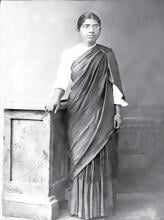
The founder of the Adyar Cancer Institute in India, Muthulakshmi Reddy (30 July 1886 – 22 July 1968), fought to uplift women and girls from impoverished situations.
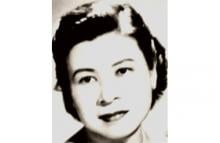
Through her iconic stories featuring fictional scenes from the history of the Philippines, language teacher and academic Genoveva Matute (3 January 1915 – 21 March 2009) helped strengthen the Filipino identity.
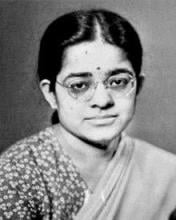
Rajeshwari Chatterjee (24 January 1922 – 3 September 2010) was the first female engineer from Karnataka in India.
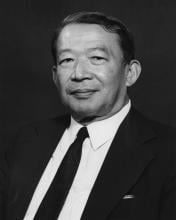
U Hla Myint (1920 – 2017) was a celebrated economist from Myanmar. Considered a prodigy, he was admitted to Rangoon University to study economics when he was just 14 years old. He went on to earn a Ph.D. at the London School of Economics (LSE).
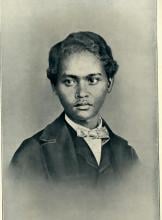
Little is known about Ali, a teenager from Sarawak, Malaysia, who was chief assistant to the famous naturalist Alfred Wallace. Most of what is known comes from Wallace’s writings. Ali accompanied Wallace on expeditions throughout the Malay Archipelago from December 1855 to February 1862.
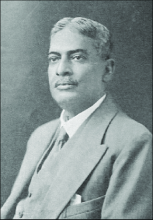
Indian scientist and physician Upendranath Brahmachari (19 December 1873–6 February 1946) is best known for creating a drug called Urea Stibamine, used to safely and reliably treat visceral leishmaniasis (or Kala-azar), a severe infection caused by the Leishmania parasite.
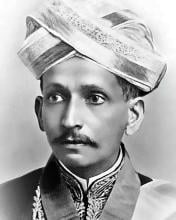
Sir Mokshagundam Srinivasa Shastry Vishveshwarayya (15 September 1860 – 14 April 1962) is widely regarded as India’s most outstanding engineer. In a career that spanned almost his entire life, Vishveshwarayya played a pivotal role in several engineering projects, including designing the Krishnarajasagara dam that is still the source of irrigation and drinking water for parts of Karnataka today.
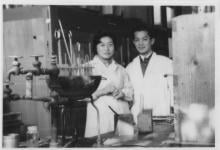
Tsuneko (7 June 1933) and Reiji Okazaki (8 October 1930 – 1 August 1975) were a Japanese couple who discovered Okazaki fragments – short sequences of DNA that are synthesized during DNA replication and linked together to form a continuous strand.