

People
News
14 Feb 2008
International Development Research Centre (IDRC)
IDRC is partnering with the UK’s One World Trust to strengthen the accountability of research institutes.

05 Feb 2008
Keio University
Interview with Masamichi Toyama, artist and Chairman of Smiles Co., Ltd, the first example of entrepreneurship within Mitsubishi. He established Soup Stock Tokyo, while on loan to KFC. Soup Stock Tokyo is a new high quality fast food culture for mainly young women in Tokyo which operates from more than 40 outlets.

01 Feb 2008
Asia Research News
The Indonesian Association for Media Development (Perhimpunan Pengembangan Media Nusantara-PPMN) is
seeking experienced investigative journalists to conduct an investigative journalism training program on
environmental issues in Jakarta from 21 - 25 April 2008.
31 Jan 2008
International Development Research Centre (IDRC)
Singapore – Researchers and policymakers will meet on February 13-15, 2008 at the Grand Mirage Resort in Nusa Dua, Bali, Indonesia to review the impacts of climate change in Southeast Asia and China and discuss what is being—and could be — done to respond.
25 Jan 2008
International Development Research Centre (IDRC)
The next (Economic and Environment Program for Southeast Asia) EEPSEA workshop will be held from May 4 to 7, 2008. The deadline for new proposals to be considered for the workshop is February 1, 2008.
25 Jan 2008
International Development Research Centre (IDRC)
“On the heels of avian influenza, the medical community has realized that, if you want to deal with emerging diseases, 75% of which come from animals, you have to deal with the animal side of the equation.”
25 Jan 2008
International Development Research Centre (IDRC)
New capacity and fresh insights are among the goals of the Teasdale-Corti global health program that aims to expand the influence of research over a wide range of health issues.
20 Jan 2008
International Development Research Centre (IDRC)
Asia has been experiencing “an extraordinarily rapid transformation,” observes Stephen McGurk. As IDRC’s New Delhi-based Regional Director for South Asia and China, McGurk has seen in the cityscape around him reflections of both positive and negative aspects of this transformative growth.
18 Jan 2008
International Development Research Centre (IDRC)
Urban areas of Indonesia generate about 55,000 tons of solid waste every day. Only about 50 to 60 percent of the waste is collected, and landfill sites are mostly open dumps. The IDRC-backed initiatives are looking at new ways of managing solid waste in slums, through innovative collection, separation, and disposal mechanisms.
15 Jan 2008
Keio University
Keio University (President: Yuichiro Anzai), Kyoto University (President: Kazuo Oike), the University of Tokyo (President: Hiroshi Komiyama), and Waseda University (President: Katsuhiko Shirai) have signed an agreement for inter-university student exchange in graduate school education.

14 Jan 2008
The Hong Kong Polytechnic University (PolyU)
The last of a series of seven surveys of residents’ opinions towards Hong Kong Disneyland conducted by the School of Hotel and Tourism Management (SHTM) of The Hong Kong Polytechnic University (PolyU) found that residents’ opinions towards the Disney theme park were still mixed, shifting more to the negative.

11 Jan 2008
The Asian Institute of Technology
Local governments should start taking action now and begin implementing climate change adaptation and mitigation policies to cushion the impact of climate change, Dr. Rajendra Pachauri, Chair of the UN Intergovernmental Panel on Climate Change (IPCC) said during a video-conference held on November 2, 2007 at the Asian Institute of Technology (AIT).
02 Jan 2008
International Development Research Centre (IDRC)
ICTs are powerful tools for reducing poverty, for combating HIV/AIDS, and for promoting good governance. At the Third Global Knowledge Forum (GK3) held recently in Kuala Lumpur, Canada’s International Development Research Centre (IDRC) and its research partners showcased some of the innovative ways in which ICTs can foster human development.

11 Dec 2007
University of the Philippines Diliman
The Office of the Vice Chancellor for Research and Development, University of the Philippines Diliman is now accepting papers for publication in the Social Science Diliman journal.
11 Dec 2007
University of the Philippines Diliman
The Office of the Vice Chancellor for Research and Development, University of the Philippines Diliman is now accepting papers for publication in the Humanities Diliman journal.
10 Dec 2007
International Development Research Centre (IDRC)
Ottawa, Canada, December 10, 2007 – Recognizing the serious consequences of climate change for development, the International Development Research Centre (IDRC) is helping developing countries adapt by supporting research and strengthening local institutions so they can better prepare for an uncertain future.
06 Dec 2007
International Development Research Centre (IDRC)
Richard Fuchs believes that people who want to understand how the world is changing should look to the wave of transformation that is sweeping across Asia.
06 Dec 2007
International Development Research Centre (IDRC)
The International Development Research Centre (IDRC) and the Canada Research Chairs Program are launching an initiative to pair leading researchers from universities in Canada with those in developing countries to collaborate on issues of mutual concern.

04 Dec 2007
International Rice Research Institute
The work of rice researchers has received major encouragement as 2007 comes to a close, with staff at the International Rice Research Institute (IRRI) and their colleagues receiving widespread recognition and several major awards.
02 Dec 2007
International Development Research Centre (IDRC)
This is the first of a series of nine papers exploring the state of the science and practice of compensation and rewards for environmental services in the developing world.

22 Nov 2007
The World Academy of Sciences (TWAS)
TWAS, the academy of sciences for the developing world, is seeking nominations for the 2008 Trieste Science Prize scheme, aimed at honouring scientists living and working in developing countries. The closing date for nominations is 31 January 2008.

15 Nov 2007
Gulf Research Center
Though the President is attempting to brave the storm, his position is much weakened as he takes hurried measures to redress the prevailing situation. He has refused to give a date for lifting the state of emergency and said it might continue even beyond the elections because of the situation on the terrorism front.
15 Nov 2007
The World Academy of Sciences (TWAS)
TWAS has announced the winners of the TWAS Prizes for 2007. Each winner will receive a US$10,000 cheque and be invited to lecture about his or her research at the Academy’s Silver Jubilee anniversary celebration scheduled to take place in Mexico City from 11 to 13 November 2008.
15 Nov 2007
The World Academy of Sciences (TWAS)
TWAS awarded its first-ever Regional Prizes for Public Understanding of Science. Each prize carries a US$3,000 cash award. It is given to individuals who have made outstanding contributions to improving public understanding and appreciation of science.
15 Nov 2007
The World Academy of Sciences (TWAS)
TWAS, the Academy of Sciences for the Developing World, has announced the election of 45 new members. The election took place at the Academy’s 18th General Meeting, held in Trieste, Italy on 13 November.

14 Nov 2007
Nature Publishing Group
The political impact of climate change in Australia and the United States is the focus of a collection of News Features in Nature this week.
14 Nov 2007
International Development Research Centre (IDRC)
As states encroach on Internet governance around the world, IDRC is supporting a major new initiative that will investigate the impacts of Internet censorship in Asia.
14 Nov 2007
International Development Research Centre (IDRC)
IDRC was one of the earliest development agencies to embrace information and communication technologies (ICTs) as powerful tools for reducing poverty, for combating HIV/AIDS, and for fostering good governance.
08 Nov 2007
University of the Philippines Jorge B. Vargas Museum & Filipiniana Research Center
The University of the Philippines Asian Center in collaboration with The UP Vargas Museum, The Japan Foundation, National Commission for Culture and the Arts, and Filipino-Japanese Foundation of Northern Luzon, Inc. cordially invites you to the Philippine nikkeijin 2007
30 Oct 2007
International Development Research Centre (IDRC)
Most developing countries will not reach the MDG target on hunger and poverty, let alone those focusing on education, health, and human rights. According to World Bank projections, by 2015 700 million people worldwide will remain poor — many of them extremely poor — and 600 million will go hungry.
Researchers
Sorry, no researchers coming up for this topic.
- « first
- ‹ previous
- 1
- 2
- 3
Giants in history
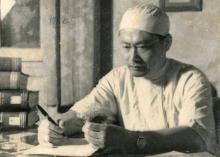
Vietnamese surgeon Tôn Thất Tùng (10 May 1912 – 7 May 1982) developed a pioneering technique that reduced the risks and mortality rate of liver operations.
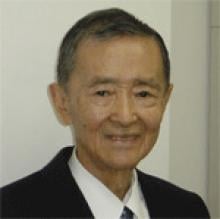
Michiaki Takahashi (17 February 1928 – 16 December 2013) was a Japanese virologist who developed the first chickenpox vaccine.

Maggie Lim (5 January 1913 – November 1995) was a Singaporean physician who promoted family planning and expanded the access to clinics to improve the quality of life for mothers and children in Singapore’s early days.
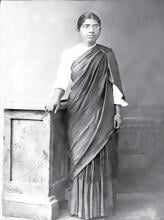
The founder of the Adyar Cancer Institute in India, Muthulakshmi Reddy (30 July 1886 – 22 July 1968), fought to uplift women and girls from impoverished situations.

Through her iconic stories featuring fictional scenes from the history of the Philippines, language teacher and academic Genoveva Matute (3 January 1915 – 21 March 2009) helped strengthen the Filipino identity.
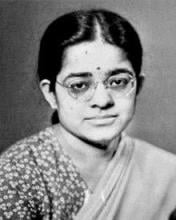
Rajeshwari Chatterjee (24 January 1922 – 3 September 2010) was the first female engineer from Karnataka in India.
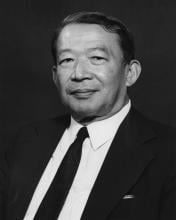
U Hla Myint (1920 – 2017) was a celebrated economist from Myanmar. Considered a prodigy, he was admitted to Rangoon University to study economics when he was just 14 years old. He went on to earn a Ph.D. at the London School of Economics (LSE).
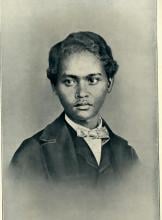
Little is known about Ali, a teenager from Sarawak, Malaysia, who was chief assistant to the famous naturalist Alfred Wallace. Most of what is known comes from Wallace’s writings. Ali accompanied Wallace on expeditions throughout the Malay Archipelago from December 1855 to February 1862.
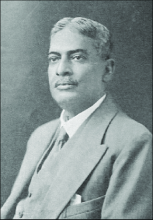
Indian scientist and physician Upendranath Brahmachari (19 December 1873–6 February 1946) is best known for creating a drug called Urea Stibamine, used to safely and reliably treat visceral leishmaniasis (or Kala-azar), a severe infection caused by the Leishmania parasite.
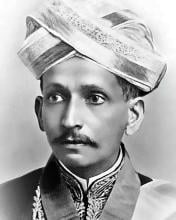
Sir Mokshagundam Srinivasa Shastry Vishveshwarayya (15 September 1860 – 14 April 1962) is widely regarded as India’s most outstanding engineer. In a career that spanned almost his entire life, Vishveshwarayya played a pivotal role in several engineering projects, including designing the Krishnarajasagara dam that is still the source of irrigation and drinking water for parts of Karnataka today.
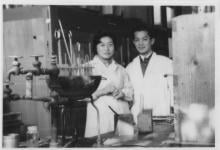
Tsuneko (7 June 1933) and Reiji Okazaki (8 October 1930 – 1 August 1975) were a Japanese couple who discovered Okazaki fragments – short sequences of DNA that are synthesized during DNA replication and linked together to form a continuous strand.