

People
News

18 Sep 2005
Population Council
A program providing reproductive health education and livelihoods skills training to adolescent girls in India, has shown that such interventions are acceptable to parents, feasible to implement, and exert some positive influence on the girls.
18 Sep 2005
Sustainable Development Policy Institute (SDPI)
The essay looks at the proliferation of bilateral and minilateral preferential trading agreements from the perspective of the developing countries. The changes may not necessarily be good for the developing countries.
14 Sep 2005
Population Council
Population Council researchers recently completed studies in Pakistan and Nepal of attitudes and behaviors surrounding violence against women during pregnancy. These investigations were some of the first of their kind in South Asia.
14 Sep 2005
Sustainable Development Policy Institute (SDPI)
In the present times, the question for us in the global South is: “Do we have choices?” If we do, how can we best exercise them in the age of extremes ushered in by globalization, by globalized wars, and symbolized by the events of 9/11.

14 Sep 2005
Asia Research News
5th Annual Conference of the South East Asian Association for Institutional Research (SEAAIR)
11 Sep 2005
Sustainable Development Policy Institute (SDPI)
Scarcity of food can be a potential source of conflicts and incidence of socio-economic and political instability. There is a close nexus among food insecurity, poverty and disease.
07 Sep 2005
Sustainable Development Policy Institute (SDPI)
This paper examines the post 9/11 US-led global war on terror and its unaccounted impacts on ordinary people’s lives, especially women’s, in the tribal areas of Pakistan.

07 Sep 2005
International University of Business Agriculture and Technology
The cyclone which struck Bangladesh on the night of 29-30, April, 1991 was particularly severe causing widespread damage, killing 138,882 people.Total loss has been estimated at US$2.07 billion dollars for all sectors.

07 Sep 2005
Keio University
The Sasagawa Project is the first systematized deinstitutionalization project in Japan that aims to make the transition from hospital to residential living while ensuring both the quality and continuity of care for the patients.
24 Aug 2005
Sustainable Development Policy Institute (SDPI)
The first volume examines issues of the natural environment and its impact upon human life. The second volume addresses trade and sustainable development, globalization and the WTO in the context of people’s livelihoods, and governance issues.
24 Aug 2005
Sustainable Development Policy Institute (SDPI)
Wages are low, the hours long irregular, and the work repetitive and often hazardous. There is a concentration of women and children, particularly girls, in the work force.
16 Aug 2005
Sustainable Development Policy Institute (SDPI)
This study finds that household income, child’s age, premature births, and average number of births turn out to be significant predictors of child survival in Pakistan.
16 Aug 2005
Sustainable Development Policy Institute (SDPI)
Conventional methods of health care financing through tax revenues have failed to meet the health care needs of all, resulting in differential access to health care facilities by different income groups.
14 Aug 2005
NIAS -- Nordic Institute of Asian Studies
The objective of the book is to look into the causal relationships between poverty and lack of democracy on the one hand, and terrorism on the other.
12 Aug 2005
NIAS -- Nordic Institute of Asian Studies
The focus is on Asian security issues and opportunities for the European Union to enhance its role as an actor in relation to Asian security. The potential role of Denmark in this respect is also touched upon.
11 Aug 2005
NIAS -- Nordic Institute of Asian Studies
This book has two objectives:
1. It analyses the sources and catalysts of violence in relations between the Muslim world and the West. (Part II).
2. It offers strategic perspectives for reducing Islamic-West inter-civilizational violence. (Part III)
08 Aug 2005
The Gawad LIDER shall have two categories: the Exemplary Leadership Award and the Innovation Award.
02 Aug 2005
Sustainable Development Policy Institute (SDPI)
Dioxin levels in chicken eggs from Peshawar was almost 3-times higher than the background levels and levels of DDT was more than four and a half times higher than the EU limit

29 Jul 2005
University of the Philippines Diliman
The Philippine Association for Home Economics in State Colleges and Universities (PAHESCU) Journal is now accepting articles/research papers for its April 2006 publications.
28 Jul 2005
Society of Environmental Journalists-Nepal(SEJ-Nepal)
The Society of Environmental Journalists-Nepal (SEJ-Nepal) would like to collaborate with international partners on media awareness training.
27 Jul 2005
Sustainable Development Policy Institute (SDPI)
Abstracts followed by papers are invited for the sub-themes under the major themes of Women's/Gender Issues; Livelihoods; WTO and Governance; Health; Peace and People's Rights; Child labor.
21 Jul 2005
International University of Business Agriculture and Technology
The low-lying coastal areas are particularly vulnerable, thus placing these population, infrastructure, agriculture, livestock and economic development in a high-risk situation.

18 Jul 2005
De La Salle University
The theories and practices of capitalism in different places and periods produced various theories and practices of welfare which have implications for the understanding and practice of compassion/apathy and solidarities/alienations and capitalism
13 Jun 2005
Keio University
Keio Research Institute at SFC
13 Jun 2005
Keio University
Global security research on current issues
13 Jun 2005
Keio University
Keio Economic Observatory
Researchers
Sorry, no researchers coming up for this topic.
- « first
- ‹ previous
- 1
- 2
- 3
Giants in history

Vietnamese surgeon Tôn Thất Tùng (10 May 1912 – 7 May 1982) developed a pioneering technique that reduced the risks and mortality rate of liver operations.

Michiaki Takahashi (17 February 1928 – 16 December 2013) was a Japanese virologist who developed the first chickenpox vaccine.

Maggie Lim (5 January 1913 – November 1995) was a Singaporean physician who promoted family planning and expanded the access to clinics to improve the quality of life for mothers and children in Singapore’s early days.

The founder of the Adyar Cancer Institute in India, Muthulakshmi Reddy (30 July 1886 – 22 July 1968), fought to uplift women and girls from impoverished situations.

Through her iconic stories featuring fictional scenes from the history of the Philippines, language teacher and academic Genoveva Matute (3 January 1915 – 21 March 2009) helped strengthen the Filipino identity.

Rajeshwari Chatterjee (24 January 1922 – 3 September 2010) was the first female engineer from Karnataka in India.

U Hla Myint (1920 – 2017) was a celebrated economist from Myanmar. Considered a prodigy, he was admitted to Rangoon University to study economics when he was just 14 years old. He went on to earn a Ph.D. at the London School of Economics (LSE).

Little is known about Ali, a teenager from Sarawak, Malaysia, who was chief assistant to the famous naturalist Alfred Wallace. Most of what is known comes from Wallace’s writings. Ali accompanied Wallace on expeditions throughout the Malay Archipelago from December 1855 to February 1862.
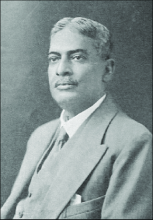
Indian scientist and physician Upendranath Brahmachari (19 December 1873–6 February 1946) is best known for creating a drug called Urea Stibamine, used to safely and reliably treat visceral leishmaniasis (or Kala-azar), a severe infection caused by the Leishmania parasite.

Sir Mokshagundam Srinivasa Shastry Vishveshwarayya (15 September 1860 – 14 April 1962) is widely regarded as India’s most outstanding engineer. In a career that spanned almost his entire life, Vishveshwarayya played a pivotal role in several engineering projects, including designing the Krishnarajasagara dam that is still the source of irrigation and drinking water for parts of Karnataka today.
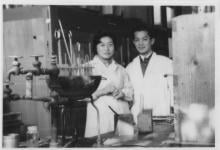
Tsuneko (7 June 1933) and Reiji Okazaki (8 October 1930 – 1 August 1975) were a Japanese couple who discovered Okazaki fragments – short sequences of DNA that are synthesized during DNA replication and linked together to form a continuous strand.