

People
News

10 Dec 2006
International Institute for Environment and Development (IIED)
Mary Robinson, a former President of Ireland and United Nations High Commissioner for Human Rights, will call today for policymakers to adopt an approach to climate change that is rooted in the international human rights framework.

10 Dec 2006
Gulf Research Center
The signing of the border agreement between Yemen and Saudi Arabia, in Jeddah, in June 2000, was considered by many to be a milestone in Saudi-Yemen relations, raising expectations on both sides about finally settling territorial disputes and improving security cooperation.
28 Nov 2006
International Institute for Environment and Development (IIED)
A pioneering international alliance that aims to ensure that poor people in Africa and Asia get a greater share of the benefits from local forests will hold its first full meeting in Uganda next week.
26 Nov 2006
IPCRI - Israel/Palestine Center for Research and Information
On November 19-23, 2006 270 Israelis, Palestinians and international participants from some 20 countries participated in an International Conference on Education for Peace and Democracy held in Antalya, Turkey. The conference was organized by IPCRI - the Israel/Palestine Center for Research and Information.
26 Nov 2006
Gulf Research Center
This article tries to shed some light on the possible collaboration between organized criminal groups dealing with drugs, and terrorists, and thereby seeks to explore the linkages between the two global wars – the war on terrorism and the war on drugs.

20 Nov 2006
Wellcome Trust
As the Shoklo Malaria Research Unit in Mae Sot, Thailand, celebrates its twentieth anniversary, Prof Francois Nosten reflects on the success of the unit, based amongst the region's refugee camps.
15 Nov 2006
NAM S&T Centre
Around 60 percent of the world population reside in this Asia Pacific region, where 50 percent of the world’s disaster was recorded during past past two decades. This publication aims at identifying areas of mitigating flood, cyclone and storm surge disaster.
15 Nov 2006
Gulf Research Center
The current lack of sustained engagement with Iran harms US interests in a critical region of the world...Direct dialogue with Tehran on specific areas of mutual concern should be pursued.

12 Nov 2006
Universiti Sains Malaysia
The lack of success in learning English among pupils in rural schools has contributed much to the rural-urban divide in Malaysia.
08 Nov 2006
NAM S&T Centre
The social and economic development of a country is closely linked with the understanding and application of science and technology by its people. Science centres and museums play a vital role in communicating basic scientific information to the people and help them make informed choices.

07 Nov 2006
International University of Business Agriculture and Technology
IUBAT practices a seed-model of KBAD providing repayable loans to students enabling them to break out of poverty trap which if extended in wider scale in any society, could lead to community self reliance.
06 Nov 2006
Asia Research News
The Environment is a major concern in many Asian countries. ResearchSEA is launching Focus on The Environment to highlight the experts and research related to the Environment.
03 Nov 2006
Nature Publishing Group
More than one hundred Nobel laureates have written to Colonel Muammar al-Gaddafi to express their concern over the death-penalty case of 5 Bulgarian nurses, and a Palestinian doctor, accused of deliberately infecting more than 400 children with HIV in 1998.

02 Nov 2006
Universiti Malaysia Sarawak
The eBario project wins gold medal at Commonwealth Innovation Award. The research project uses innovative application of ICTs with the goal of continually sustaining social and economic programs in a rural community in Sarawak which does not have the basic amenities such as electricity, water and telecommunications.
01 Nov 2006
Tokyo University of Science
Tokyo University of Science (Chairperson, Board of Governors - Takeyo Tsukamoto) was awarded an AA- rating by the reputed American credit ratings company 'Standard and Poors'. AA- is fourth from top in long-term credit rating rankings. The outlook on this rating is stable.
01 Nov 2006
Tokyo University of Science
The Tokyo University of Science entered into Agreement of Cooperation with the University of California, Santa Cruz, USA, on September 1, 2006.
01 Nov 2006
Tokyo University of Science
The discussion focused on math and science teachers for primary and secondary education. The U.S. is facing problems due to the declining quality of teachers. This visit was to help find measures to improve the situation by discussing with professors who educate math and science teachers in the Japanese education system.
30 Oct 2006
Studies in Islam and the Middle East
Many meaningful milestones in the human history were in the form of existentialist struggles marked by violence and wars. Civilizations are built with the blood of warriors and the sweat of the laborers. History shows us that before stability is attained, countless innocent lives are lost and personal and public properties are destroyed.
29 Oct 2006
Gulf Research Center
It took three years for the US to seriously consider alternate plans when their main plank fell apart. In planning an alternate approach now, can the US be sure that it has a workable plan or will it wait for another three years to decide if there is yet another way out of the likely mess?
22 Oct 2006
Gulf Research Center
More important than the elections is establishing an electoral culture, and this cannot be fulfilled through spectators. It has to be achieved through actual participation, not necessarily in the highest public domain; it could start at the level of local or municipal councils
18 Oct 2006
Nature Publishing Group
Science issues could play a key role in the US mid-term elections, says a news feature in this week’s Nature. Reporters have teamed up to scrutinize races across the country and report how two topics in particular – stem cells and energy – are being used on the campaign trail.
18 Oct 2006
Gulf Research Center
The Arab Gulf has begun to build ties with a diverse group, including the European Union, Turkey, and particularly Asia. By linking the economic interests of these countries and regions to the security of the Gulf, the Arab Gulf is able to build stronger partnership, in addition to establishing a role for itself in the international arena.

16 Oct 2006
Keio University
This study found that group-owned newspapers aim to maximize profit by cutting the number of reporters, reducing the amount of non-advertising space in the newspaper, and cutting advertising space.
15 Oct 2006
Gulf Research Center
North Korea's nuclear test should be seen from a broader perspective: the lack of deterrent mechanisms is encouraging developing countries to pursue their own nuclear programs in order to improve their strategic positions.

12 Oct 2006
International Center for Agricultural Research in the Dry Areas (ICARDA)
The International Center for Agricultural Research in the Dry Areas (ICARDA) is seeking a Human Resources Manager, who will be based at its headquarters in Aleppo, Syria.
10 Oct 2006
Gulf Research Center
Suggestions that Europe is unable to offer concrete solutions to the region's problems indicate a misunderstanding of the actual nature of the challenge. Europe cannot replace the US in the Gulf but it can certainly provide alternatives and incentives where the current US approach falls desperately short.
10 Oct 2006
Keio University
This paper analyses the role of journalism in Japan and uses a high profile group bullying murder case as a case study to illustrate the state of journalism in Japan
10 Oct 2006
Keio University
According to 2004 statistics, local films in Japan took in an estimated 35 % of the total revenue. By contrast the same year, Canadian feature films earned 4.3 % in Canada. This figure shows the big difference between Canada and Japan.
08 Oct 2006
Palestine Academy for Science and Technology
The co-riparians of the Jordan River Basin (Lebanon, Syria, Israel, the occupied Palestinian territories and Jordan) suffer differing degrees of water stress. The quantification and attainment of their water rights is thus an important topic, especially as the demand for water is growing throughout the region as a whole.
27 Sep 2006
Palestine Academy for Science and Technology
The East Mediterranean region is part of the Middle East and North Africa region (MENA), which is recognized as one of the driest and most water scarce regions in the world. This paper described the roots of water conflict over the shared water resources particularly in Turkey, Iraq, Syria, Lebanon, Jordan, Palestine and Israel.
Researchers
Sorry, no researchers coming up for this topic.
- « first
- ‹ previous
- 1
- 2
- 3
Giants in history
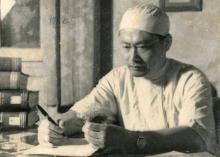
Vietnamese surgeon Tôn Thất Tùng (10 May 1912 – 7 May 1982) developed a pioneering technique that reduced the risks and mortality rate of liver operations.
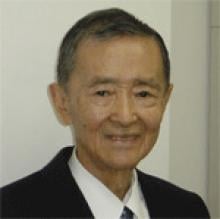
Michiaki Takahashi (17 February 1928 – 16 December 2013) was a Japanese virologist who developed the first chickenpox vaccine.

Maggie Lim (5 January 1913 – November 1995) was a Singaporean physician who promoted family planning and expanded the access to clinics to improve the quality of life for mothers and children in Singapore’s early days.
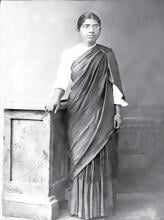
The founder of the Adyar Cancer Institute in India, Muthulakshmi Reddy (30 July 1886 – 22 July 1968), fought to uplift women and girls from impoverished situations.
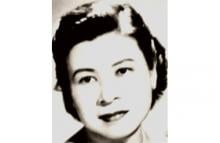
Through her iconic stories featuring fictional scenes from the history of the Philippines, language teacher and academic Genoveva Matute (3 January 1915 – 21 March 2009) helped strengthen the Filipino identity.
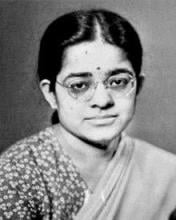
Rajeshwari Chatterjee (24 January 1922 – 3 September 2010) was the first female engineer from Karnataka in India.
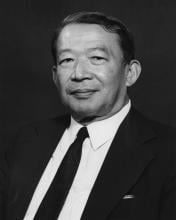
U Hla Myint (1920 – 2017) was a celebrated economist from Myanmar. Considered a prodigy, he was admitted to Rangoon University to study economics when he was just 14 years old. He went on to earn a Ph.D. at the London School of Economics (LSE).
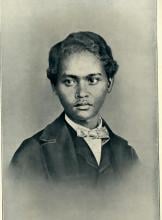
Little is known about Ali, a teenager from Sarawak, Malaysia, who was chief assistant to the famous naturalist Alfred Wallace. Most of what is known comes from Wallace’s writings. Ali accompanied Wallace on expeditions throughout the Malay Archipelago from December 1855 to February 1862.
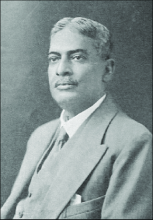
Indian scientist and physician Upendranath Brahmachari (19 December 1873–6 February 1946) is best known for creating a drug called Urea Stibamine, used to safely and reliably treat visceral leishmaniasis (or Kala-azar), a severe infection caused by the Leishmania parasite.
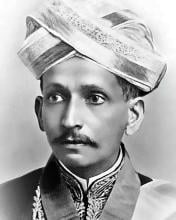
Sir Mokshagundam Srinivasa Shastry Vishveshwarayya (15 September 1860 – 14 April 1962) is widely regarded as India’s most outstanding engineer. In a career that spanned almost his entire life, Vishveshwarayya played a pivotal role in several engineering projects, including designing the Krishnarajasagara dam that is still the source of irrigation and drinking water for parts of Karnataka today.
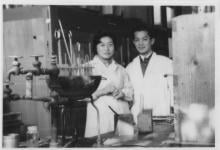
Tsuneko (7 June 1933) and Reiji Okazaki (8 October 1930 – 1 August 1975) were a Japanese couple who discovered Okazaki fragments – short sequences of DNA that are synthesized during DNA replication and linked together to form a continuous strand.