
People
News

13 Feb 2007
Gulf Research Center
The book suggests that the US agenda in Iraq was about oil, but not about oil in the simple sense many believed. This war (2003) was not an issue of corporate greed but about geopolitical power above all.

13 Feb 2007
IPS Asia Pacific
'Stories from the Asia Water Wire' is a compilation water and development articles written by journalists in 2005 and 2006 and featured in the Asia Water Wire (www.asiawaterwire.net).
11 Feb 2007
Gulf Research Center
Russia is positioning itself as a potential contributor of diplomatic services to stabilize the region. In the process, it is unlikely to challenge the American hegemony in the region, but will strive to serve reminders to the regional countries and the United States that it is capable of plugging several gaps.
06 Feb 2007
International Development Research Centre (IDRC)
"How could it be that an event of this magnitude was ignored? 10 000 people were killed each day. That’s three 9/11s a day for a hundred days — and we barely noticed it? It’s mind-boggling. What went wrong in the media system that caused us to fail?"
06 Feb 2007
International Development Research Centre (IDRC)
The developing world’s poorest people live in marginal, often harsh rural environments. The natural resource base tends to be fragile and highly vulnerable to over exploitation. This book draws on more than a decade of research and presents case studies from Bhutan, Cambodia, China, Ecuador, Lebanon, and Viet Nam.
05 Feb 2007
Gulf Research Center
This volume provides a compelling analysis of the consequences of the US-led invasion of Iraq. It is a first rate account of the underlying problems of the processes of state building in post-Saddam Iraq.
01 Feb 2007
Gulf Research Center
At some point the GCC States will begin to wonder why they should further engage with a regime that talks about cooperation, but ends up doing nothing to contribute to regional security

30 Jan 2007
University of the Philippines Diliman
These three papers examine the role of the church in the lives of Filipinos living in Japan and the rest of East Asia.

26 Jan 2007
Keio University
University research activities have always been an important factor in societal progress. Thus, it is important for universities to communicate their research to the public. Keio’s Annual Report on Research Activities provides the community with information regarding our strategies and direction, as well as our current research activities.
23 Jan 2007
University of the Philippines Diliman
These papers give some perspectives on migrant women and the experience of Filipinas in Korea and the case of a Filipino community in Nagoya, Japan, the 3rd paper discusses issues of engaging with Filipinos abroad.
22 Jan 2007
Gulf Research Center
Both the US and Iran appear so consumed and focused on each other that they completely disregard the concerns of the states and people in the rest of the Gulf
19 Jan 2007
University of the Philippines Diliman
Besides the finding that Filipinos are generally comfortable in communicating, a study confirms that in Filipino culture, communication is collectivistic, family-oriented, highly contextual, and hierarchical.
19 Jan 2007
University of the Philippines Diliman
Despite the signing of the Comprehensive Agreement on Respect for Human Rights and International Humanitarian Law (CARHRIHL), neither the Philippine government nor the CPP-NPA-NDF has been truly determined to respect human rights in the Philippines. The burden then lies in civil-society organizations and international political entities.
18 Jan 2007
University of the Philippines Diliman
Archives and museums are distinct institutions that follow different standards principles and practices in managing their respective collections. However, many museums today, such as the UP Vargas Museum, have adopted archival procedures as well, thus, blurring the line between the two institutions.
17 Jan 2007
NAM S&T Centre
Amongst the recommendations are on sharing of information and examples of best practise, investment in mapping and forecasting, protection of cultural and natural heritage, strategic and life-line infrastructure endangered by natural disasters, restraint in producing unvalidated maps and higher priority for early warning systems.
17 Jan 2007
Nature Publishing Group
Nature Publishing Group (NPG), publisher of the world's most influential science journals, today announced the launch of Nature Education, a new venture to develop innovative educational resources and tools for science students and their professors.
16 Jan 2007
University of the Philippines Diliman
A study on the memory of a group of Filipinos shows that a deeper level of processing, or semantic processing, in a person’s memory has a significant effect on explicit memory or the intentional recollection of past events or experiences.
15 Jan 2007
Gulf Research Center
There are three great powers in the modern world: the power of nation-states, of the international economy and of working people on whom all states, armies and corporations, ultimately depend. Many of the most important events in the modern world take place at the intersection where these three forces collide.
12 Jan 2007
IPS Asia Pacific
'Asia Media Report: A Crisis Within', a report on media trends in Asia produced and coordinated by IPS Asia-Pacific, is now off the press.
08 Jan 2007
Caucasus Media Investigations Center
Caucasus Media Investigations Center has announced the winners of the competition on the subject “Child Abuse and Protection of Child Rights” within the project of “Development of Media Investigations in Caucasus” which is held by the support of Open Society Institute Assistance Foundation.
07 Jan 2007
Gulf Research Center
The book of Andrew Kydd is about the role of trust and mistrust in international relations and the Cold War. Its basic assumption is that when states can trust each other, they can live at peace, provided that they are security seekers, uninterested in expansion for its own sake.

05 Jan 2007
Asia Research News
Michigan State University's School of Journalism is looking for a full/associate/assistant professor with an expertise in research about the media in Muslim countries of South-east Asia and/or South Asia, with a preference for South-east Asia.
05 Jan 2007
International Development Research Centre (IDRC)
To commemorate the 17th Jailed Journalists Support Day, the International Development Research Centre (IDRC) and Reporters Without Borders Canada invited two Afghan journalists to tour five Canadian cities to speak about freedom of the press and the role of women in Afghanistan.
04 Jan 2007
Asia Research News
The Environmental Education and Reporting Program is a two-month course that provides fundamental education on environmental concepts, laws, and issues as well as reporting training, both print and broadcast.

03 Jan 2007
IPCRI - Israel/Palestine Center for Research and Information
IPCRI - The Israel/Palestine Center for Research and Information is searching for 2 people (1 Israeli and 1 Palestinian) to work half-time on the development of a new project on Israeli-Palestinian business cooperation.
03 Jan 2007
Asia Research News
The 2007 Award will be for a female print journalist living in India and writing in English. This year's award topic area is on human rights and women/girls. All nominations must be received by 7 January 2007.
29 Dec 2006
Gulf Research Center
About 90 percent of Iraqis feel that the situation in the country was better ahead of the US-led invasion than it is today, according to a poll conducted by the Iraq Centre for Research and Strategic Studies (ICRSS).
19 Dec 2006
University of the Philippines Diliman
During the 28th NAST Annual Scientific Meeting last July 13, 2006, 23 scientists of the University of the Philippines received awards for their outstanding performance and contribution to science and technology.

18 Dec 2006
International Rice Research Institute
Los Banos, Philippines – It’s a long way from the small Texas town of Alvin to the lush green rice fields of Tamil Nadu in southern India. Despite this, the two places have played interesting roles in one of the most remarkable success stories in the history of efforts to ease human hunger and suffering.
12 Dec 2006
Gulf Research Center
Throughout the history of Iraq, the regular army has more than once demonstrated its ability to serve as a national instrument, standing above ethnic, sectarian, and regional affiliations.
Researchers
Sorry, no researchers coming up for this topic.
- « first
- ‹ previous
- 1
- 2
- 3
Giants in history
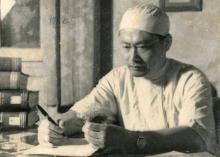
Vietnamese surgeon Tôn Thất Tùng (10 May 1912 – 7 May 1982) developed a pioneering technique that reduced the risks and mortality rate of liver operations.
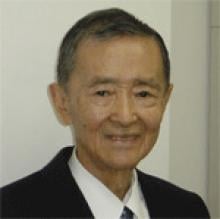
Michiaki Takahashi (17 February 1928 – 16 December 2013) was a Japanese virologist who developed the first chickenpox vaccine.

Maggie Lim (5 January 1913 – November 1995) was a Singaporean physician who promoted family planning and expanded the access to clinics to improve the quality of life for mothers and children in Singapore’s early days.
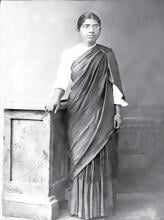
The founder of the Adyar Cancer Institute in India, Muthulakshmi Reddy (30 July 1886 – 22 July 1968), fought to uplift women and girls from impoverished situations.

Through her iconic stories featuring fictional scenes from the history of the Philippines, language teacher and academic Genoveva Matute (3 January 1915 – 21 March 2009) helped strengthen the Filipino identity.
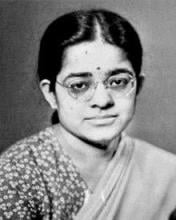
Rajeshwari Chatterjee (24 January 1922 – 3 September 2010) was the first female engineer from Karnataka in India.
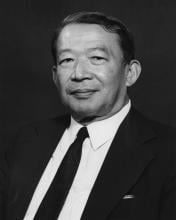
U Hla Myint (1920 – 2017) was a celebrated economist from Myanmar. Considered a prodigy, he was admitted to Rangoon University to study economics when he was just 14 years old. He went on to earn a Ph.D. at the London School of Economics (LSE).
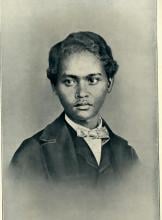
Little is known about Ali, a teenager from Sarawak, Malaysia, who was chief assistant to the famous naturalist Alfred Wallace. Most of what is known comes from Wallace’s writings. Ali accompanied Wallace on expeditions throughout the Malay Archipelago from December 1855 to February 1862.
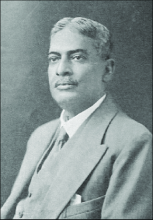
Indian scientist and physician Upendranath Brahmachari (19 December 1873–6 February 1946) is best known for creating a drug called Urea Stibamine, used to safely and reliably treat visceral leishmaniasis (or Kala-azar), a severe infection caused by the Leishmania parasite.
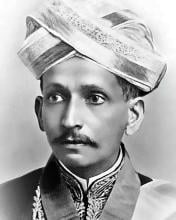
Sir Mokshagundam Srinivasa Shastry Vishveshwarayya (15 September 1860 – 14 April 1962) is widely regarded as India’s most outstanding engineer. In a career that spanned almost his entire life, Vishveshwarayya played a pivotal role in several engineering projects, including designing the Krishnarajasagara dam that is still the source of irrigation and drinking water for parts of Karnataka today.
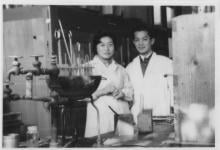
Tsuneko (7 June 1933) and Reiji Okazaki (8 October 1930 – 1 August 1975) were a Japanese couple who discovered Okazaki fragments – short sequences of DNA that are synthesized during DNA replication and linked together to form a continuous strand.