

Technology
News
27 May 2011
The Agency for Science, Technology and Research (A*STAR)
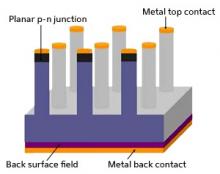
Nanopillars significantly boost the power conversion efficiency of thin-film solar cells

27 May 2011
The Agency for Science, Technology and Research (A*STAR)
Enzymes turn vegetable oils into fuel through a flexible two-step process
27 May 2011
RIKEN
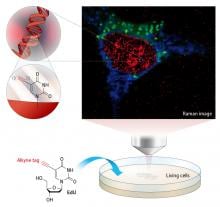
Revealing the inner workings of cells takes a step forward using a newly developed Raman microscopy technique

25 May 2011
The Agency for Science, Technology and Research (A*STAR)
The Institute of Microelectronics (IME), an institute of the Agency for Science, Technology and Research (A*STAR) have announced today their cooperation with TowerJazz, the global specialty foundry leader, on breakthrough projects in micro-electro-mechanical systems (MEMS), packaging and application-specific integrated circuits (ASICs).

25 May 2011
Waseda University
7 Research Themes Selected for 3 Mid-/Long-Term Research Projects

23 May 2011
The World Academy of Sciences (TWAS)
The call is now open for the 2011 Ernesto Illy Trieste Science Prize. This year's prize will be given in the field of materials science.

22 May 2011
Nature Publishing Group
Summaries of newsworthy papers - Geoscience: Better earthquake risk maps needed; Chemical Biology: Commodity chemicals by design; Structural & Molecular Biology: Connecting genetics to diseases; Nanotechnology: A superconducting first near absolute zero; Genetics: Risk variant for prostate cancer in African-American men

20 May 2011
The Agency for Science, Technology and Research (A*STAR)
The Singapore Business Federation (SBF) and Singapore Institute of Manufacturing Technology (SIMTech) today signed a memorandum of understanding (MOU) to assist local manufacturing and services companies develop R&D capabilities and foster stronger research collaboration with SIMTech.
20 May 2011
Toyohashi University of Technology
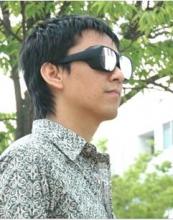
Toyohashi Tech researcher receives coveted Japanese government award for the invention of unique color filter–glasses. Allowing those with normal color vision to experience colorblindness, the glasses enable understanding of problems arising for people with color vision deficiency.
20 May 2011
RIKEN
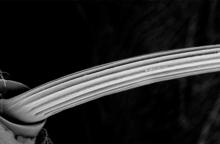
An enzyme helps control the extension of cellular tendrils by regulating the delivery of supplies needed for growth
20 May 2011
RIKEN
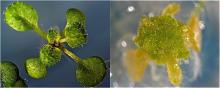
Identification a master regulator of the response of plants to injury sheds light on organ regeneration
19 May 2011
RIKEN
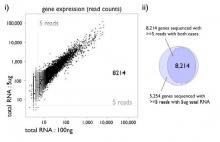
A new gene expression technique adapted for single molecule sequencing has enabled researchers at the RIKEN Omics Science Center (OSC) to accurately and quantitatively measure gene expression levels using only 100 nanograms of total RNA.
16 May 2011
The Hong Kong Polytechnic University (PolyU)
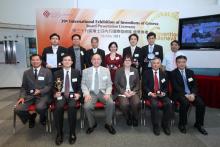
The Hong Kong Polytechnic University (PolyU) has set a record of reaping 10 prizes at the 39th International Exhibition of Inventions of Geneva, with an array of innovations which range from myopia-retarding contact lenses to DNA Bio-sensor and solar energy device.
13 May 2011
Universiti Sains Malaysia
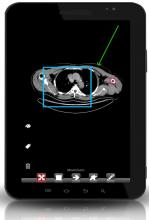
Universiti Sains Malaysia (USM) has announced the development of “ENDEAVOR-Mobile”, the world’s first fully Android-based mobile teleradiology collaboration platform.
13 May 2011
RIKEN
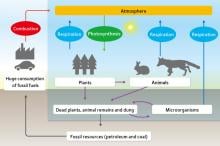
Insights gained by the Biosphere Oriented Biology Research Unit into complex biological systems could revolutionize energy production and re-integrate society into the global ecological cycle

12 May 2011
National Institute for Materials Science (NIMS)
Social Acceptance of Nanotechnology is an Essential Aspect of the Strategy For Research, Development, and Commercialization: An Interview With Masafumi Ata and Saori Ishizu at the National Institute of Advanced Industrial Science and Technology.
11 May 2011
The World Academy of Sciences (TWAS)
TWAS, the academy of sciences for the developing world, is currently seeking nominations of young scientists in Africa whose research in computer science promises to have a positive impact in the developing world.
10 May 2011
Waseda University
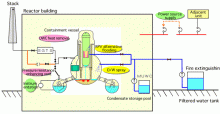
A severe earthquake and massive tsunami hit the Pacific coastline of eastern Japan on March 11, 2011. A total of six nuclear power plants automatically shut down because of the earthquake. Power from outside the plant was also lost. Emergency diesel generators started operating.
04 May 2011
Nature Publishing Group
Summaries of newsworthy papers - Evolution: A candidate for a pair of wings; Physics: Materials for efficient recovery of waste heat
04 May 2011
Institute of High Performance Computing, Singapore
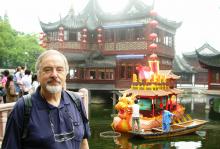
Professor Wolfgang Johannes Reinhard Hoefer, from Singapore’s Institute of High Performance Computing (IHPC) has been recognized by his peers as an authoritative pioneer in the field of microwave research. He will be receiving the prestigious "Microwave Pioneer Award" from the IEEE Microwave Theory and Techniques (MTT) Society.
04 May 2011
Institute of High Performance Computing, Singapore
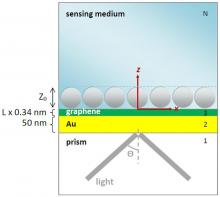
Graphene, the one-atom-thick carbon lattice that is the subject of last year’s Nobel Prize in Physics, has found application in surface plasmon resonance (SPR) biosensing.
03 May 2011
RIKEN
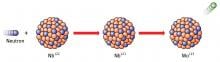
Newly available data on rare, neutron-rich isotopes reveal shortcomings of models describing the synthesis of elements
03 May 2011
The Agency for Science, Technology and Research (A*STAR)
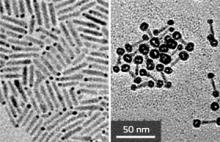
A novel photochemical process allows catalytic and magnetic metals to be deposited onto semiconductor nanorods without effort

03 May 2011
The Agency for Science, Technology and Research (A*STAR)
A germanium–tellurium alloy could form the basis for reconfigurable electronic switches

03 May 2011
The Agency for Science, Technology and Research (A*STAR)
Motion-sensing technologies developed at A*STAR could revolutionize human–computer interaction.

03 May 2011
The Agency for Science, Technology and Research (A*STAR)
Hitachi Asia Ltd. and the Agency for Science, Technology and Research (A*STAR) Data Storage Institute (DSI) recently entered into a strategic partnership to research a new generation storage system for genome sequencing data.
03 May 2011
RIKEN
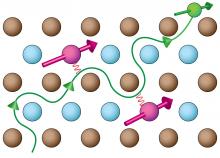
Titanium oxide doped with cobalt produces magnetic properties at room temperature via a newly discovered mechanism
27 Apr 2011
Nature Publishing Group
Summaries of newsworthy papers on Patenting Ethics; The rise of people power; The role of Agulhas leakage in climate control; How the Grand Canyon and its neighbours got grand and Keeping rats up past their bed time

20 Apr 2011
Chiang Mai University
A research team from Chiang Mai University (CMU) have developed a simpler, less-expensive Detection Kit for monitoring Hyaluronan using purified protein from the waste cartilage of a variety of species from the meat processing industry. The research won the team the National Research Council Invention Award, 2011.

18 Apr 2011
The Hong Kong Polytechnic University (PolyU)
The Hong Kong Polytechnic University (PolyU) has recently received a software and system donation worth more than HK$700,000 from Hong Kong Aero Engine Services Limited (HAESL), with further support from Metrology Software Products Limited (MSP).
Giants in history

Turkish astrophysicist Dilhan Eryurt (29 November 1926 – 13 September 2012) conducted research on how the sun affects environmental conditions on the moon.
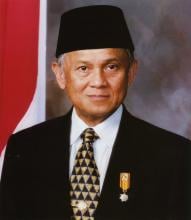
Bacharuddin Jusuf Habibie (25 June 1936 – 11 September 2019) was an Indonesian engineer who was President of Indonesia from 1998 to 1999.
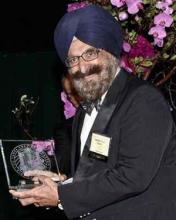
Physicist Narinder Singh Kapany (31 October 1926 – 4 December 2020) pioneered the use of optical fibres to transmit images, and founded several optical technology companies. Born in Punjab, India, he worked at a local optical instruments factory before moving to London for PhD studies at Imperial College. There, he devised a flexible fibrescope to convey images along bundles of glass fibres.

Sir Mokshagundam Srinivasa Shastry Vishveshwarayya (15 September 1860 – 14 April 1962) is widely regarded as India’s most outstanding engineer. In a career that spanned almost his entire life, Vishveshwarayya played a pivotal role in several engineering projects, including designing the Krishnarajasagara dam that is still the source of irrigation and drinking water for parts of Karnataka today.
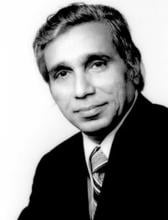
Fazlur Rahman Khan (3 April 1929 – 27 March 1982) was a Bangladeshi-American structural engineer and architect who invented the tube principle, which formed the basis for modern skyscraper design.
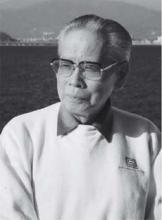
A Japanese surgeon, Tetsuzo Akutsu (20 August 1922 – 9 August 2007) built the first artificial heart capable of keeping an animal alive.

Lin Lanying (7 February 1918 – 4 March 2003) was a Chinese material engineer remembered for her contributions to the field of semiconductor and aerospace materials. Lanying was born into a family who did not believe in educating girls and she was not allowed to go to school.

Gregorio Y. Zara (8 March 1902 – 15 October 1978) was a Filipino engineer and physicist best remembered for inventing the first two-way video telephone. Zara’s video telephone invention enabled the caller and recipient to see each other while conversing, laying the foundation for video-conferencing