

Technology
News

30 Aug 2011
Asia Research News
Summary of Asia Manufacturing News, August edition: Honda to build motorcycle plant in Vietnam; Developments at Great Wall motor company ;SolidWorks software helps design 'super truck.'; New technique makes artificial bones more natural and other development stories
30 Aug 2011
RIKEN
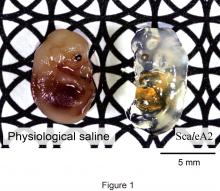
Combined with fluorescence labeling, new approach produces 3D images at unprecedented depth and levels of spatial detail

30 Aug 2011
Nature Publishing Group
Summaries of newsworthy article: Long-term effects of combat on amygdala
28 Aug 2011
Nature Publishing Group
Summaries of newsworthy papers: Neuroscience: Animals in the amygdala; Genetics & Nature: Working towards 1001 Arabidopsis genomes; Geoscience: Cold ocean on early Mars; Cell Biology: Controlling the balance of metabolic responses

26 Aug 2011
RIKEN
The ability to control how magnetic vortices gyrate together has potential application in magnetic devices
26 Aug 2011
RIKEN
Guidance signals prevent neurons from making bad connections by triggering a mechanism that causes growing axons to shrivel and retract
24 Aug 2011
Nature Publishing Group
Summaries of newsworthy papers: Infectious disease: Bacteria fight against dengue; Atmospheric science: Studying clouds in a CLOUD chamber; Comment: Antibiotics may be damaging beneficial bacteria permanently; Fossils: Marsupials and placental mammals split 160 million years ago and more
24 Aug 2011
Nature Publishing Group
Summary of newsworthy paper: Global climates: In the heat of battle
24 Aug 2011
Nature Publishing Group
Summaries of newsworthy papers: Harvesting wet energy; Stem cells from Parkinson’s disease patients; Rearranging the bird tree of life
23 Aug 2011
Nature Publishing Group
Summary of newsworthy article: Chemistry beyond the bench
22 Aug 2011
Nature Publishing Group
Summaries of newsworthy papers: Geoscience: 3.4-billion-year-old sulphur-metabolizing microbes; ; Cell Biology: A system to study cells with cancer stem cell properties; Climate Change: Cryptic biodiversity crash; Climate Change: Calcifiers cover up; Geoscience: Evolution of plants influenced river shape
19 Aug 2011
RIKEN
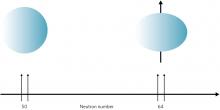
Adding neutrons to synthetic atoms can drastically alter the shape of their nuclei and affect their stability
19 Aug 2011
RIKEN
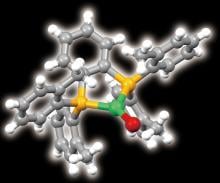
Electronic screens based on new energy-efficient technology could become more affordable thanks to the substitution of expensive metal components with copper ones
19 Aug 2011
RIKEN
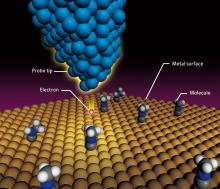
The observation and manipulation of single molecules by scanning tunneling microscopy is opening new frontiers in nanoscience
19 Aug 2011
Nature Publishing Group
Summaries of newsworthy papers: Ageing: Keeping old mice young at heart; Stem cells: Bolstering bone density; Wheat can’t stand the heat

18 Aug 2011
The Agency for Science, Technology and Research (A*STAR)
A one-pot synthesis provides a simpler and faster route to highly efficient solar cells
18 Aug 2011
The Agency for Science, Technology and Research (A*STAR)
The transmission quality of an optical fiber can now be tested without the need to take measurements at both ends
17 Aug 2011
Nature Publishing Group
Summaries of newsworthy papers: A great nanoscale resolution; Punishment as a defence mechanism; Engineering on-chip quantum devices; Semiconductor prodigies outperform their parents; King penguin chicks prove cool customers
17 Aug 2011
Nature Publishing Group
Summaries of newsworthy articles: Cities: Better, Greener, Smarter; Science of Health: Stamping out vaccine fears early
17 Aug 2011
Nature Publishing Group
Summaries of newsworthy papers: Planetary science: Questioning the standard model of lunar formation; Comment: In praise of memory-altering drugs; Fossils: How vertebrates got their jaws; Correspondence: Stem China’s demand for ivory and more

17 Aug 2011
Toyohashi University of Technology
From harnessing microorgansisms in bioactuators to algorithms for Internet-based information analysis, the Toyohashi Tech e-Newsletter describes a diverse range of research projects.
16 Aug 2011
The Agency for Science, Technology and Research (A*STAR)
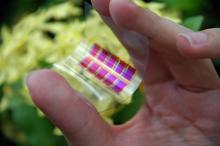
Scientists from Singapore’s Institute of Materials Research and Engineering (IMRE), an institute of the Agency for Science, Technology and Research (A*STAR) have created a new polymer with both high charge mobility and high power conversion efficiency for application in both plastic electronics and organic solar cells.
14 Aug 2011
Nature Publishing Group
Summaries of newsworthy papers: Climate Change: Increased leaf litter boosts soil carbon release; Genetics: Map for developmental delay; Cell Biology: Regulating metabolism in stressful conditions; Geoscience: Do planetary waves cause Titan’s downpours?
12 Aug 2011
RIKEN
Plants switch off growth signals by targeting ‘used’ receptor molecules for destruction
12 Aug 2011
RIKEN
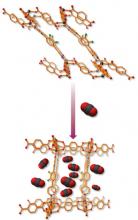
Materials made from porous coordination polymers with flexing structures make better traps for harmful gases
10 Aug 2011
Nature Publishing Group
Summaries of newsworthy papers: Biology: The genetics of multiple sclerosis *PRESS BRIEFING*; Atmospheric chemistry: Mysterious methane; Comment: ArXiv turns 20; Biotechnology: Reversing the route to biofuels; Quantum mechanics: Ion micro-management; Cod genome reveals unusual immunology
09 Aug 2011
Nature Publishing Group
Summaries of newsworthy papers: Predicting the success of fertilisation in mouse eggs **PRESS BRIEFING**; Enhancing rechargeable batteries; Tracking influenza A immunity; Potential new therapeutic targets for Schistosomiasis; Birds have dinosaur digits 1, 2 and 3
08 Aug 2011
The Agency for Science, Technology and Research (A*STAR)
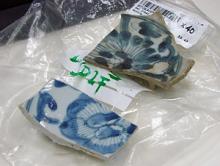
Software that can identify the individual components of a chemically complex object can help museums and auction houses to authenticate ancient objects

08 Aug 2011
The Agency for Science, Technology and Research (A*STAR)
Highly efficient organic light-emitting diodes are created by optimizing the molecular structure and device configuration
08 Aug 2011
The Agency for Science, Technology and Research (A*STAR)
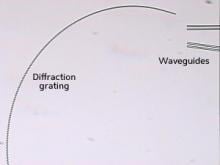
A silicon chip with integrated laser and optical grating offers new possibilities for telecommunications
Giants in history

Turkish astrophysicist Dilhan Eryurt (29 November 1926 – 13 September 2012) conducted research on how the sun affects environmental conditions on the moon.
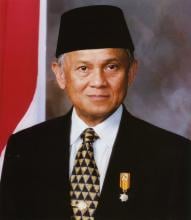
Bacharuddin Jusuf Habibie (25 June 1936 – 11 September 2019) was an Indonesian engineer who was President of Indonesia from 1998 to 1999.

Physicist Narinder Singh Kapany (31 October 1926 – 4 December 2020) pioneered the use of optical fibres to transmit images, and founded several optical technology companies. Born in Punjab, India, he worked at a local optical instruments factory before moving to London for PhD studies at Imperial College. There, he devised a flexible fibrescope to convey images along bundles of glass fibres.

Sir Mokshagundam Srinivasa Shastry Vishveshwarayya (15 September 1860 – 14 April 1962) is widely regarded as India’s most outstanding engineer. In a career that spanned almost his entire life, Vishveshwarayya played a pivotal role in several engineering projects, including designing the Krishnarajasagara dam that is still the source of irrigation and drinking water for parts of Karnataka today.
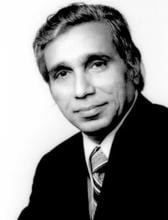
Fazlur Rahman Khan (3 April 1929 – 27 March 1982) was a Bangladeshi-American structural engineer and architect who invented the tube principle, which formed the basis for modern skyscraper design.

A Japanese surgeon, Tetsuzo Akutsu (20 August 1922 – 9 August 2007) built the first artificial heart capable of keeping an animal alive.

Lin Lanying (7 February 1918 – 4 March 2003) was a Chinese material engineer remembered for her contributions to the field of semiconductor and aerospace materials. Lanying was born into a family who did not believe in educating girls and she was not allowed to go to school.

Gregorio Y. Zara (8 March 1902 – 15 October 1978) was a Filipino engineer and physicist best remembered for inventing the first two-way video telephone. Zara’s video telephone invention enabled the caller and recipient to see each other while conversing, laying the foundation for video-conferencing