
Technology
News
12 Oct 2011
The Agency for Science, Technology and Research (A*STAR)
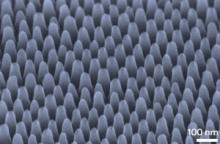
Advanced electronics beckon thanks to self-assembling templates that allow the creation of nanoscale features on silicon wafers
11 Oct 2011
Nature Publishing Group
On irradiation protection and linking the end of an ice age with atmospheric oxygen among other research

11 Oct 2011
The Agency for Science, Technology and Research (A*STAR)
Singapore, 11 October 2011 –
10 Oct 2011
The Hong Kong Polytechnic University (PolyU)
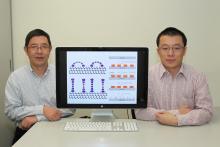
Researchers of The Hong Kong Polytechnic University (PolyU) have achieved further breakthrough in studying graphene on the nano-scale.

10 Oct 2011
The Hong Kong Polytechnic University (PolyU)
PolyU's green technology to keep the drivers cool...

09 Oct 2011
Nature Publishing Group
Summary of newsworthy papers from European winters to stem-cell

07 Oct 2011
The Agency for Science, Technology and Research (A*STAR)
The Manufacturing Productivity Technology Centre (MPTC), a first of its kind in Singapore, is a rich resource of A*STAR SIMTech technologies showcased under one roof.
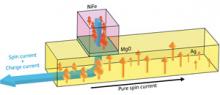
07 Oct 2011
RIKEN
Improvements to specialized valves that separate spin and electron currents may lead to higher-density magnetic media
06 Oct 2011
Nature Publishing Group
Summaries of newsworthy papers: Comets on Earth, defence mechanism and macular degeneration, snowball earth, muscular atrophy and more
04 Oct 2011
Nature Publishing Group
A summary of papers to go live on 4/10/2011, topics include: molecule-metal contacts, plasma membrane and nuclear transfer
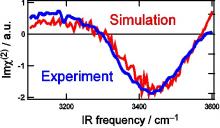
04 Oct 2011
RIKEN
New study sheds light on the mysterious structure of the world’s most common liquid interface
03 Oct 2011
Asia Research News
Summary of Science and Innovation news from the British Embassy, Tokyo. Topics include supercomputer, regenerative medicine, smart grid, energy storage and more.
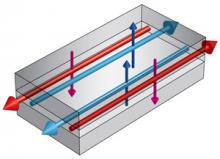
03 Oct 2011
RIKEN
Current flowing along the edges of a promising quantum device is insensitive to its magnetic impurities
03 Oct 2011
RIKEN
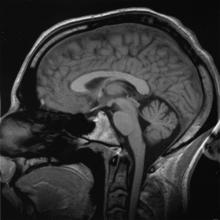
A molecular probe that targets a pro-inflammatory enzyme allows visualization of inflammation during brain injury in rats

03 Oct 2011
RIKEN
RIKEN invites applications for the position of Chief Scientist to lead a new laboratory working on The Advanced Science Institute (ASI). Applications from overseas applicants are welcome
03 Oct 2011
RIKEN
The RIKEN Brain Science Institute (BSI) is seeking outstanding neuroscientists for tenure-track Team Leader positions (equivalent to U.S. Assistant or Associate Professor) and for a tenured Senior Team Leader position (equivalent to U.S. Full Professor) to investigate the brain.
03 Oct 2011
RIKEN
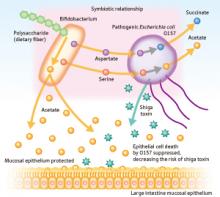
Analyzing metabolites in living organisms using NMR spectroscopy is yielding new insights into environmental health and ecology and the development of green innovations at the RIKEN Plant Science Center.
02 Oct 2011
Nature Publishing Group
Summaries of newsworthy papers: Arctic ozone loss, mucosal memory, Dust-climate links in the tropical Atlantic, ovarian cancer, leukaemia and more
29 Sep 2011
Nature Publishing Group
Summaries of newsworthy papers: Neutron star mergers, neurons control limb movement, people not projects and more

28 Sep 2011
The Agency for Science, Technology and Research (A*STAR)
Multi-compartment globular structures assembled from polymer-based materials may soon serve as cell prototypes
28 Sep 2011
The Agency for Science, Technology and Research (A*STAR)
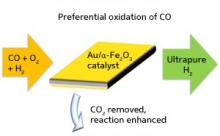
Combining carbon dioxide sorbents with gold nanoparticle catalysts makes manufacturing ultrapure hydrogen gas easier than ever
28 Sep 2011
The Agency for Science, Technology and Research (A*STAR)
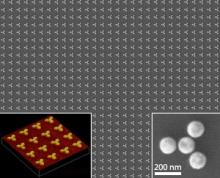
Similarities between the electronic states of molecules and the optical properties of gold nanostructures aid the development of new photonic devices
28 Sep 2011
The Agency for Science, Technology and Research (A*STAR)
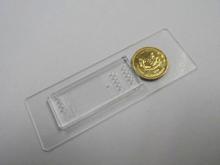
Microfluidic devices are poised to transform biological research by streamlining the cost, speed and precision of individual experiments.

28 Sep 2011
The Agency for Science, Technology and Research (A*STAR)
Vibration-assisted milling can lead to higher-quality surfaces
27 Sep 2011
Nature Publishing Group
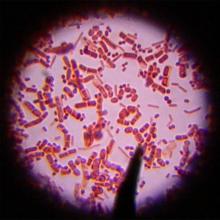
Summaries of newsworthy papers: Association of a bacterium with haemorrhagic stroke, microbial production of a diesel biofuel and more.
27 Sep 2011
The Hong Kong Polytechnic University (PolyU)
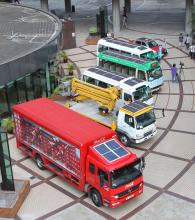
With strong support from the industry, The Hong Kong Polytechnic University (PolyU) has garnered momentum to further promote the use of its award-winning Solar-powered Air-conditioning System for installation on different types of vehicles, which now include mini-bus, taxi, public light bus and truck.

23 Sep 2011
RIKEN
Access to multiple life science databases made easier by a web-based interface and portal developed at RIKEN

23 Sep 2011
National Institute for Materials Science (NIMS)
Tohoku University, Japan Science and Technology Agency (JST) and Japan Atomic Energy Agency (JAEA) announced on August 22, 2011 that Kenichi Uchida, a PhD student, and Professor Eiji Saitoh of Tohoku University and their colleagues have succeeded in injecting spin current into a magnetic material by acoustic wave spin pumping.
22 Sep 2011
RIKEN
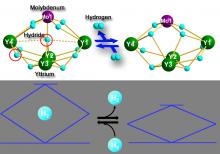
Researchers at the RIKEN Advanced Science Institute (ASI) has shed light on a class of heterometallic molecular structures whose features point the way to breakthroughs in the development of lightweight fuel cell technology. The structures contain a combination of rare-earth and d-transition metals ideally suited to the compact storage of hydrogen.
Giants in history

Turkish astrophysicist Dilhan Eryurt (29 November 1926 – 13 September 2012) conducted research on how the sun affects environmental conditions on the moon.
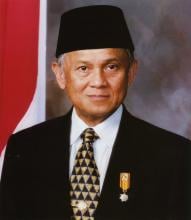
Bacharuddin Jusuf Habibie (25 June 1936 – 11 September 2019) was an Indonesian engineer who was President of Indonesia from 1998 to 1999.
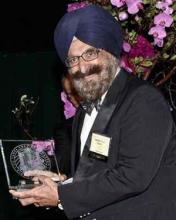
Physicist Narinder Singh Kapany (31 October 1926 – 4 December 2020) pioneered the use of optical fibres to transmit images, and founded several optical technology companies. Born in Punjab, India, he worked at a local optical instruments factory before moving to London for PhD studies at Imperial College. There, he devised a flexible fibrescope to convey images along bundles of glass fibres.

Sir Mokshagundam Srinivasa Shastry Vishveshwarayya (15 September 1860 – 14 April 1962) is widely regarded as India’s most outstanding engineer. In a career that spanned almost his entire life, Vishveshwarayya played a pivotal role in several engineering projects, including designing the Krishnarajasagara dam that is still the source of irrigation and drinking water for parts of Karnataka today.
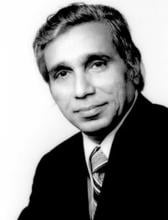
Fazlur Rahman Khan (3 April 1929 – 27 March 1982) was a Bangladeshi-American structural engineer and architect who invented the tube principle, which formed the basis for modern skyscraper design.

A Japanese surgeon, Tetsuzo Akutsu (20 August 1922 – 9 August 2007) built the first artificial heart capable of keeping an animal alive.

Lin Lanying (7 February 1918 – 4 March 2003) was a Chinese material engineer remembered for her contributions to the field of semiconductor and aerospace materials. Lanying was born into a family who did not believe in educating girls and she was not allowed to go to school.

Gregorio Y. Zara (8 March 1902 – 15 October 1978) was a Filipino engineer and physicist best remembered for inventing the first two-way video telephone. Zara’s video telephone invention enabled the caller and recipient to see each other while conversing, laying the foundation for video-conferencing