
Technology
News
21 Sep 2016
National Institute for Materials Science (NIMS)
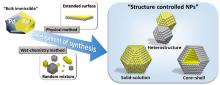
Fabricating palladium-ruthenium nanoparticles could lead to improved industrial processes.

21 Sep 2016
Hokkaido University
The High Precision Telescope (HPT) installed in the Philippine’s DIWATA-1 microsatellite jointly developed by Hokkaido University and other institutions has successfully captured images with a ground resolution of about 3 meters—a world-best for a 50 kg-class microsatellite.

20 Sep 2016
Asia Research News
Funded by NRF, these consortia will provide seamless platforms to engage industry, government agencies and researchers in these technologies

20 Sep 2016
Asia Research News
Robotic Chef, Thin Film Solar Cells, Free Space Technology and more at the fifth edition of Singapore’s premier technology brokerage event
19 Sep 2016
Asia Research News
Deadline extended until 25th September 2016.

13 Sep 2016
The Agency for Science, Technology and Research (A*STAR)
Previously too complex to tackle, computer simulations can now show how elliptical vortex rings form.
13 Sep 2016
The Agency for Science, Technology and Research (A*STAR)
Electromagnetic waves created on a layer of organic molecules could provide the perfect on-chip light source for future quantum communication systems.
13 Sep 2016
Ulsan National Institute of Science and Technology (UNIST)
South Korea's Ulsan National Institute of Science and Technology (UNIST) signs cooperation MoU with Sunbo Unitech Co., Ltd. and Sunbo Angel Partners to take the lead in the activation of the venture industry in the southeastern region of the country.
12 Sep 2016
Institute of Transformative Bio-Molecules (WPI-ITbM), Nagoya University
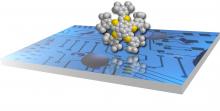
Scientists at Nagoya University have developed a short route to form various thiophene-fused polycyclic aromatic hydrocarbons (PAHs) by simply heating mono-functionalized PAHs with sulfur.
09 Sep 2016
Hokkaido University
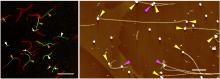
A team of researchers from Hokkaido University has developed a versatile method to pattern the structure of “nanowires,” providing a new tool for the development of novel nanodevices.

08 Sep 2016
Daegu Gyeongbuk Institute of Science and Technology (DGIST)
A Korean research team developed a mechanoluminescence color control technology that can change green light to red light by simulating the candy light-emitting principle.
05 Sep 2016
National Institute for Materials Science (NIMS)
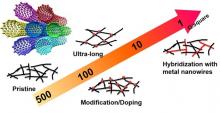
Carbon nanotubes show potential, but also many challenges, for the manufacture of flexible, wearable electronics, according to a research review in Science and Technology of Advanced Materials.
05 Sep 2016
Asia Research News
Themed “Managing NRW the Asian Way and Enabling Indonesian Water Utilities”, the trade event will address issues in water loss management in Asia, with a focus on Indonesia, which is one of the region’s most populous nations.
02 Sep 2016
Daegu Gyeongbuk Institute of Science and Technology (DGIST)
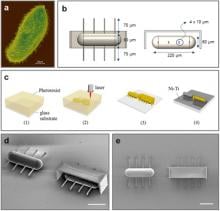
A Korean research team developed microrobots with high propulsion efficiency in highly-viscous fluid environments, applying propulsion techniques that mimic the ciliary stroke motion of paramecia.

31 Aug 2016
Korea Advanced Institute of Science and Technology (KAIST)
Korea Advanced Institute of Science and Technology (KAIST) ranked first in the list of Asia’s most innovative top 75 universities, which was released on August 30, 2016 by Thomson Reuters.
31 Aug 2016
Hokkaido University
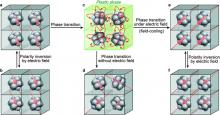
A novel “plastic crystal” developed by Hokkaido University researchers has switching properties suitable for memory-related applications.
31 Aug 2016
Asia Research News
Two Luminaries to Present Keynote Speeches at the 9th Singapore International Energy Week
30 Aug 2016
King Abdullah University of Science and Technology (KAUST)
Machine learning techniques make it possible to reconstruct and generate characteristic building models from partial image data.
30 Aug 2016
King Abdullah University of Science and Technology (KAUST)
Imploding bubbles improve the growth of single-crystalline perovskite solar cell thin films.
30 Aug 2016
National Institute for Materials Science (NIMS)
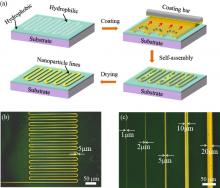
Prints Made on Flexible Substrates. Technique May Be Applicable to the Development of Wearable Devices.
30 Aug 2016
Institute of Transformative Bio-Molecules (WPI-ITbM), Nagoya University
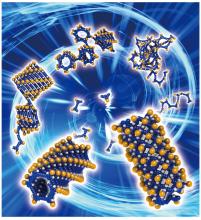
Organic nanotubes (ONTs) are tubular nanostructures
composed of organic molecules that have unique properties and have found various applications, such as electro-conductive materials. A group of scientists at Nagoya University have developed a simple and effective method for the formation of robust covalent ONTs from simple molecules.

29 Aug 2016
Korea Advanced Institute of Science and Technology (KAIST)
A research team in South Korea has developed a continuous roll-processing technology that transfers and packages flexible large-scale integrated circuits (LSI).
26 Aug 2016
Ulsan National Institute of Science and Technology (UNIST)
Partnership to bring significant benefits to our global society.
25 Aug 2016
National Institute for Materials Science (NIMS)
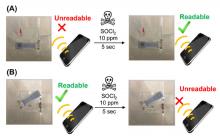
Researchers in Japan and US jointly developed a chemical sensing material whose electrical conductivity dramatically increases when exposed to toxic gases.
25 Aug 2016
National Institute for Materials Science (NIMS)
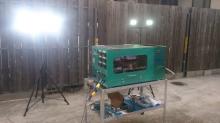
They Reduce Friction by about One-Third. Playing a Vital Role in a Newly Developed Small Jet Engine Generator for Emergency Use

25 Aug 2016
The Agency for Science, Technology and Research (A*STAR)
A decision-making tool helps producers of pharmaceutical and other valuable chemicals make the leap to an entirely new way of manufacturing.

25 Aug 2016
The Agency for Science, Technology and Research (A*STAR)
A coating that blocks 90 per cent of the heat from sunlight could be used to develop smart windows

25 Aug 2016
Ulsan National Institute of Science and Technology (UNIST)
A new class of battery seperator has been engineered by a team of researchers, affiliated with Ulsan National Institute of Science and Technology (UNIST), which is expected to bring unprecedented benefits to battery performance.
23 Aug 2016
National Institute for Materials Science (NIMS)
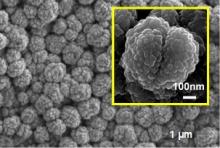
Research groups in Japan and United States jointly developed an anode material for lithium-ion rechargeable batteries by forming nanoparticles made of silicon-metal composites on metal substrates.

23 Aug 2016
Tohoku University
The theory of thermoelectricity for low dimensional semiconductors has recently been updated by Nguyen et al (2016) from Tohoku University, 23 years after it was first published by Hicks and Dresselhaus.
Giants in history

Turkish astrophysicist Dilhan Eryurt (29 November 1926 – 13 September 2012) conducted research on how the sun affects environmental conditions on the moon.
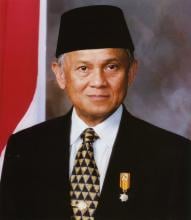
Bacharuddin Jusuf Habibie (25 June 1936 – 11 September 2019) was an Indonesian engineer who was President of Indonesia from 1998 to 1999.

Physicist Narinder Singh Kapany (31 October 1926 – 4 December 2020) pioneered the use of optical fibres to transmit images, and founded several optical technology companies. Born in Punjab, India, he worked at a local optical instruments factory before moving to London for PhD studies at Imperial College. There, he devised a flexible fibrescope to convey images along bundles of glass fibres.

Sir Mokshagundam Srinivasa Shastry Vishveshwarayya (15 September 1860 – 14 April 1962) is widely regarded as India’s most outstanding engineer. In a career that spanned almost his entire life, Vishveshwarayya played a pivotal role in several engineering projects, including designing the Krishnarajasagara dam that is still the source of irrigation and drinking water for parts of Karnataka today.

Fazlur Rahman Khan (3 April 1929 – 27 March 1982) was a Bangladeshi-American structural engineer and architect who invented the tube principle, which formed the basis for modern skyscraper design.

A Japanese surgeon, Tetsuzo Akutsu (20 August 1922 – 9 August 2007) built the first artificial heart capable of keeping an animal alive.

Lin Lanying (7 February 1918 – 4 March 2003) was a Chinese material engineer remembered for her contributions to the field of semiconductor and aerospace materials. Lanying was born into a family who did not believe in educating girls and she was not allowed to go to school.

Gregorio Y. Zara (8 March 1902 – 15 October 1978) was a Filipino engineer and physicist best remembered for inventing the first two-way video telephone. Zara’s video telephone invention enabled the caller and recipient to see each other while conversing, laying the foundation for video-conferencing