
Technology
News
13 Jun 2016
National Institute for Materials Science (NIMS)
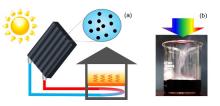
—Success May Promote Solar Heat Utilization Based on Plasmon Resonance of Ceramic Materials—
13 Jun 2016
National Institute for Materials Science (NIMS)
A research group in Japan achieved energy conversion efficiency exceeding 18% using standard size perovskite solar cells for the first time in the world.
13 Jun 2016
National Institute for Materials Science (NIMS)
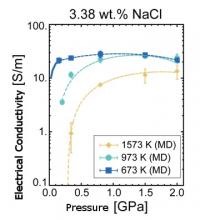
—A Step Forward in Understanding Mechanisms behind Magma Generation and the Outbreak of Earthquakes—

13 Jun 2016
The Agency for Science, Technology and Research (A*STAR)
New singalong software brings sweet melody to any cacophonous cry.

13 Jun 2016
Universiti Putra Malaysia (UPM)
A lecturer at Universiti Putra Malaysia has won the prestigious FameLab science communication competition in Cheltenham, United Kingdom.
09 Jun 2016
National Institute for Materials Science (NIMS)
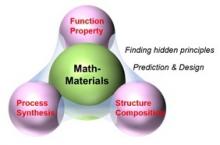
The rapidly evolving branches of materials science need mathematics to translate their accumulating knowledge into a common language.

07 Jun 2016
Ulsan National Institute of Science and Technology (UNIST)
A research team at Ulsan National Institute of Science and Technology, Korea, has partnered with Power Plaza Co. Ltd., an electric vehicle manufacturer based in South Korea to make greener, lighter electric vehicles for urban mobility.

06 Jun 2016
The Hong Kong Polytechnic University (PolyU)
Scientists have invented an easily breathable nanomask that can filter incredibly tiny particles, such as viruses and air pollutants.

06 Jun 2016
The Hong Kong Polytechnic University (PolyU)
A new 3D mapping model integrates multi-platform satellite/aerial imagery and laser scanning data to achieve a higher accuracy in mapping products by 26-66% to centimetre level compared to the conventional mapping technologies.
06 Jun 2016
Tohoku University
The Philippines' first microsatellite, DIWATA-1, was successfully released into orbit from the Japanese Experiment Module Kibo on the International Space Station at 20:44 (JST) on April 27, 2016.
06 Jun 2016
Asia Research News
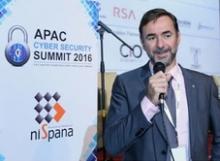
Nispana’s “APAC Cyber Security Summit 2016 ( 2- 3 June 2016), successfully concluded today at the Double Tree, Hotel by Hilton at Kuala Lumpur, Malaysia in the presence of Mr. Christophe Durand, Head- Cyber Strategy, INTERPOL and Mr. Benoit Godart- Head of Outreach & Support, European Cybercrime Centre (EC3) EUROPOL.
03 Jun 2016
National Institute for Materials Science (NIMS)
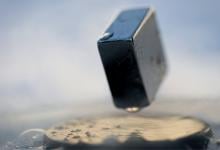
The discoverer of the first iron-based superconductor, one of Science magazine’s 2008 runner-up breakthroughs of the year, now reports finding around 100 new superconducting materials.
03 Jun 2016
Korea Advanced Institute of Science and Technology (KAIST)
A Korean research team developed an ideal electrode structure composed of graphene and layers of titanium dioxide and conducting polymers, resulting in highly flexible and efficient OLEDs.

03 Jun 2016
Asia Research News
Kuala Lumpur witnessed the largest cyber security gathering yesterday at the APAC Cyber Security Summit 2016 which was hosted at the Double Tree Hotel by Hilton, in Kuala Lumpur, Malaysia (2 &3 June, 2016)
02 Jun 2016
The Hong Kong Polytechnic University (PolyU)
Light-weight and highly-conductive PGS for temperature maintenance and effective waste heat dissipation.

02 Jun 2016
The Agency for Science, Technology and Research (A*STAR)
An unusual silicon-rich alloy offers enhanced channeling of light for optical computer chips.
02 Jun 2016
The Agency for Science, Technology and Research (A*STAR)
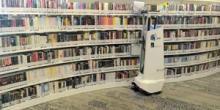
Automated robot that scans library shelves using laser mapping and radio tags can ensure no book is misplaced again.
02 Jun 2016
The Agency for Science, Technology and Research (A*STAR)
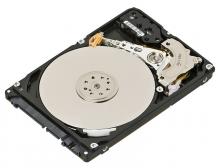
The unusual thermal properties of graphene could help increase the storage capacity of magnetic memory.

02 Jun 2016
Singapore Management University
Researchers in Singapore have developed an adaptable, automated approach for debugging software that combines the elements of previous solutions.

31 May 2016
Zelinsky Institute of Organic Chemistry, Russian Academy of Sciences
Russian scientists have developed a technique that allows them to visualize defects on the surface of graphene. The technique may ultimately help scientists develop a better understanding of graphene’s properties in order to find novel applications for this supermaterial.
31 May 2016
Nanyang Technological University
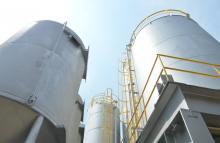
A Singapore research team is harnessing advanced fibre-sensor technologies to increase productivity and process safety in the waste oil recycling process.
30 May 2016
The Hong Kong Polytechnic University (PolyU)
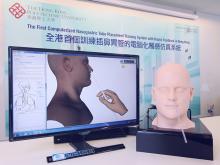
The School of Nursing of The Hong Kong Polytechnic University (PolyU) has recently developed a computerized haptic system for nasogastric tube (NGT) placement training, enabling nursing students to practise NGT insertion in computer-simulated virtual environment.
30 May 2016
Hokkaido University
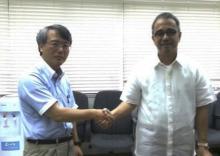
This is Part III of an article based on an interview with Hokkaido University Professor Yukihiro Takahashi, director of the Space Mission Center, about the university’s involvement in the development of low-cost, high-performance microsatellites.
30 May 2016
Universiti Putra Malaysia (UPM)
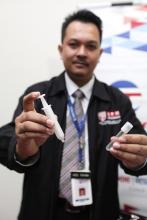
Universiti Putra Malaysia (UPM) has succeeded in producing a novel multi-purpose disposable Safety Syringe and a non-penetrative Vacuum Blood Container, or SJ-VacTube, the first to have been made in this country.

30 May 2016
Singapore Management University
Researchers showcased exciting real-world applications of intelligent agents at the 15th Autonomous Agents and Multiagent Systems International Conference held in Singapore from 9-13 May 2016.

30 May 2016
Singapore Management University
Singapore Management University’s Green Transformation Lab celebrates its third year of innovation.

30 May 2016
Singapore Management University
Computer security expert from Singapore Management University is leading the fight against online troublemakers.

30 May 2016
Singapore Management University
A researcher from Singapore Management University studies the economics of platform-based business models such as online marketplaces.
26 May 2016
Hokkaido University
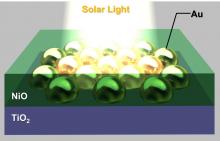
Hokkaido University scientists are testing the development of solar cells made of solid materials to improve their ability to function under harsh environmental conditions.
25 May 2016
Kavli Institute for the Physics and Mathematics of the Universe (Kavli IPMU)
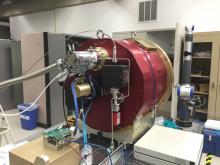
An international team of researchers is developing an instrument that will decode the light of the night sky to understand the nature of dark matter.
Giants in history

Turkish astrophysicist Dilhan Eryurt (29 November 1926 – 13 September 2012) conducted research on how the sun affects environmental conditions on the moon.
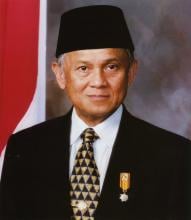
Bacharuddin Jusuf Habibie (25 June 1936 – 11 September 2019) was an Indonesian engineer who was President of Indonesia from 1998 to 1999.
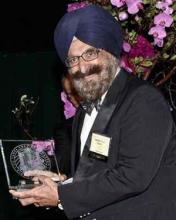
Physicist Narinder Singh Kapany (31 October 1926 – 4 December 2020) pioneered the use of optical fibres to transmit images, and founded several optical technology companies. Born in Punjab, India, he worked at a local optical instruments factory before moving to London for PhD studies at Imperial College. There, he devised a flexible fibrescope to convey images along bundles of glass fibres.
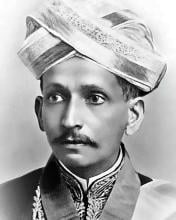
Sir Mokshagundam Srinivasa Shastry Vishveshwarayya (15 September 1860 – 14 April 1962) is widely regarded as India’s most outstanding engineer. In a career that spanned almost his entire life, Vishveshwarayya played a pivotal role in several engineering projects, including designing the Krishnarajasagara dam that is still the source of irrigation and drinking water for parts of Karnataka today.
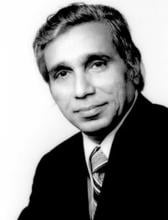
Fazlur Rahman Khan (3 April 1929 – 27 March 1982) was a Bangladeshi-American structural engineer and architect who invented the tube principle, which formed the basis for modern skyscraper design.
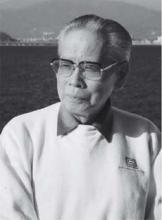
A Japanese surgeon, Tetsuzo Akutsu (20 August 1922 – 9 August 2007) built the first artificial heart capable of keeping an animal alive.

Lin Lanying (7 February 1918 – 4 March 2003) was a Chinese material engineer remembered for her contributions to the field of semiconductor and aerospace materials. Lanying was born into a family who did not believe in educating girls and she was not allowed to go to school.

Gregorio Y. Zara (8 March 1902 – 15 October 1978) was a Filipino engineer and physicist best remembered for inventing the first two-way video telephone. Zara’s video telephone invention enabled the caller and recipient to see each other while conversing, laying the foundation for video-conferencing