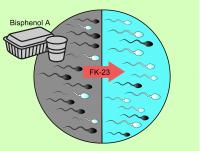
Researchers found that FK 23, a lactic acid bacterium-derived material, improved the sperm dysfunction induced by bisphenol A (BPA)—a chemical commonly used in plastic production including food containers—using a rat model.
The prize, in partnership with Nature, will celebrate breakthroughs in mental health science. It aims to accelerate translation, influence policy and transform lives. This award champions new pharmacological, psychological, social and digital interventions from around the world. The overall winner will receive USD 1 million, and three finalists will be awarded USD 250,000 each.
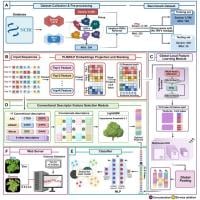
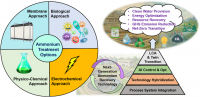
Researchers have developed a new framework that uses artificial intelligence to monitor wastewater treatment in real time, ensuring environmental safety while maximizing resource recovery. This “twin transition” approach allows facilities to predict system health and optimize energy use simultaneously.
We don’t have time to count every fish in the ocean! Environmental DNA or eDNA allows us to see where fish live by analyzing DNA in seawater – such as from shed scales or skin. This Japan-wide eDNA survey conducted by the Advanced Institute for Marine Ecosystem Change (WPI-AIMEC), Tohoku University & JAMSTEC, revealed hidden factors of the ecological niches that affect shifts in fish distributions.
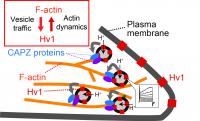
We revealed that the proton channel Hv1/VSOP, previously thought to function at the cell surface in microglia (brain immune cells), also functions on endosomes inside cells and precisely controls the actin cytoskeleton. Using advanced microscopy and electrophysiology (endosome patch-clamp), we found Hv1 acts as a brake on actin elongation.
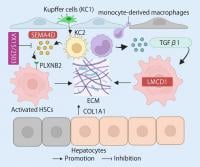
A high-resolution cellular atlas of liver fibrosis and recovery identifies two proteins, SEMA4D and LMCD1, as promising therapeutic targets. The findings were validated in both mouse models and human patient samples, suggesting relevance to human disease.
The LIGO–Virgo–KAGRA (LVK) detector network has a new trick up its sleeve to improve the instruments’ sensitivity to gravitational waves: it’s called Astrophysical Calibration and it plays a role similar to auto-tune in music production.
Obesity trends have continued to rise in low- and middle-income countries over the past 45 years, but have plateaued in many high-income countries, a study in Nature reports.
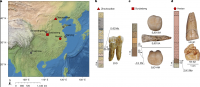
Enamel proteins from the teeth of six Homo erectus individuals that lived in China around 400,000 years ago offer insights into how ancient genetic material might have made its way into modern humans.
What if light had a hidden geometry? A new international collaboration between Tohoku University and Max Planck Institute for the Science of Light shows that the geometry behind light waves can affect how light moves and interacts inside materials. Their research explores the hidden geometry of light and reveals new connections between photonics, topology, and quantum physics.
More than a decade after the Nagoya Protocol, which aims to fairly share the benefits of utilizing genetic resources, became law, microbiologists and other scientists still face practical challenges and confusion.
A new guide published by a team of microbiologists provides universally applicable frameworks for anyone working with biological resources.
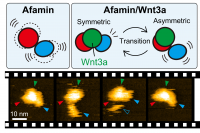
We have succeeded in visualizing the structural dynamics underlying how the serum protein Afamin stabilizes and transports Wnt3a, a lipid-modified signaling molecule.
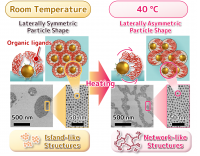
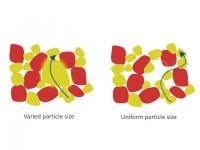
A tiny change to the arrangement of organic molecules in nanoparticle systems can result in a massive change to material properties. By synthesizing gold nanoparticles coated with two different types of organic molecules, a research team has uncovered new insights into this phenomenon.
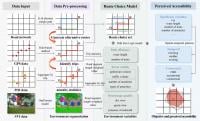
SUTD researchers used mobile phone GPS traces, street view imagery, and open-source spatial data to show that pedestrian route choices in a rapidly developing city are shaped far more by street conditions and context than by distance alone.
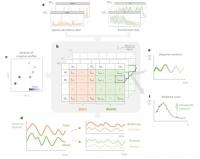
An international research team led by National Taiwan University has developed a new analytical framework based on Empirical Dynamic Modeling. This framework can quantify how response diversity varies over time using time-series data. Published in Nature Communications, the study offers the first direct empirical evidence that greater response diversity helps stabilize total community biomass.
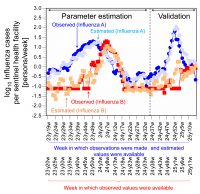
Researchers from The University of Osaka and collaborators developed a wastewater-based method to estimate influenza incidence by measuring viral RNA concentrations in wastewater. The approach can separately estimate influenza A and B trends and may detect epidemic changes about one week earlier than conventional patient report data. The study highlights wastewater surveillance as a promising complement to existing public health systems for earlier healthcare preparedness.
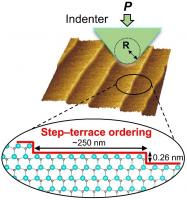
Researchers from The University of Osaka report the creation of step–terrace–ordered GaN surfaces using catalyst-referred etching (CARE). Mechanical testing on these surfaces demonstrates exceptional reproducibility across 100 measurements, achieving record-low stress scatter.
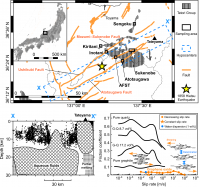
Many secrets lie deep beneath the Earth’s surface. Researchers from Tohoku University uncovered one of them when they discovered a hidden natural lubricant inside an active fault. Their findings may explain why the Atotsugawa Fault System produces surprisingly few large earthquakes despite being located in a tectonically active region.
A new cohort of Outstanding Scholarly Work Awardees (OSWA) across the Ateneo’s nine schools reflect a shared commitment to research that extends beyond the confines of the University.
Dolphin secrets, Iron-rich Moon, Squeezing diamonds, Sweat the small stuff, Muonic molecules. Read all in the latest Editor's Choice. Plus: SciCom Coffee speaker.
Daegu Gyeongbuk Institute of Science and Technology (DGIST)
12 May 2026
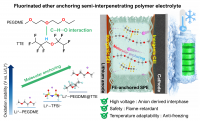
- DGIST Principal Researcher Kim Jaehyun’s team has developed a high-voltage, flame-retardant solid polymer electrolyte that operates even at low temperatures
- Fluorine-based additives induce molecular interactions that modify the lithium-ion solvation structure, prevent polymer freezing, and improve oxidation resistance
- Published in the international journal Energy Storage Materials
Daegu Gyeongbuk Institute of Science and Technology (DGIST)
12 May 2026
- The existing Distinguished Professor Program was expanded and reorganized to establish an integrated recognition program covering both faculty and research staff members
- Principal Researcher Lee Myung-jae was selected and honored as the first “Distinguished Member of Research Staff”
Daegu Gyeongbuk Institute of Science and Technology (DGIST)
12 May 2026
- DGIST successfully hosts the 30th Distinguished Lecture Series featuring Prof. Charles Lee, world-renowned authority in genomic medicine
- Shares cutting-edge research findings on human genomic structural variation and precision medicine and introduces the latest technological trends such as long-read sequencing