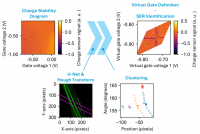
Researchers developed a new artificial intelligence (AI) technique that could help overcome a major bottleneck in the development of large-scale quantum computers. The method enables automated analysis of key measurement data used in semiconductor spin qubits.
What shapes student health? A recent study from Tohoku University reveals that it is not just access to care, but how well health information is understood and used. Better health starts with better understanding, which is why improving health literacy can help all students live healthier lives.
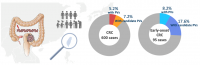
Hereditary colorectal cancer (CRC) accounts for 5-10% of all CRC cases, influencing familial risk and early onset. This study revealed the genetic landscape of CRC in Taiwan, identifying novel and population-specific variants that enhance hereditary risk assessment.
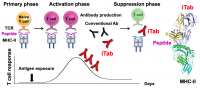
Researchers from The University of Osaka have discovered a new class of antibodies, called iTabs, that naturally suppress specific immune responses by blocking immune cell activation. These antibodies can reduce autoimmune disease severity in mice, suggesting a new way to treat conditions like multiple sclerosis without weakening the immune system overall.
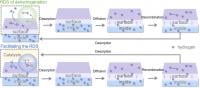
Magnesium hydride stores lots of hydrogen but the problem comes with the high temperatures needed to release it. Now, researchers have found a new catalyst that helps solve this common bottleneck, focusing on a phenomenon called the burst effect.
Biodegradable plastics are great. They provide the ductility of plastics whilst reducing the materials environmental downsides. However, in the quest for greater degradability, improving durability has received scant attention. A research group recently rectified this with the development of a new bamboo composite that emphasised both biodegradability and strength. The group also developed a means to predict how the material breaks down in water.
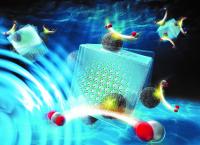
Researchers at The University of Osaka have developed a catalyst that uses vibrational energy to convert carbon dioxide (CO2) into carbon monoxide (CO), an important industrial feedstock. The work demonstrates a new piezocatalytic route for CO2 conversion at low temperature and ambient pressure, offering a potential path toward future low-energy carbon recycling technologies.
For 70 years, we have assumed that “attempt time” in nanomagnets is one nanosecond. For the first time ever, this value was measured experimentally by researchers at Tohoku University. Spoiler alert: it’s more than one nanosecond!
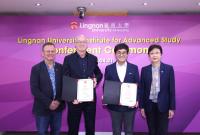
The Lingnan University Institute for Advanced Study (LUIAS) held a conferment ceremony today, 21 April, to honour two internationally famous scholars. Prof Arnold B. Bakker, a leading authority in work and organisational psychology at Erasmus University Rotterdam, was appointed a Lingnan Fellow. Prof M. Jae Moon, an eminent scholar in public management and digital governance from Yonsei University, Korea, received the title of Senior Lingnan Scholar.
Engineers at NIMS develop a system that captures all the elements of trial and error in material design, enabling reliable reproduction of the reasoning processes and results
Floatable beads made from chitosan and cellulose acetate and enhanced with bentonite were engineered to effectively clean oil from water. The beads showed good oil adsorption capacity while remaining easy to collect from the water surface.
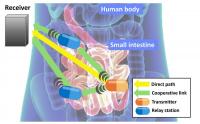
Wireless signals do not travel well through the human body, especially in high-frequency bands, such as the UWB band, making it difficult for swallowable medical devices to reliably send data outside the body. By accounting for how different frequencies behave in the body, researchers adjusted each part of the signal to match how it is absorbed and distorted by tissue, creating a stronger, clearer signal at the receiver.
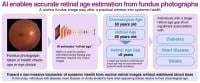
A picture (of the eye) is worth a thousand words to this AI system that predicts the risk for major diseases like diabetes, based on the gap between the patient’s real age and the estimated retinal age.
Daegu Gyeongbuk Institute of Science and Technology (DGIST)
21 Apr 2026
- Strengthens high school students’ advanced inquiry capabilities through collaboration between DGIST faculty and school teachers
- Provides systematic support, from mentoring during the semester to intensive research during vacations and final presentations
An international research team led by the Department of Mechanical Engineering at CityUHK has successfully developed a breakthrough technology, called “Liquid Droplet Mops”, which only uses a minimal amount of water to effectively remove dust and pollutants from solar panel surfaces, significantly enhancing cleaning efficiency while conserving water.
For many years, designing synthetic polymer systems has been inspired by the hierarchical self-assembly of folded proteins into functional nanostructures. However, extending folding-based design principles to small synthetic molecules has remained elusive. In particular, luminescent molecules with complex three-dimensional structures were considered difficult to assemble.
Daegu Gyeongbuk Institute of Science and Technology (DGIST)
21 Apr 2026
- DGIST Prof. Moon Cheil’s team reports the discovery of two immune cell mechanisms operating within the brain’s olfactory system during the early stages of dementia
- Identifies region-specific immune response roles (“tailored firefighters”), paving the way for early diagnosis and personalized treatment
- Published in Alzheimer’s & Dementia, a leading journal in Alzheimer’s disease research
Daegu Gyeongbuk Institute of Science and Technology (DGIST)
21 Apr 2026
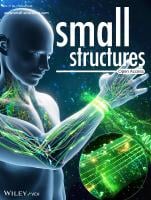
- Prof. Kim Bong-hoon’s team implements a smart fabric-based sensor that can collect sweat automatically and analyze multiple biosignals simultaneously.
- It measures electrolytes, metabolites, and movement all at once using minute amounts of sweat: Customized healthcare is expected.
- The paper was selected as a cover article in “Small Structures,” a prestigious international journal in the field of nanotechnology and materials science.
Daegu Gyeongbuk Institute of Science and Technology (DGIST)
21 Apr 2026
- Implements a mathematical model by applying open innovation dynamics to AI learning mechanisms
- Expected to resolve structural issues of general AI, such as excessive energy consumption and privacy concerns
Daegu Gyeongbuk Institute of Science and Technology (DGIST)
21 Apr 2026
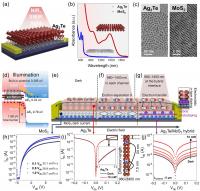
- Prof. Jong-Soo Lee’s team realizes a “hybrid photosensor” combining quantum dots and two-dimensional semiconductors
- Proposes a low-cost, large-area platform to replace expensive conventional sensors; successfully fabricates a 32×32 pixel image sensor array
- Published in the world-leading materials science journal Advanced Materials
Lingnan University and Yuanpei College of Peking University (PKU) organised the Lingnan-Yuanpei STEM Summer Academy (LYSSA) jointly for the third consecutive year.
In collaboration with Clarivate, Professor Nam-Gyu Park’s research team highlights the rapid growth of solid-state implementation since its first successful realization in 2012
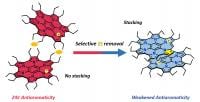
An Ehime University research group has discovered that antiaromatic molecules, typically unstable, can form stable dimers through π-stacking. The homoHPHAC cation, despite its positive charge, adopts a slightly offset stacked structure. This interaction induces electronic reorganization, partially attenuating antiaromaticity. The findings reveal a new mode of molecular assembly for antiaromatic molecules and provide insights for designing functional π-conjugated materials.
Researchers uncovered that an orthogonal molecular architecture directs the formation of a rare double-cable structure, offering a new blueprint for advancing the fundamental design of energy-active materials. By guiding charges to move along separate pathways, the new design minimizes energy loss and boosts clean energy generation.
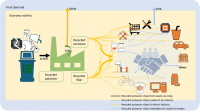
This study uses an IO-MFA model to reveal that recycled polyester is currently concentrated in low-value industries, identifying high-value invisible pathways in indirect supply chains to foster strategic industrial matchmaking. It provides a data-driven framework for policymakers to design "pull" mechanisms, such as mandatory recycled content, to redirect materials toward higher-margin economic streams.
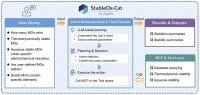
Researchers have created a new database that employs AI to filter jargon and eliminate the need for users to have specialist programming skills. Called StableOx-Cat, the database identifies stable metal oxide electrocatalysts, making it easier to discover better materials for clean energy technologies.