
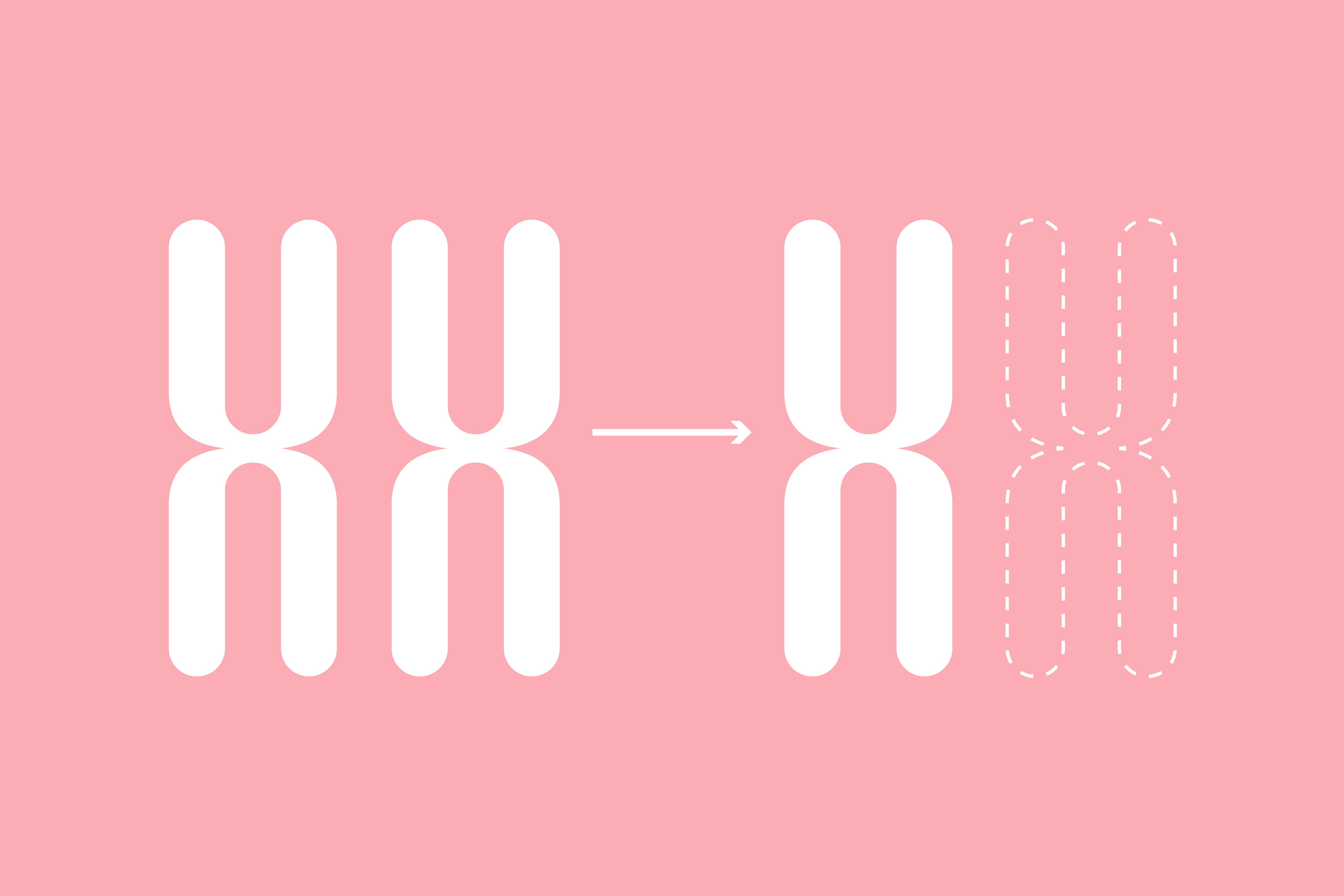

Cellular changes affect ability to conceive
Missing X chromosome affects fertility: Women with loss of the X chromosome are shown to have difficulty conceiving naturally.
Osaka Metropolitan University
Chromosomes carry genetic information for biological sex, which generally assigns women two X chromosomes and men XY chromosomes. This is a basic principle of human genetics most are taught in grade school biology, but it is little known that with aging, men can lose the Y chromosome, and women can lose one of their X chromosomes. These phenomena are known as loss of the Y chromosome (LOY) and loss of the X chromosome (LOX). LOY is associated with several diseases such as Alzheimer’s disease, diabetes mellitus, and heart disease, while LOX may link to acute myeloid leukemia and pneumonia. However, little is known about LOX’s effect on reproduction.
Therefore, a research group led by Associate Professor Takuya Misugi and Professor Daisuke Tachibana at Osaka Metropolitan University’s Graduate School of Medicine investigated the association between LOX and infertility. The team extracted white blood cells from 20–45-year-old women, 123 who had conceived naturally and 381 who did not, then compared LOX levels.
The results revealed that women with infertility had a significantly higher proportion of LOX cells. Furthermore, when the proportion of LOX cells in white blood cells exceeded approximately 0.9%, the likelihood of achieving natural pregnancy decreased. The researchers also examined the relationship between LOX and anti-Müllerian hormone (AMH), which can be used as a marker of ovarian reserve. The analysis showed that AMH levels were not associated with the LOX measured in this study.
“Based on our findings, combining AMH with LOX analysis may enable more accurate prediction of whether natural pregnancy is possible,” said Taiki Kikuchi, the first author of this study. “In the future, measuring LOX in individuals experiencing infertility may help determine whether natural pregnancy is possible or whether fertility treatments, such as in vitro fertilization, should be initiated at an earlier stage.”
The findings were published in Reproductive BioMedicine Online.
Conflict of interest statement for all authors
Tomohiro Kubo is the founder of TL Genomics, Inc. Soichi Sano serves as a scientific advisor to TL Genomics, Inc. Taiki Kikuchi, Naofumi Yoshida, Shintaro Yoneyama, Yoshinori Maki, Kohei Kitada, Akihiro Hamuro, Takuya Misugi, Yoshihiro Nakamura, Atsushi Haruki and Daisuke Tachibana declare no conflicts of interest.
###
About OMU
Established in Osaka as one of the largest public universities in Japan, Osaka Metropolitan University is committed to shaping the future of society through the “Convergence of Knowledge” and the promotion of world-class research. For more research news, visit https://www.omu.ac.jp/en/ and follow us on social media: X, Instagram, LinkedIn.
Advertisement