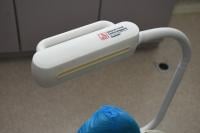
Researchers at the National Dental Research Institute Singapore (NDRIS) have developed a novel device that aims to limit the spread of aerosols generated during dental procedures, thereby lowering the risk of COVID-19 crosscontamination in the dental setting.
The Kisakata Earthquake devastated Akita and Yamagata Prefectures. More details about this Edo period disaster have been revealed thanks to a collaborative project between researchers and locals.
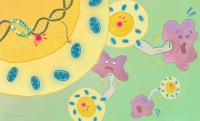
A specially designed lipid nanoparticle could deliver immune-signaling molecules into liver macrophage cells to overcome resistance to anti-tumor immunotherapy.
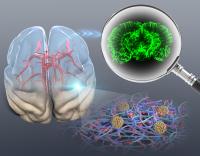
When it comes to cancer, clarity is key. The ability to visualize cancerous tumors and metastatic tissue three dimensionally (3D) can help clinicians diagnose the precise type and stage of cancer, while also informing the best treatment methods. To obtain an even clearer tissue for imaging, a research team based in Japan has tested the effectiveness of specialized hydrogels.
Inspired by a kind of tree leaf, scientists at City University of Hong Kong (CityU) discovered that the spreading direction of different liquids deposited on the same surface can be steered, solving a challenge that has remained for over two centuries. This breakthrough could ignite a new wave of using 3D surface structures for intelligent liquid manipulation with profound implications for various scientific and industrial applications, such as fluidics design and heat transfer enhancement.
A new approach leads to the long-awaited formation of rings made of three pyrroles, which could be used to produce compounds with a host of interesting properties, and explains why they have not been observed before.
Accommodation for young people in Hong Kong has long been at the top of the policy agenda. Recent research conducted by Lingnan University in Hong Kong (LU) and the City University of Hong Kong on the younger generation’s housing opportunities finds that 26 per cent of parents who responded expect to subsidise their adult children when they buy a property.
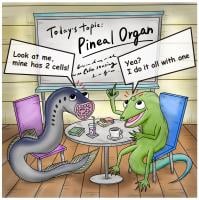
Using the lamprey, researchers from Japan analyzed the photosensory mechanism of the pineal organ, also called the pineal gland, in non-mammalian vertebrates and discovered a novel mechanism of pineal color discrimination (two-cell system) in which two types of photoreceptor cells, each containing two different opsins, are used to detect color. This discovery may provide insight into the evolution of color detection in other animals, including color vision in humans.
Anna Mani (23 August 1918 – 16 August 2001) was an Indian meteorologist who contributed significantly to the understanding of solar radiation, ozone and wind energy by developing a wide range of measurement tools. One of India’s pioneering female scientists, Mani excelled in the male-dominated area of meteorology and became the Deputy Director-General of the India Meteorological Department.
Lockdowns and restricted mobility have devastated labour markets across the world. According to the International Labour Organization (ILO), the equivalent of 225 million jobs was wiped out globally due to employment and working hour losses in 2020 compared to 2019 (Q4). These working hour losses are four times higher than those experienced during the global financial crisis in 2009.
Daegu Gyeongbuk Institute of Science and Technology (DGIST)
15 Sep 2021
New research published in Stem Cell Reports has found elevated cholesterol supply from astrocytes to neurons in the model of Alzheimer's disease (AD) brains, suggesting that modulating brain cholesterol could be explored in the search of treatment options for the devastating, degenerative disease.
Institute of Industrial Science, The University of Tokyo (UTokyo-IIS)
14 Sep 2021
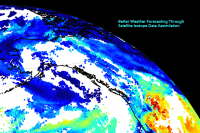
Researchers from The University of Tokyo assimilated satellite observations of water vapor isotopes into a weather forecasting model and found that forecast accuracy was improved by several percentage points
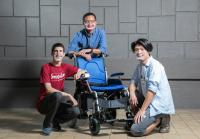
The Lingnan Entrepreneurship Initiative (LEI) of Lingnan University has received two Gold awards at the MUSE Design Award in the category Conceptual Design for their “CREW Wheelchair Control System” and “12° Mask” respectively.
Similar to a magnet that always has both south and north poles, a kind of special quasiparticles in condensed matter called “Weyl Fermions” always appear in pairs with opposite chirality. There had been no experimental report that unpaired Weyl points exist in condensed matter until recently, a City University of Hong Kong (CityU) physicist observed the first unpaired singular Weyl magnetic monopole in a specific kind of single crystalline solid.
Cochlear implants help deaf patients in hearing, yet the current technology remains far from perfect. A research team led by scientists from City University of Hong Kong (CityU) has shown that neonatally deafened rats could be trained with cochlear implant stimulation to restore the ability to locate the directions of sound origins.
Would you feel depressed if it has rained for several days? Sunshine affects our mood. The medical sector generally believes that seasonal affective disorder (SAD) is related to shorter sunshine duration in autumn and winter, as sunlight affects the activity of the brain.
Social media makes it easy for us to know how friends are doing recently, and even give us clues about our friends’ social networks. But in order to know the social networks of people of the past, you may have to bury yourself in countless ancient books and put in a lot of effort to figure out their actual relationships. A historian from City University of Hong Kong (CityU) who actively promotes digital humanities research uses digital tools to study the history of the Song dynasty.
The MSME sector in Sri Lanka amounts to 1.017 million establishments, employing approximately 2.25 million persons. This approximates to more than 90% of total establishments in the country and 45% of total employment.
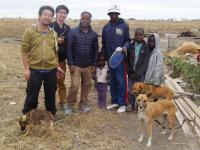
Abnormally high levels of DNA methylation have been identified in dogs exposed to high levels of lead near a mining area in Kabwe, Zambia, by a team of scientists from Japan and Zambia.
Giants in History: Chinese agronomist Yuan Longping (7 September 1930 – 22 May 2021) developed the first varieties of the high-yield, hybrid rice that brought food security to multiple countries including China, which had been ravaged by food shortages as recently as the mid-20th century.
Giants in History: Gloria Lim (1930-11 July 2022) is a retired mycologist from Singapore who studied tropical fungi. One of the first students to attend University of Malaya when it was founded in 1949, she graduated as one of the two Botany Honours students from the inaugural class.
A recent study conducted by the Science Unit of Lingnan University in Hong Kong (LU) shows that concentrations of fine particulate matter (PM2.5) from incense burning both inside and outside temples could be 6 times and 4 times of the recommended levels respectively. In addition, the more temples there are in the same district, the higher the respiratory mortality rate.
Magnetic patterns in meteorites, Treating mitochondrial diseases, underwater sensors and a broad COVID-19 vaccine in the September Editor's Choice. Plus, what's it like to communicate vaccine research in a pandemic and Asia Research News 2022.
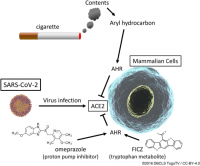
Researchers have identified a potential reason why lower numbers of COVID cases have appeared amongst smokers compared to non-smokers, even as other reports suggest smoking increases severity of the disease.
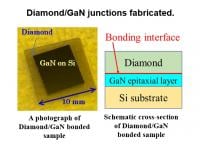
Researchers succeed in the direct bonding of diamond and gallium nitride (GaN) at room temperature and demonstrate that the bond can withstand heat treatments of 1,000℃, making it ideal for the high temperature fabrication process of GaN-based devices. GaN-on-diamond semiconductor material will allow for the next generation of high power, high frequency devices.
International Institute for Integrative Sleep Medicine (WPI-IIIS), University of Tsukuba
09 Sep 2021
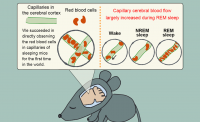
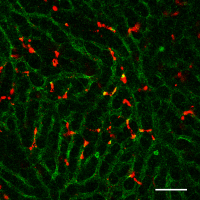
Researchers from the University of Tsukuba and Kyoto University find that capillary blood flow in the brain, which is important for delivering oxygen and nutrients and removing waste products, is increased in mice during the dream-active phase of sleep.






![The chemical structure and solids crystals of calix[3]pyrrole (Photo: Inokuma Laboratory).](https://www.asiaresearchnews.com/sites/default/files/styles/thumbnail/public/articles_images/P2136%20Fig1%20crystal%20photo.jpg?itok=v32aIJNZ)