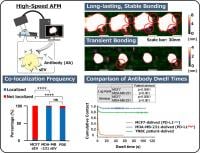
Researchers at the Nano Life Science Institute (WPI-NanoLSI) at Kanazawa University have developed a way to observe how antibodies interact with a cancer-related protein carried on tiny membrane-bound vesicles released by cells. Using high-speed atomic force microscopy, they found that measuring how much of the protein is present does not necessarily show how accessible it is to antibodies.
Large-scale study of more than 16,000 disaster-affected residents highlights the importance of distinguishing social networks, loneliness, and purpose in life during long-term recovery.
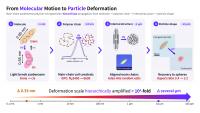
Tomomichi Itoh and his colleagues at Ehime University have shown how tiny light-induced molecular shape changes can be amplified into visible deformation of polymer microparticles. The team developed light-responsive particles containing azobenzene molecules and revealed how structural changes triggered by light spread through the material, ultimately deforming particles several to tens of micrometers in size.
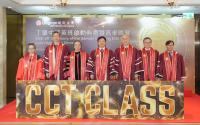
Lingnan University has announced the admission of 14 outstanding students to its inaugural Samuel C.C. Ting Elite Class (CCT Class). Selected from high-achieving undergraduates awarded University Entrance Scholarships, the students come from eight countries and regions, namely the Hong Kong SAR, the Chinese Mainland, Ethiopia, Kyrgyzstan, Nepal, the Philippines, Russia, and the UK.
Daegu Gyeongbuk Institute of Science and Technology (DGIST)
16 Oct 2026
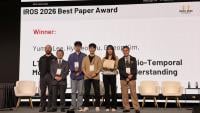
- Sole winner among 1,933 papers; develops “long-term memory for robots” that tracks the history of objects in changing spaces
- Understands spatial and temporal changes simultaneously using only video, without expensive sensors; “Expected to accelerate commercialization of household and logistics robots”
Daegu Gyeongbuk Institute of Science and Technology (DGIST)
16 Oct 2026
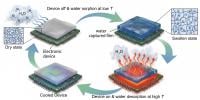
- DGIST Professor Seong Kyun Kim’s team develops a novel material that retains airborne moisture and evaporates it when heated to provide cooling
- Adheres firmly to metal and semiconductor surfaces without inducing corrosion; demonstrates cooling for over 12 hours and temperature reductions of up to 18.2°C
- Published in the internationally renowned journal Small Structures
Daegu Gyeongbuk Institute of Science and Technology (DGIST)
16 Oct 2026
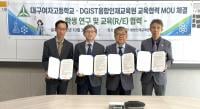
- MOU signed with Daegu Girls’ High School, Gyungbuk Girls’ High School, and Suseong High School for collaboration on student research (R/E)
- Practical career exploration programs to be operated, including research mentoring and open-lab visits
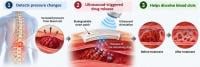
Researchers have developed a biodegradable smart patch that detects pressure changes and releases blood clot-dissolving medication when activated by ultrasound. Laboratory tests demonstrated sensitive pressure monitoring, controlled drug release, and approximately 70% blood clot degradation, highlighting its potential for future medical applications.
Nine students from Saint Francis University (SFU) took part in the GYEI Oxford-Cambridge Academic Program 2026, organised by the Global Youth Empowerment Initiative (GYEI), in August this year. The 12-day academic and cultural exchange at the Universities of Oxford and Cambridge allowed students to experience the academic atmosphere of world-leading institutions firsthand and broaden their global horizons.
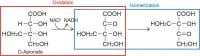
Only four enzymes including D-apionate oxidoisomerase (ApnO) are known to catalyze distinct, sequential chemical reactions at a single active site. Biochemical and crystallographic analysis revealed the catalytic mechanism of ApnO containing zinc and manganese ions as metal cofactors, and unique tetrahedral coordination geometry of the later.
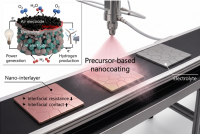
Nanocoating technology reduces interfacial resistance between electrode and electrolyte, maximizing efficiency in both hydrogen production and power generation
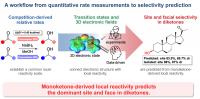
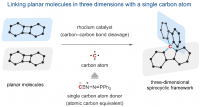
Researchers from the University of Osaka have developed a rhodium-catalyzed reaction that uses a single carbon atom to join two flat molecules into a rigid 3D spirocyclic structure. The reaction cleaves carbon–carbon single bonds and forms four new carbon–carbon bonds around one central carbon. It can join identical or different molecules, and it is expected to aid the design of new functional molecules for applications such as electronic materials.
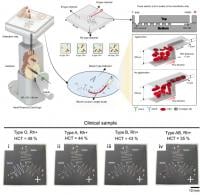
Researchers at National Taiwan University have built a small hand-cranked spinner and a plastic chip that, from a single drop of blood, can identify a person's blood type and estimate how much of their blood is made up of red blood cells. The test takes about one minute and needs no electricity, making it suited to ambulances, disaster zones and remote clinics.
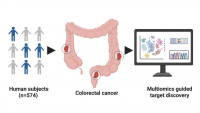
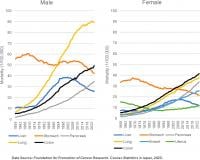
Over decades of sustained, integrated national viral hepatitis control, Japan has seen substantial reductions in HBV- and HCV-related disease burden and hepatocellular carcinoma mortality.
The Hong Kong Council of Social Service estimates that the number of carers across the territory reaches as high as 1.12 million. Some employed people are forced to juggle the demands of work alongside caring for parents, spouses, or children, taking on the arduous role of “compound carers”.
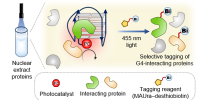
A new labeling tool reveals an unlikely candidate involved in the DNA folding process: hexokinase-1. The exciting new method can be used to determine how DNA and proteins interact.
Elemental sulfur is widely known to occr in microorganisms, plants, and fungi, but whether mammals produce and use elemental sulfur has remained unclear.Now, a collaborative team has finally answered this question, discovering that mammalian cells and tissues produce and store cyclo-octasulfur - a stable form of elemental sulfur composed of eight sulfur atoms arranged in a ring.
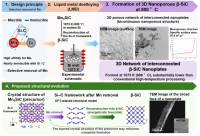
Researchers discovered that using liquid metal dealloying can help produce a special silicon carbide at a markedly lower temperature than conventional methods, while still allowing for control of its structure at the nanometer scale.
Lingnan University has officially opened applications for its undergraduate programmes for the 2027/28 academic year. Starting from today, both Chinese Mainland Gaokao candidates and students holding international qualifications may submit their applications through the University's online system.
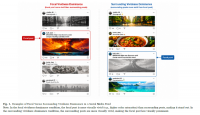
A joint study demonstrates that brighter, more colorful fake posts capture user gaze faster, yet overall memory retention remains unaffected by surrounding visual contrast
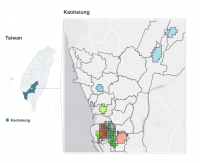
A study of more than 4,000 patients in southern Taiwan suggests that older adults may play an under-recognised role in tuberculosis transmission. It also reveals how patterns of spread differ across bacterial groups and locations, offering clues for more targeted prevention.
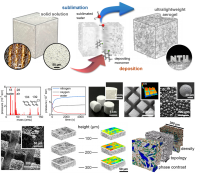
Researchers at National Taiwan University (NTU), a collaboration from the College of Engineering, College of Medicine, and the National Taiwan University Hospital (NTUH), have developed a revolutionary method for producing aerogels, introducing what they describe as the world's first purely gaseous-born aerogel fabrication platform.
A research team led by Professor Chan Kui-ming from the Department of Biomedical Sciences at CityUHK, discovered that H2BE113K, a missense H2B mutation, promotes colony formation and lung metastasis of breast cancer.
The Wofoo Joseph Lee Consulting and Counselling Psychology Research Centre at Lingnan University and the Interdisciplinary Research Center for Applied Psychology at Shandong Normal University signed a Memorandum of Understanding (MoU) at Lingnan on 8 October 2026. The two centres also co-organised a psychology seminar on impulsive decision-making and the influence of artificial intelligence (AI) on moral decisions.