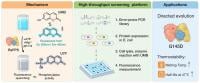
The lab at National Taiwan University has developed a simple fluorescence-based method to rapidly test the activity of an enzyme that phosphorylates phenolic compounds. This new platform makes it much easier to screen thousands of enzyme variants and provides a practical tool for exploring and improving phenolic compound–phosphorylating enzymes.
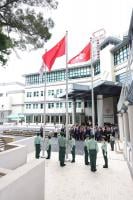
Lingnan University held a flag-raising ceremony to celebrate the 77th anniversary of the founding of the People’s Republic of China on the University campus today, 1 October, starting at 10:30 am.
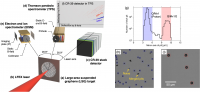
Researchers from the University of Osaka and collaborating institutions accelerated protons to nearly half the speed of light using a long-pulse laser and ultrathin graphene. A moving electric field carried the protons to high energies, and artificial intelligence helped detect rare high-energy particles among millions of detector images. This technique could pave the way for future AI-driven autonomous laser experiment systems.
Analysis of 3.8 million immune cells from nearly 2,000 people reveals distinct waves of immune ageing and sex-specific changes that may help explain differences in age-related and autoimmune diseases.
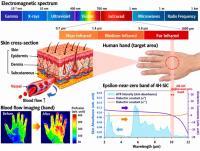
This study published in Advanced Science reports a wavelength-matched far-infrared approach for enhancing peripheral blood circulation using silicon carbide (SiC), which exhibits epsilon-near-zero behavior near 10.3 μm. By matching the selective thermal emission of SiC with the low-absorption optical window of human skin, the study demonstrates enhanced cutaneous blood flow compared with a conventional broadband graphite emitter.
Ads lasting 10 seconds or less are up to 40% more effective than longer conventional ads at prompting immediate consumer responses such as website visits
Institute of Industrial Science, The University of Tokyo (UTokyo-IIS)
01 Oct 2026
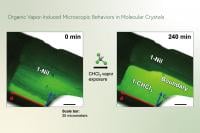
A study from the Institute of Industrial Science, The University of Tokyo used special instruments to investigate how crystals smaller than a strand of hair change and move as they draw in chloroform vapor
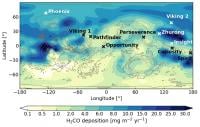
Billions of years ago, rain may have helped shape where the chemistry of life could begin on Mars. A new study maps the delivery of formaldehyde, an important prebiotic molecule, to the surface. The map could help guide future Mars missions searching for signs of the planet’s early organic evolution.
Researchers at SUTD have built a robotic platform that can be dropped from the air onto remote waters and sail autonomously using wind energy, pairing rapid aerial deployment with the potential for long duration marine monitoring.
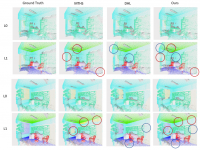
A new framework developed by SUTD researchers could improve how robots, autonomous systems and augmented reality tools recognise objects and navigate complex real-world environments.
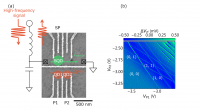
Researchers at Tohoku University and collaborators have demonstrated key technologies for controlling and measuring electrons in zinc oxide quantum dots, an important step toward developing spin-based quantum devices. Their results provide a new platform for exploring how electron spins behave in this promising material.
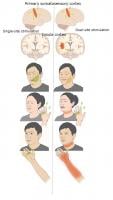
Researchers at the University of Osaka found that simultaneous stimulation of the primary somatosensory cortex and insular cortex may produce richer artificial bodily sensations than stimulating either region alone. In three patients, dual-site stimulation evoked sensations including gentle touch and combined numbness and warmth.
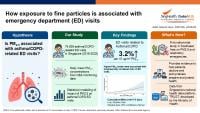
Nationwide Duke-NUS study finds asthma-related emergency visits rise within two days of increases in PM2.5, underscoring the importance of early precautions during periods of poorer air quality.
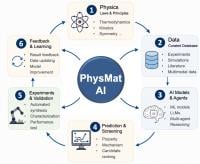
Correlation does not imply causation. Using AI to discover new materials is becoming more common, but data-driven approaches sometimes rely heavily on correlations and make testing AI-based predictions difficult. A new perspective paper published by Tohoku University researchers developed a framework for incorporating physics-based principles into AI to generate more interpretable, testable, and meaningful predictions.
Lingnan University has achieved outstanding results in the newly released Times Higher Education (THE) World University Rankings 2027. Among 2,297 institutions across 118 countries and regions, Lingnan made a remarkable leap from the 301–350 band to 257th, climbing nearly 100 places to show the highest improvement among the Hong Kong SAR’s eight UGC-funded universities.
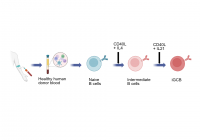
Researchers at the University of Osaka developed a simple two-step culture system that turns human blood-derived B cells into germinal center-like B cells using CD40L, IL-4, and IL-21 in a specific sequence. The resulting cells closely resemble genuine human germinal center B cells and undergo somatic hypermutation. The platform provides a practical tool for studying antibody formation directly in human cells and may support future vaccine and autoimmune disease research.
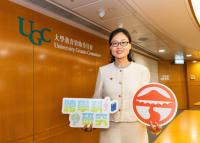
The University Grants Committee (UGC) of the Hong Kong Special Administrative Region presented the 2026 UGC Teaching Award to Prof Helen Geng Hongyan, Assistant Professor of Teaching of the Division of Science at Lingnan University. She received the award in the General Faculty Members category.
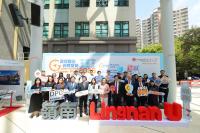
Lingnan University and the Civil Service Bureau of the Hong Kong Special Administrative Region (HKSAR) Government jointly organised the first Government Career Fair on the Lingnan campus today (29 September), with 20 exhibition booths, bringing together over 15 government bureaux and departments — including the Digital Policy Office, the Education Bureau, disciplined services and the Leisure and Cultural Services Department, totalling over 30 civil service grades.
Daegu Gyeongbuk Institute of Science and Technology (DGIST)
29 Sep 2026
- New College of AI launching in 2027 to nurture top-tier AI professionals for regional and national industries
- Strategic partnership with France’s ENPC to accelerate the global “Lab-to-Market” model for deep-tech startups
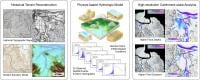
Researchers at Tohoku University ran flood simulations on current-day Marumori Town, Japan, and compared it to data from over one hundred years ago. Their analysis shows how flood risk changes as we install anti-flooding infrastructure, and how this also affects where communities deem it safe to put down roots.
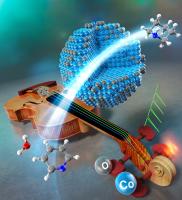
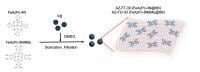
What if the blue pigment in your ink or dye could help power the future of clean energy? A research group has fine-tuned blue pigment molecules to create a blue-pigment based catalyst that is high-performing and free of the more expensive platinum.
New research identifies coastal regions at heightened risk of non-native marine species, including the eastern United States, Gulf of Mexico, coastlines bordering the North Sea, southeastern China and northern Australia.
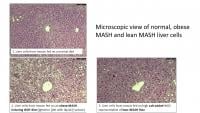
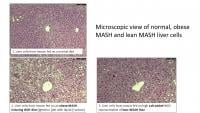
• New research finds that excess dietary salt alters liver metabolism and may drive progressive fatty liver disease even in people who are not obese.
• This sheds light on how lean patients might develop the disease, traditionally associated with obesity, and if applicable to humans, could be a potential prognostic factor for lean MASH.
• Causal role of high salt intake on lean MASH still needs to be verified in patients with this condition.
• New research finds that excess dietary salt alters liver metabolism and may drive progressive fatty liver disease even in people who are not obese.
• This sheds light on how lean patients might develop the disease, traditionally associated with obesity, and if applicable to humans, could be a potential prognostic factor for lean MASH.
• Causal role of high salt intake on lean MASH still needs to be verified in patients with this condition.
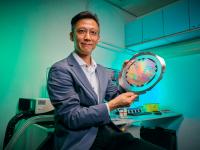
To address the challenges faced by spatial omics, a research team led by Professor Shi Peng from the Department of Biomedical Engineering in College of Biomedicine at City University of Hong Kong (CityUHK) has presented Spectrum-FISH, a sequencing-free and amplification-free approach for the spatial analysis of tissue.