The Agency for Science, Technology and Research (A*STAR)
20 Jan 2012
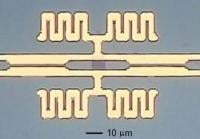
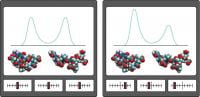
Scientists have developed a new way to create Terahertz radiation - or T-rays, the technology behind full-body security scanners. They say their new, stronger and more efficient T-rays could be used to make better medical scanning gadgets and may one day lead to innovations similar to the “tricorder” scanner used in Star Trek.
The Agency for Science, Technology and Research (A*STAR)
19 Jan 2012
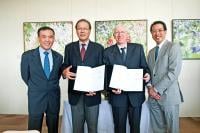
GE Global Research, the central technology development arm for GE Healthcare and all of GE’s businesses, has signed a Memorandum of Understanding (MOU) with Singapore’s Agency of Science, Technology and Research (A*STAR).
The Agency for Science, Technology and Research (A*STAR)
18 Jan 2012
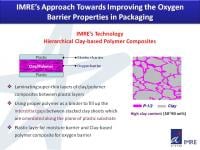
High-tech plastics for better food and medicine packaging as well as more durable paints and varnishes will be developed by a new Industrial Coating and Packaging (ICAP) consortium, helmed by the Institute of Materials Research and Engineering (IMRE), a research institute of Singapore’s Agency for Science, Technology and Research (A*STAR).
Backed by strong support from The Hong Kong Jockey Club (HKJC) Charities Trust, The Hong Kong Polytechnic University (PolyU) has brought together multi-disciplinary expertise for the establishment of Hong Kong's first Design Institute for Social Innovation.
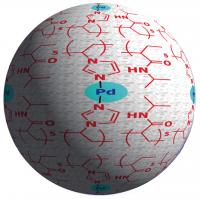
Prof. Dr. Sherif A. El-Safty, a Principal Researcher of the Materials Recycling Design Group, Research Center for Strategic Materials, National Institute for Materials Science developed a nanomaterial which enables simple detection and removal of arsenic from drinking water.
Eight students in Africa, Asia, and Canada have been selected to receive IDRC’s Climate Change and Water (CCW) 2011 Adaptation H2O graduate research awards. They were recommended on the basis of their innovative research relating to climate change and water.
For me, in the flood of news a headline bears special importance for Northeast Asia security. The guideline reiterated by President Hu Jintao about boosting the "cultural soft power" of China recognizes that "culture has increasingly become a major element bringing together the people and the creative power of Chinese nationality".
NIMS is collecting basic data on natural minerals produced in various regions and inorganic materials with different chemical compositions as a tool for selecting suitable materials, and will make this information available in a NIMS Materials database (MatNavi).
After a lengthy study spanning over four years, Professor Pauline Cho from the School of Optometry at The Hong Kong Polytechnic University (PolyU) and her research team concluded that orthokeratology not only can correct refractive error, but also effective in slowing the progression of myopia.
The Agency for Science, Technology and Research (A*STAR)
06 Jan 2012
Experts from around the world, including two Nobel Laureates, converge at A*STAR IMRE’s M3 @ Singapore 2012 conference to present cross-disciplinary innovations for applications ranging from energy to sensors.
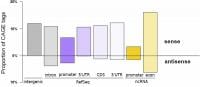
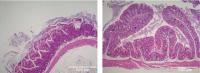
Researchers at the RIKEN Omics Science Center, collaborating with scientists from Italy, Norway, the United States, the United Kingdom and Germany, have found promoters for olfactory receptor genes using nanoCAGE technology, which enables comprehensive analysis of transcription start sites (TSSs) from tiny biological samples.
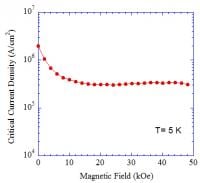
The National Institute for Materials Science succeeded in realizing superconductivity in fullerene nanowhiskers, which are a nanosized carbon material that is lightweight and has a fine fibrous shape - A Giant Step toward the Birth of Lightweight, Flexible Superconducting Materials
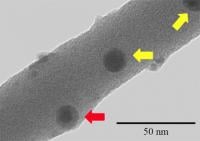
The Nano Electronic Materials Unit, MANA, NIMS selectively grew polymer nanowires using only irradiation with a pulsed laser, in a region limited to the area of irradiation. They also succeeded in imparting diverse functionalities to the nanowires by doping with various species of nanomaterials.
The striking colors of butterfly wings or peacock feathers are examples of so-called ‘structural color’ in nature. You see these colors due to the reflection of certain wavelengths of light from the birds’ feathers.
The National Institute for Materials Science succeeded in fabricating mesoporous Prussian blue, in which an extremely large number of nanosized pores (mesoporous) are formed in the crystal structure of the material.