
Researchers from the University of Osaka found that the human brain represents social relationships learned through drama viewing, especially antagonistic ties. Participants watched six episodes of SUITS and underwent fMRI scans before and after viewing. Brain activity patterns after viewing reflected rivalries and conflicts among characters, particularly in regions involved in social cognition. The findings suggest that negative relationships help structure the brain’s internal social maps.
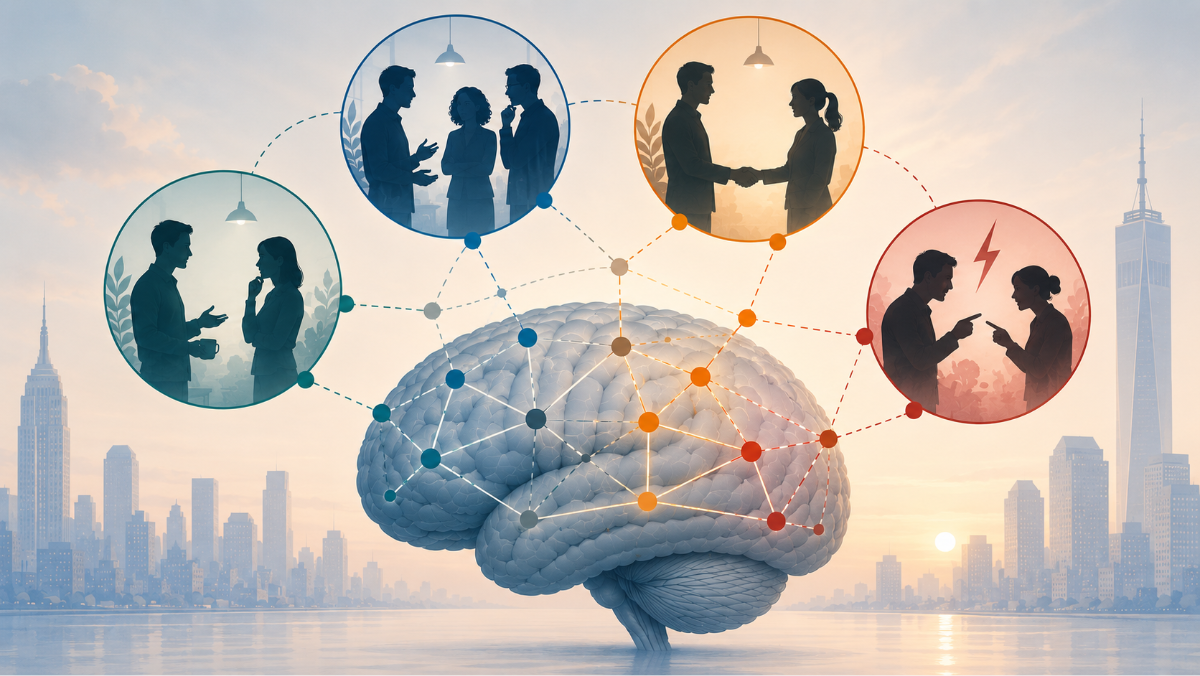
Fig. 1
Image of the study
CC0, No restrictions., Tamami Nakano
Researchers from the University of Osaka have revealed that the brain represents complex character relationships learned through drama viewing, with antagonistic ties playing a particularly important role.
Osaka, Japan - When watching a drama, we quickly learn who is friends with whom–and, just as importantly, who stands against whom. But how does the brain organize this web of alliances, rivalries, and conflicts? Researchers from – the University of Osaka have shown that social relationships learned through a television drama are reflected in patterns of brain activity, especially when those relationships are antagonistic. These findings will be published in Communication Psychology.
Humans need to understand not only individual people but also the relationships among them. Previous neuroscience studies have examined social networks by focusing on the number of connections or a person’s position within a group. However, real relationships are not simply “connected” or “not connected.” They also carry emotional meaning, including friendship, trust, competition, and hostility.
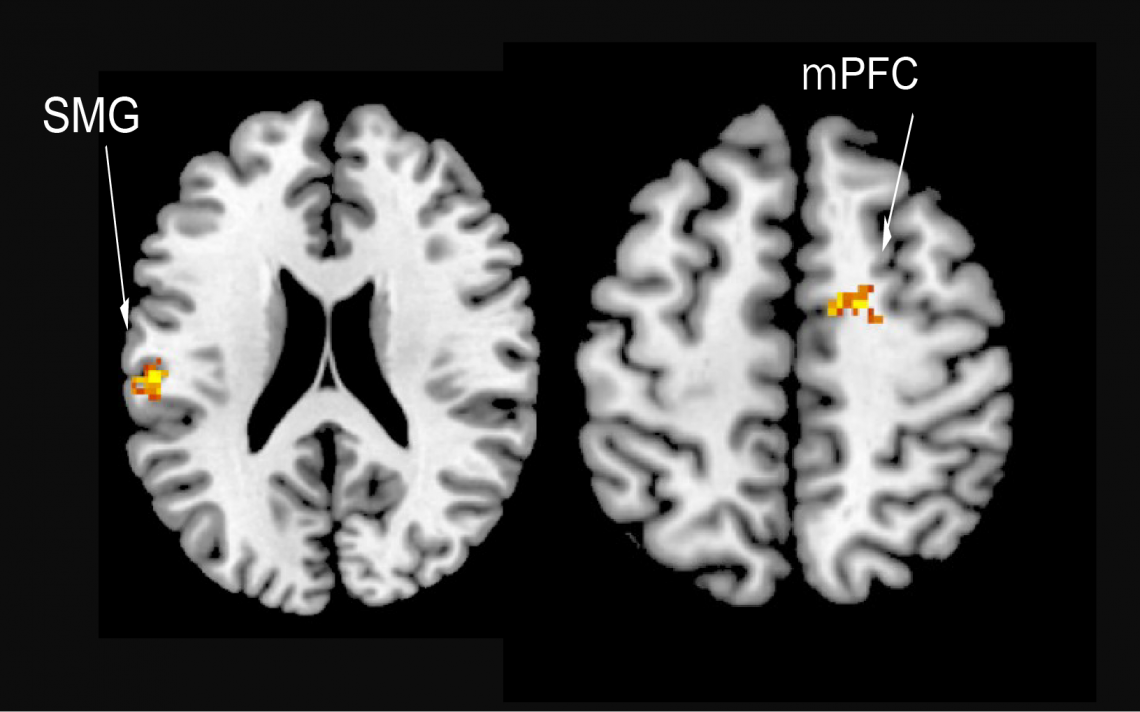
The research team asked 21 university students to watch six episodes of the television drama SUITS. Participants underwent fMRI scans before and after viewing the drama while looking at faces of eight main characters. After viewing, they rated all character pairs for relationship strength and whether the relationship was affiliative or antagonistic. Using representational similarity analysis, the researchers compared these ratings with brain activity patterns. They found that antagonistic relationships were strongly reflected in the left anterior supramarginal gyrus and right medial prefrontal cortex. In contrast, affiliative relationships did not show significant effects under the same criteria.
These findings suggest that the brain builds a multidimensional social map from narrative experience, and that rivalries and conflicts may serve as powerful anchors. The results could deepen understanding of story comprehension, social cognition, entertainment engagement, and future AI systems that infer human relationships.
Professor Tamami Nakano notes that “when we imagine a drama’s character map, we pay attention not only to who is close, but also to who is in conflict. This study shows that such natural social understanding is reflected in the brain.”
###
The article, “Antagonism Shapes Social Maps in the Human Brain,” will be published in Communication Psychology at DOI: https://doi.org/10.1038/s44271-026-00491-y
Fig. 2
Brain Regions representing antagonistic human relationships
Original content, Credit must be given to the creator., Tamami Nakano
About The University of Osaka
The University of Osaka was founded in 1931 as one of the seven imperial universities of Japan and is now one of Japan's leading comprehensive universities with a broad disciplinary spectrum. This strength is coupled with a singular drive for innovation that extends throughout the scientific process, from fundamental research to the creation of applied technology with positive economic impacts. Its commitment to innovation has been recognized in Japan and around the world. Now, The University of Osaka is leveraging its role as a Designated National University Corporation selected by the Ministry of Education, Culture, Sports, Science and Technology to contribute to innovation for human welfare, sustainable development of society, and social transformation.
Website: https://resou.osaka-u.ac.jp/en
Advertisement