
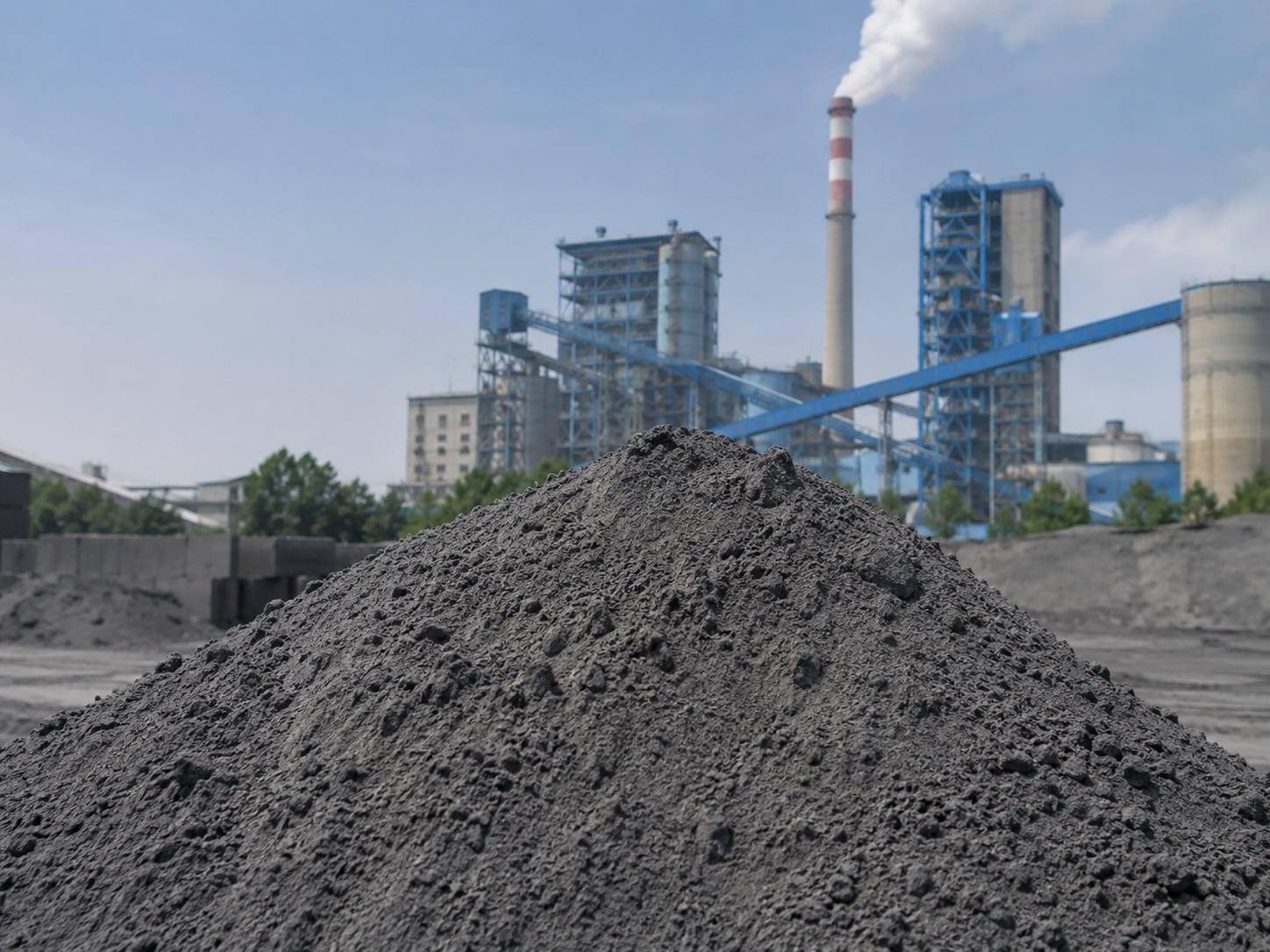

Fly ash waste could partly replace zinc oxide in tyre tread rubber, reducing zinc release while maintaining key performance.
Fly ash from coal-fired power generation could be repurposed as a functional ingredient in tyre tread rubber, helping to reduce zinc oxide use and lower environmental impact.
Researchers show that fly ash, a waste from power plants, can partly replace zinc oxide in tyre tread rubber, reducing zinc release and environmental impact while maintaining key rubber performance.
Tyres are essential to modern transport, but their production and use raise environmental concerns. One important issue is zinc oxide, a common activator used in rubber vulcanisation. Zinc oxide helps rubber form the crosslinked network that gives tyres their strength, elasticity and durability. However, zinc can be released into the environment during manufacturing, recycling and tyre wear, where it may affect aquatic ecosystems.
In a recent study, an international collaborative team from Kasetsart University in Thailand and Newcastle University in Singapore investigated whether fly ash, an industrial waste from coal-fired power plants, could partially replace zinc oxide in tyre tread rubber.
Fly ash contains several metal oxides, including calcium oxide, magnesium oxide, aluminium oxide and iron oxide. These compounds can help activate the vulcanisation process in rubber, suggesting that fly ash could do more than act as an inert filler. It could also help reduce reliance on zinc oxide.
The researchers prepared tyre tread rubber compounds with different zinc oxide-to-fly ash ratios: 3:0 as the control, followed by 2:1, 1:2, 0:3 and 0:5 parts per hundred rubber. They then tested curing behaviour, crosslink density, mechanical properties, dynamic mechanical properties, abrasion resistance, zinc release in water and environmental impact using gate-to-gate life cycle assessment.
The results showed that fly ash could support rubber vulcanisation even when zinc oxide was reduced. The 2:1 and 1:2 zinc oxide-to-fly ash formulations showed crosslinking behaviour comparable to the conventional zinc oxide control. This means zinc oxide could be reduced by around one-third or two-thirds while maintaining effective vulcanisation.
Mechanical performance was also largely preserved. The 2:1 and 1:2 formulations showed tensile strength, modulus and crosslink density comparable to the control rubber. Their dynamic mechanical behaviour was also similar, suggesting that important tyre-related indicators, including road grip and rolling resistance, were not significantly compromised.
The environmental benefit was clear in zinc release tests. After three months in water, the 1:2 zinc oxide-to-fly ash formulation reduced zinc release by 63% compared with the control. This is important because zinc leakage from tyre materials can contribute to aquatic ecotoxicity.
Life cycle assessment also showed that replacing zinc oxide with fly ash reduced freshwater aquatic ecotoxicity, marine aquatic ecotoxicity and global warming potential. The lowest environmental impacts were observed when zinc oxide was fully replaced at the 0:3 ratio. However, the study also showed that higher fly ash loading can affect material performance, so partial replacement appears to offer the best balance between rubber properties and environmental benefit.
The work points to a practical circular economy route for tyre materials. Instead of treating fly ash only as a waste stream, it can be repurposed as a functional ingredient in rubber compounds. At the same time, tyre manufacturers could reduce zinc oxide use, lower zinc release and improve the environmental profile of tyre tread formulations.
The findings are relevant to tyre manufacturers, rubber compounders, waste management companies and sustainability teams seeking lower-impact materials for transport applications. They also highlight opportunities for countries with both rubber industries and fly ash waste streams to develop more circular industrial supply chains.
The paper, “Sustainable use of fly ash waste in tire tread rubber: Characterization of physical properties and environmental impact assessment”, is published in Waste Management. DOI: 10.1016/j.wasman.2025.114737.
Authors and affiliations
The study was carried out by Hassarutai Yangthong, Papawarin Udomsin, Siriwan Jansinak, Supitta Suethao and Wirasak Smitthipong from Kasetsart University, Thailand; and Kheng Lim Goh from Newcastle University in Singapore.
For further details, contact Dr Wirasak Smitthipong at [email protected], or Dr Kheng Lim Goh at [email protected].
Advertisement