


Okinawa rail embryo successfully developed after artificial insemination using frozen-thawed sperm
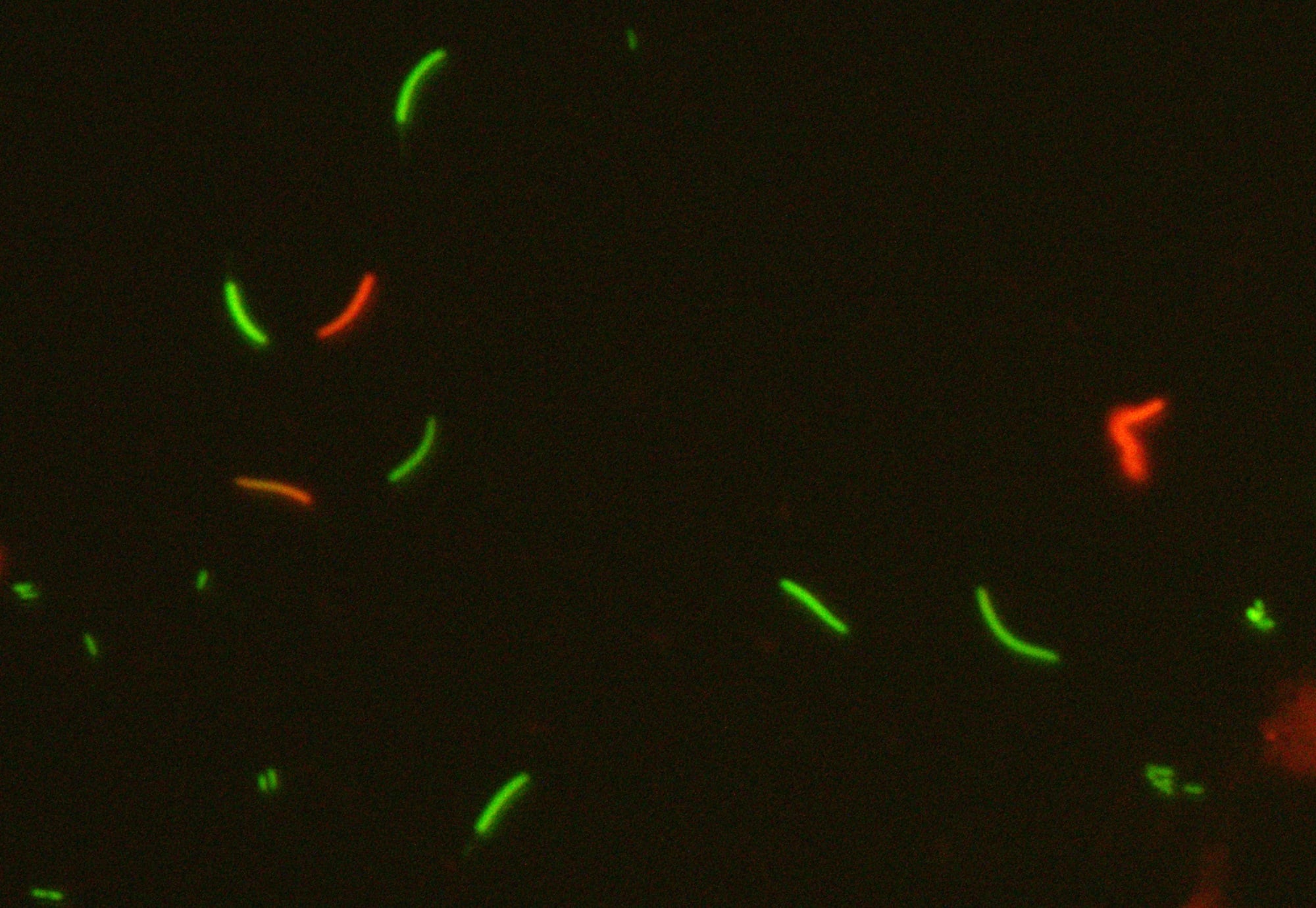
Membrane integrity analysis of frozen sperm: Most of the membranes developed normally. Green shows normally developing membranes, and red shows abnormal development.
Osaka Metropolitan University
The Okinawa rail (Hypotaenidia okinawae) is an endangered flightless bird endemic to the Yanbaru forest region of Okinawa Island in Japan. The bird is only recently recovering its numbers after introduced predators, such as the mongoose, and traffic accidents reduced its population to as low as 820 individuals.
As well as habitat preservation, sperm cryopreservation and artificial insemination are becoming necessary to support its long-term conservation. However, these reproductive technologies have been successfully applied in only a limited number of wild species and so far not successfully in Okinawa rails.
A research group led by Takehito Kaneko of the Graduate School of Veterinary Science at Osaka Metropolitan University reported the successful artificial insemination of an Okinawa rail using collected sperm from a captive breeding facility.
"The freezing medium for cryopreserving the sperm was developed by our team," Kaneko said. "It contains N-methylacetamide as a cryoprotectant, which has previously been used to artificially inseminate other bird species, like chickens."
Analysis of the thawed sperm showed that sufficient sperm motility and membrane integrity were maintained after cryopreservation. When the researchers thawed the frozen sperm and artificially inseminated a female, embryonic development was confirmed.
Unfortunately, on day 21 of incubation, the chick failed to break through the egg—a phenomenon known as pipping—however, despite the chick dying, the embryo developed successfully until that point.
"Although the embryo ultimately failed to hatch because it was unable to pip successfully, this isn't uncommon," Kaneko explained. “The key thing is that our method enabled the reliable preservation of sperm obtained from an endangered bird, for which opportunities for collection are often limited, and that it was successfully used in artificial insemination.”
Analysis of the unhatched offspring showed that development had progressed to the stage immediately before hatching, and a paternity test confirmed that fertilization had been achieved using the frozen-thawed sperm.
“We expect that the techniques developed in this study can be applied to captive breeding programs for other endangered bird species in Japan and elsewhere," Takehito Kaneko said. "Thereby making a significant contribution to conservation efforts.”
The findings were published in Scientific Reports.
Competing interests
The authors declare no competing interests.
###
About OMU
Established in Osaka as one of the largest public universities in Japan, Osaka Metropolitan University is committed to shaping the future of society through the “Convergence of Knowledge” and the promotion of world-class research. For more research news, visit https://www.omu.ac.jp/en/ and follow us on social media: X, Instagram, LinkedIn.
Advertisement