

Chemistry Green chemistry
News
19 Aug 2026
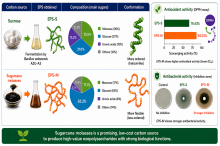
Feeding bacteria a cheap agricultural by-product enables the production of high-value biomaterials with promising biomedical and industrial applications.

21 Apr 2026
Floatable beads made from chitosan and cellulose acetate and enhanced with bentonite were engineered to effectively clean oil from water. The beads showed good oil adsorption capacity while remaining easy to collect from the water surface.
03 Apr 2026
Holds potential for use in developing next-generation catalysts

09 Dec 2025
Brain atlas, From perfume to plastic, Stable solar power, Plant aging switch, Anti-cancer droplets, Greener gold, Extreme star factory and How research shapes sustainability policy. Read all in the latest Editor's Choice.

01 Dec 2025
Surface-bound gels may have provided the structure and chemistry for life to take root on Earth, and perhaps beyond

11 Nov 2025
Researchers have developed an eco-friendly method to create gold nanoparticles (AuNPs) using microalgae. This "green synthesis" avoids harsh chemicals, resulting in nanoparticles that are more stable than conventional ones. When activated by a laser, these AuNPs effectively destroy cancer cells while showing lower toxicity to healthy cells. This breakthrough promises a more sustainable and safer approach to photothermal cancer therapy and other applications in nanomedicine.
22 Oct 2025
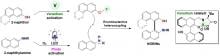
The University of Osaka researchers developed a world-first sustainable method for synthesizing pharmaceutical-grade NOBIN. By cooperatively utilizing a vanadium catalyst and energy-efficient LED light, the process eliminates byproducts, reduces waste, and allows for ideal raw material ratios, paving the way for greener and more efficient chiral molecule production.

28 Apr 2025
The power conversion efficiency of all-organic solar cells was doubled through the development of novel organic electrodes that can be fabricated using a moderate process.

08 Aug 2024
A catalyst that significantly enhances ammonia conversion could improve wastewater treatment, green chemical and hydrogen production.

20 Oct 2023
A huge step forward in the evolution of perovskite solar cells recorded by researchers at City University of Hong Kong (CityU) will have significant implications for renewable energy development.
The CityU innovation paves the way for commercialising perovskite solar cells, bringing us closer to an energy-efficient future powered by sustainable sources.
10 Mar 2023
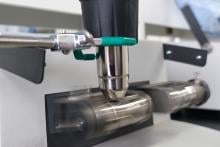
The first-ever molecular catalyst specifically tailored for mechanochemical reaction conditions enables high-efficiency transformations at near room temperature.

12 Apr 2022
Milling rice to separate the grain from the husks, produces about 100 million tons of rice husk waste globally each year. Scientists searching for a scalable method to fabricate quantum dots have developed a way to recycle rice husks to create the first silicon quantum dot LED light. Their new method transforms agricultural waste into state-of-the-art light-emitting diodes in a low-cost, environmentally friendly way.
15 Feb 2022
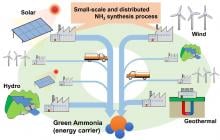
Research by Japanese scientists at Hiroshima University reveals a way to make ammonia from its constituent molecules of nitrogen and hydrogen at ambient pressure.
18 Jan 2022
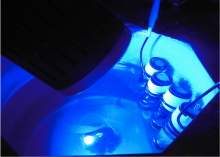
A new method for creating a highly useful chemical subunit eliminates the need for precious metals, potentially leading to the sustainable production of pharmaceuticals and electronics.

18 Nov 2021
A new method for creating one of chemistry’s most widely used class of compounds could revolutionize industrial processes, making them cheaper, simpler and more environmentally friendly.
06 Sep 2021
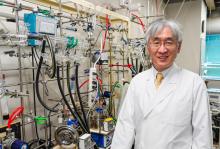
Professor Toshifumi Satoh of Hokkaido University’s Graduate School of Engineering has taken up the challenge to create “Smart synthetic method.” Satoh and his colleagues proposed the idea of “Smart synthesis,” which aims to minimize the use of harmful chemicals and solvents for cleaner and more sustainable polymeric synthesis.
29 Jul 2021
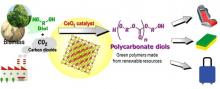
Using a CeO2 catalyst, researchers develop an effective catalytic process for the direct synthesis of polycarbonate diols without the need for dehydrating agents. The high yield, high selective process has CO2 blown at atmospheric pressure to evaporate excess water by-product allowing for a catalytic process that can be used with any substrate with a boiling point higher than water.
13 Apr 2021
Scientists develop high performing electrocatalyst to synthesize ammonia in an effort to replace conventional eco-unfriendly methods
03 Feb 2021
Carbon dioxide (CO2) is one of the major greenhouse gases causing global warming. If the carbon dioxide could be converted into energy, it would be killing two birds with one stone in addressing the environmental issues. A joint research team led by City University of Hong Kong (CityU) has developed a new photocatalyst which can produce methane fuel (CH4) selectively and effectively from carbon dioxide using sunlight. According to their research, the quantity of methane produced was almost doubled in the first 8 hours of the reaction process.

09 Sep 2020
Scientists at Daegu Gyeongbuk Institute of Science and Technology, Korea, develop a novel “heterostructured” photocatalyst using titanium and copper, two abundant and relatively inexpensive metals. Their cost-effective synthesis procedure, coupled with the high stability of the photocatalyst, provides an economically feasible way to convert waste carbon dioxide and water into useful hydrocarbon fuels using endless sunlight.

04 Sep 2020
Scientists at Daegu Gyeongbuk Institute of Science and Technology (DGIST) in Korea have found a way to improve the efficiency of betavoltaic devices, a type of power source that uses an internal radioactive material. This study opens up a new horizon in the field of nuclear batteries for powering set-and-forget electronic devices.

21 Jan 2019
A team of researchers has developed a system that produces electricity and hydrogen (H2) while eliminating carbon dioxide (CO2).

27 Nov 2018
A compound made from the glycerol by-product of biodiesel production could promote cleaner burning in vehicle engines.

09 Oct 2018
New simulations indicate that swirling ammonia in combustion chambers can help reduce harmful emissions – insight that may help on-going efforts to develop ammonia as a carbon-free fuel source.
Events
Sorry, nothing coming up for this discipline
Researchers
Sorry, nothing coming up for this discipline
Giants in history
Sorry, nothing coming up for this discipline