

Biology Botany
News
03 Sep 2026
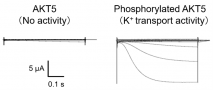
Leaf stalks – the edible part of vegetables like celery and Swiss chard – can grow even bigger than before thanks to key research identifying the role of a potassium channel called AKT5. Until now, its function has been a mystery.
05 Aug 2026
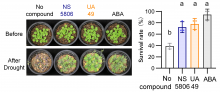
As climate change drives up temperatures worldwide and water becomes scarce, how can we make sure crops survive? Tohoku University researchers have identified a new class of small molecules that enhances plant drought tolerance.

16 Jul 2026
Early rice gets the flower, Exercising against cancer, Efficient artificial photosynthesis, New “living pink rocks”, Unlocking megathrust earthquakes, Longevity protein demystified and Death gene paradox. Read all in the latest Editor's Choice.
09 Jun 2026
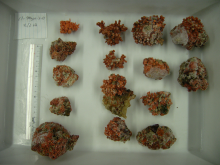
Rhodoliths may look like small rocks on the seafloor, but they're actually living algae that create habitats for marine life and contribute to long-term carbon storage. A new study found that the deeper ‘low-light’ waters off Japan's Tanegashima Island harbor a surprisingly distinct and diverse community of these ‘living pink rocks,’ including four species completely new to science. Researchers identified at least 12 species in a small patch of seafloor 35–38 meters deep, but only three were also found in nearby shallow waters, suggesting the deeper habitat is not simply a continuation of the one near the surface.
04 May 2026
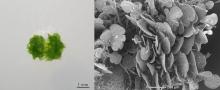
A Hiroshima-University-led research team has discovered a key gene responsible for the initiation of gemma development, acting as a "master switch" to start asexual reproduction (cloning) in the model plant Marchantia polymorpha (common liverwort).

06 Mar 2026
Kelli canines, Healthy fats in rice, Mercury and Earth in chorus, AI lights up materials discovery, Radiation detection with phones and Down to one. Read all in the latest Editor's Choice. Plus Women's Month 2026.
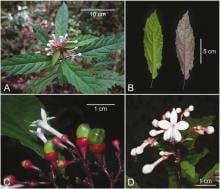
25 Feb 2026
The indigenous Bugkalot people of Nueva Ecija call it “kelli” but science has only now been able to identify it as a distinct species and given it a formal scientific name

29 Jan 2026
Sticky life beginnings. Precarious pitcher plant, Breaking the cobalt "cage", Toxic algae killer & “Pure-bred” stem cell medium. Read all in the latest Editor's Choice. Plus Asia Research News 2026 is out now and SciCom Coffee talk by Rachael Smith at Wellcome Sanger Institute.
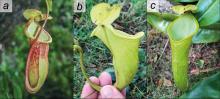
19 Dec 2025
A new species of pitcher plant found only on Palawan Island is already at risk of extinction due to frequent severe weather conditions and human encroachment.
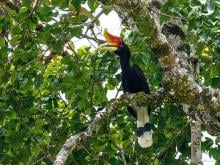
21 Aug 2025
NGOs in the Malaysian state of Sabah want oil palm companies and other land managers to plant Ficus species to increase habitat for threatened wildlife

08 Aug 2025
What appears to be silver-blue pigment is actually structural coloration—an optical phenomenon that Encephalartos horridus creates through light-scattering wax crystals sculpted from a lipid compound that may date back to the dawn of land plants.

30 May 2025
Mutant protein protects against mildew, but leaves turn yellow and age sooner

19 May 2025
Identification of plant species at high risk of extinction in climate-sensitive alpine ecosystems.

27 Mar 2025
Suppression of the CcMCA1 gene has potential in halting invasive plant species

27 Nov 2024
Clues found relating repair of photosynthetic protein complex to how plants survive in colder regions

30 Oct 2024
Arabidopsis thaliana mutant’s lack of KNS3 means boric acid channels don’t arrive properly at plasma membrane

29 Oct 2024
Sorghum possesses unique lipid profiles and bioactive compounds that support health and meet the demand for health-promoting food products.

07 Jun 2024
Blue energy future, Off switch for brain cells, New Japanese lily species, Generative AI in motion, Economies take off with new airports and Braille-shaped electrodes for retinal implants. Read all in the latest Editor's Choice. Plus SciCom Coffee with Catriona Child.
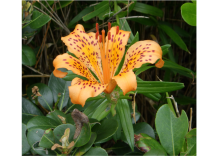
01 May 2024
Classification of these plants bloom to double the number of taxonomic groups through morphological study, DNA analysis
19 Mar 2024
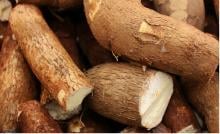
The 12th Starch Value Chain ASIA conference was held in Vientiane, at Crowne Plaza Hotel, from February 27 to 29, 2024. The conference encompassed four key themes: Asia’s starch markets, industrial and food-grade tapioca starch in Laos with expansion plans, sustainable climate-smart agri-technology for rice and cassava cultivation, and challenges for future growth in Asia's biogas-to-energy sector.
22 Feb 2024
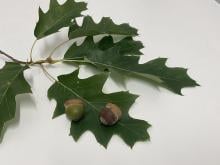
The effects of a phenomenon called tree masting on ecosystems and food webs can be better understood thanks to new theoretical models validated by real world observations.

17 Aug 2023
Japanese fossil forest found, AI finds a way to people’s hearts, Language diversity and child social development & Supplement for kidney disease. Plus Submissions open for Asia Research News 2024. Read all in the latest Editor's Choice.
21 Jul 2023
An exquisitely preserved fossil forest from Japan provides missing links and helps reconstruct a whole Eurasia plant from the late Miocene epoch.
17 May 2023
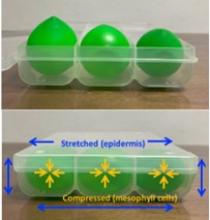
A research group led by Osaka University has found that plant cells may be able to detect mechanical forces to determine their own position within the leaf—whether they are on the surface or in the inner tissues—and therefore differentiate into appropriate cell types after damage. These findings reveal how plants regenerate the correct type of tissues when damaged, and may improve our understanding of the mechanisms underlying the high regeneration potential of plants.
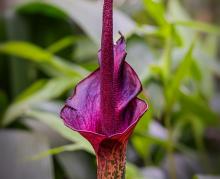
10 Mar 2023
Insights into their diversity will help to understand and protect them and their natural environment.
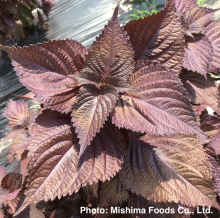
12 Jan 2023
A team of Japanese researchers created a high-quality genome assembly of red perilla, a step toward harnessing the plant’s potentially useful bioactive chemicals — and its medicinal properties.
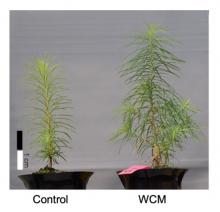
26 Oct 2022
Plastic sheets coated with an Eu3+ film that converts UV light to red light were able to accelerate growth of vegetal plants and trees.
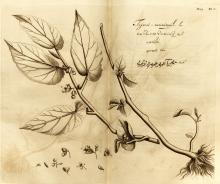
23 Oct 2022
Published in 1693, Hortus Indicus Malabaricus offers a glimpse into the history of medical and natural sciences of South Asia.

06 Oct 2022
Giants in History: Archana Sharma (16 February 1932 - 14 January 2008) conducted research into plant and human genetics that expanded the understanding of both botany and human health.
03 Jun 2022
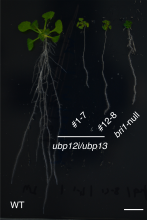
Scientists have revealed two enzymes that regulate protein degradation of proteins in the cell membrane of plants, and established the roles they play in plant growth and development.
Events

21 Oct 2026 to 23 Oct 2026
Showcase and connect with our global community of leading research experts, industry representatives and practitioners at the 2026 International Conference on Agriculture Sciences (ICAS 2026) in Bologna, Italy!
Researchers
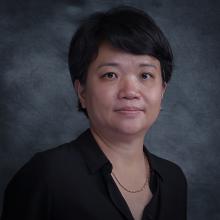
Dr. Wong Sin Yeng is an associate professor and Deputy Director at the Institute of Biodiversity and Environmental Conservation, Universiti Malaysia Sarawak (UNIMAS), whose work has led to identifying hundreds of new plant species in Southeast Asia.

Prof Smith’s research programme primarily investigates the ecology and evolution of zoonotic viruses and the molecular epidemiology of human respiratory pathogens.
Giants in history
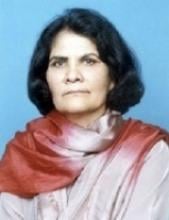
Pakistani botanist Azra Quraishi (22 September 1945 – 22 November 2002) is recognised for developing virus-free seed potatoes that increased potato production in Pakistan by an estimated five per cent.

Flora Zaibun Majid ( 1939–2018) was an accomplished Bangladeshi researcher in botany and nutrition science and the first female chairperson of the Bangladesh Council of Scientific and Industrial Research.

Indian botanist Shipra Guha-Mukherjee (13 July 1938 – 15 September 2007) made a breakthrough discovery that enabled the genetic study of plants and, by extension, the development of improved varieties of rice, wheat, potatoes, and other crops.

Archana Sharma (16 February 1932 - 14 January 2008) conducted research into plant and human genetics that expanded the understanding of both botany and human health. In relation to botany, she uncovered the means by which asexually-reproducing plants evolve into new species.

Gloria Lim (1930-2022) was a mycologist from Singapore who studied tropical fungi. One of the first students to attend University of Malaya when it was founded in 1949, she went on to become the first female Dean of the Faculty of Science at the University of Singapore.
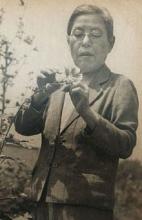
Kono Yasui (16 February 1880 – 24 March 1971) was a Japanese botanist who researched the genetics of poppies, corn and spiderworts and surveyed the plants that had been affected by the nuclear fallout after the atomic bombings of Hiroshima and Nagasaki.
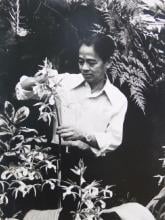
Rapee Sagarik (4 December 1922 – 17 February 2018) was Thailand’s renowned expert on orchids.

Janaki Ammal Edavalath Kakkat (4 November 1897 – 7 February 1984) was an Indian botanist who studied plant chromosomes and genetics.
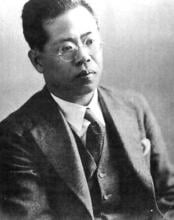
Woo Jang-choon (8 April 1898 – 10 August 1959) was a Korean-Japanese agricultural scientist and botanist.
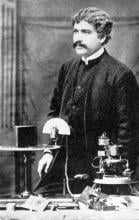
Sir Jagadish Chandra Bose (30 November 1858 – 23 November 1937) was a scientist and inventor who contributed to a wide range of scientific fields such as physics, botany and biology.

Indian organic chemist Asima Chatterjee (1917 to 2006) studied the medicinal properties of plant products, especially compounds known as vinca alkaloids.
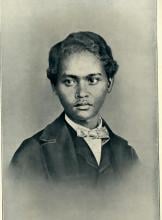
Little is known about Ali, a teenager from Sarawak, Malaysia, who was chief assistant to the famous naturalist Alfred Wallace. Most of what is known comes from Wallace’s writings. Ali accompanied Wallace on expeditions throughout the Malay Archipelago from December 1855 to February 1862.

Birbal Sahni (14 November 1891 – 10 April 1949), a pioneer of Indian palaeobotanical research, and founder of what is now the Birbal Sahni Institute of Palaeosciences in Lucknow, made multiple contributions to the study of prehistoric plants. These include the discovery of a new group of fossil gymnosperms (named Pentoxylae), reconstruction of the extinct Williamsonia sewardiana plant, and description of a new type of petrified wood from the Jurassic age.

Ground-breaking cancer researcher Kamal Jayasing Ranadive (8 November 1917 – 11 April 2001) advanced the understanding of the causes of leukaemia, breast cancer and oesophageal cancer through the use of animal models. She was also among the first to recognise how susceptibility to cancer is linked to tumour-causing interactions between hormones and viruses.