

Communications Biology
About Communications Biology
Communications Biology is an open access journal from Nature Portfolio publishing high-quality research, reviews and commentary in all areas of the biological sciences.
- Website: https://www.nature.com/commsbio/
News
28 Jul 2026
Tohoku University
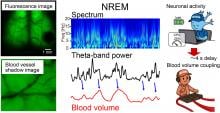
Have you ever felt strangely exhausted after waking up from a dream? Researchers took a look at how the brain allocates energy during sleep to explain this “paradoxical sleep.”
30 Jun 2026
Osaka Metropolitan University
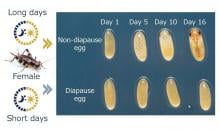
Cricket mothers transmit environmental information that determines embryonic developmental timing. Researchers have demonstrated that entry into developmental arrest is controlled by an integrated program of transcriptional, epigenetic, and metabolic reprogramming. Their study uncovers a system-level mechanism linking environmental cues to embryonic fate.
03 Feb 2026
Osaka Metropolitan University
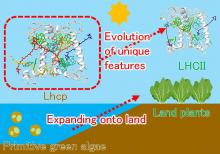
Early marine algae adapted their light-harvesting systems for weak blue-green light, suggesting how photosynthesis evolved.

20 Sep 2024
The University of Osaka
Researchers from Osaka University studied the neurological control applied to human walking that maintains the correct relationship between the leg positions. They found that the rhythm of each leg continues independently unless they become too far out of phase. This work can lead to better care for people who have difficulty walking due to age or neurological issues.

05 Sep 2024
Hokkaido University
Medaka fish that lacked functional Hmgn2 genes were unable to distinguish between simple shapes, revealing a new function for the regulatory gene.
15 Mar 2024
Hokkaido University
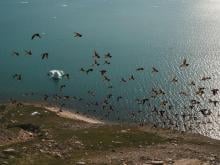
Acoustic recordings of a colony of little auks reveal their nocturnal activities and offer valuable monitoring means for avian biology in the Arctic.
25 Jan 2024
Science Media Center Taiwan
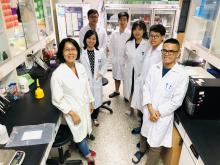
Taiwan: Researchers from National Chung-Hsing University, Taiwan, have made a discovery in the fight against Zika virus. Their study, published in the journal “Communication Biology,” reveals that people who have previously been exposed to dengue virus and Japanese encephalitis virus may have acquired immunity against Zika virus. This finding may shed new light on vaccine strategies in countries where these viruses are common.
21 Dec 2023
The University of Osaka
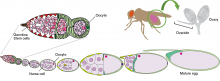
A research group led by Osaka University and University of Hawaii Manoa found that in female fruit flies, microorganisms enhance reproductive function, boosting the number of cells that form eggs and the number of mature eggs. This is done by controlling the release of hormones to speed up cell division in the ovaries, and limiting programmed cell death. These findings could improve reproductive medicine and could aid the development of new methods to enhance fertility.
01 Sep 2023
Tohoku University
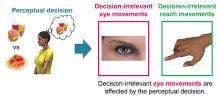
Your eyes may reveal more than you think. That is what Tohoku University researchers have discovered, finding a link between certain types of decision making and eye movements.
26 Jun 2023
Hiroshima University
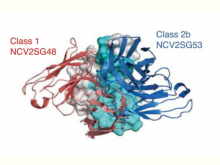
What scientists learned about the rare antibodies targeting SARS-CoV-2’s Achilles’ heel could help fine-tune our COVID-19 vaccine strategy for longer-lasting immunity.
26 May 2023
The University of Osaka
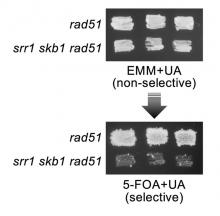
A research team, led by researchers from Osaka University, performed genetic screening of fission yeast lacking DNA repair gene Rad51 to identify genes that play a role in gross chromosomal rearrangement (GCR), a type of mutation that occurs at the centromere. Cells lacking Srr1 or Skb1 exhibited reduced GCR, indicating that these genes are important to the occurrence of GCR. These findings advance our understanding of the mechanisms underlying centromeric GCR.
07 Apr 2023
Institute for Integrated Cell-Material Sciences (iCeMS) at Kyoto University
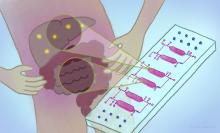
A tiny platform empowers scientists to examine how gut and liver cells interact in health and disease.
22 Dec 2022
Osaka Metropolitan University
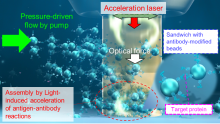
Osaka Metropolitan University scientists discovered the principle of light-induced acceleration of antigen–antibody reaction, allowing for simple, ultrafast, and highly sensitive detection of proteins. The researchers introduced target proteins and probe particles with modified antibodies selectively binding to the target proteins into a small channel and applied irradiation with infrared laser light. They achieved, for the first time, the rapid measurement of trace amounts of attogram-level target proteins after only 3 minutes of laser irradiation. These findings will potentially contribute to breakthroughs in the development of systems for ultra-early diagnosis of various diseases.
15 Dec 2022
The University of Osaka
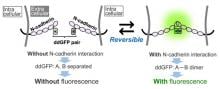
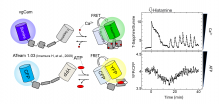
Researchers led by Osaka University report the development of INCIDER, a fluorescent sensor system that enables high-contrast microscopic imaging of temporal changes in cellular interactions mediated by the N-cadherin molecule. This sensor system, which emits much brighter fluorescence than the currently used system while detecting these interactions, is expected to have a wide range of applications in developmental biology, neuroscience, and other fields.
16 Nov 2022
The University of Osaka
Researchers from SANKEN (The Institute of Scientific and Industrial Research) at Osaka University have genetically engineered a protein to emit the shortest-wavelength fluorescence light reported to date. They did this by optimizing the interactions between the fluorescence center (chromophore) and its surroundings, in a manner that differs from previous reports. The resulting fluorescence emission was bright and stable over a useful range of pH values. This work will aid basic and applied research, such as understanding the behavior of healthy and diseased cells.

10 Aug 2022
Kanazawa University
Researchers at Kanazawa University report in Communications Biology that using common chemicals for fixing living cell samples for microscopy studies causes membrane proteins to aggregate.
08 Mar 2022
Osaka City University
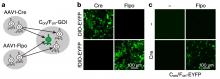
Scientists develop a method to genetically label neurons with a single gene of interest in mice by combining the anterograde transsynaptic spread of adeno-associated virus serotype 1 (AAV1) with intersectional gene expression. In two distinct circuits: the retina/primary visual cortex to the superior colliculus and the bilateral motor cortex to the dorsal striatum, injections of AAV1 expressing either Cre or Flpo recombinases and the Cre/Flpo double-dependent AAV into two upstream regions and the downstream region, respectively, were used to label postsynaptic neurons receiving inputs from the two upstream regions.
02 Nov 2021
Hiroshima University
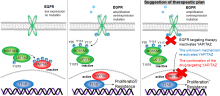
Malfunctioning of the so-called Hippo signalling pathway within animal cells leads to irregular activity of proteins that regulate genes involved in cell proliferation. Researchers have identified a key step in the process of this aberration, opening the door to new therapeutics for cancers such as head-and-neck squamous cell carcinoma and lung adenocarcinoma.
08 Jul 2021
Ehime University
Molecular evolution of enzyme beyond recruit hypothesis
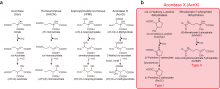
●First determination of crystal structures of aconitase X by X-ray crystallographic analysis
●Evidence of a common ancestor of aconitase superfamily, appearing before the previously proposed one
●Evolutional insight of requirement of complicated metabolic pathways in primordial cell
05 May 2021
City University of Hong Kong (CityUHK)
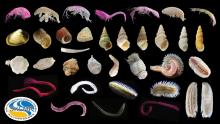
Biodiversity is of crucial importance to the marine ecosystem. The prohibition of trawling activities in the Hong Kong marine environment for two and a half years has significantly improved biodiversity, an inter-university study led by City University of Hong Kong (CityU) has found. Research results showed that the trawl ban could restore and conserve biodiversity in tropical coastal waters.
04 Dec 2020
Hiroshima University
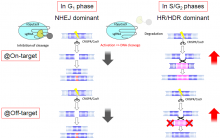
Turning off gene-editing until it reaches cell cycle phases where more accurate repairs are likely to happen offers a promising fix to CRISPR-Cas9’s problem with unwanted genetic changes.

20 Nov 2020
Ulsan National Institute of Science and Technology (UNIST)
A research team, affiliated with South Korea's Ulsan National Institute of Science and Technology (UNIST) has succeeded in unveiling the principle behind the changing sleep patterns, according to the ambient temperature, through the use of Drosophila as a model of sleep.
10 Nov 2020
Ehime University
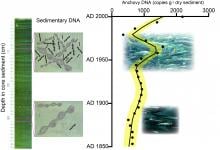
Far too little is known about the long-term dynamics of the abundance of most macro-organism species. We used sedimentary DNA technology to quantify marine fish DNA abundance in sediment sequences spanning the last 300 years. This study first shows the existence of fish DNA in the sequences and proves that fish abundance can be tracked using sedimentary DNA, highlighting the utility of sedimentary DNA for researchers to acquire lengthy records of macro-organism species abundance.
29 Oct 2020
Hokkaido University
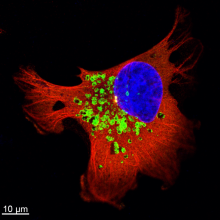
Scientists have revealed the molecular mechanism regulating the trafficking of lysosomes that increases the invasiveness of radioresistant cancer cells following radiotherapy.
04 Sep 2020
Hiroshima University
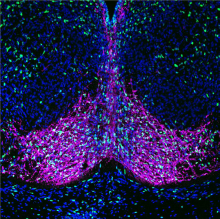
Pregnant mice fed diets high in omega-6 fats and low in omega-3 fats are shown in a new study to produce offspring whose brains had a higher level of dopamine-producing neurons—the neurological reward system. These mice went on to chase hyper-caloric diets, suggesting that the fats in a pregnant mother's diet may control the eating habits of her children, and potentially offering a new obesity-prevention strategy.
04 Aug 2020
The Chinese University of Hong Kong (CUHK)
Prognosis describes how serious a patient’s cancer is and his or her chance of survival. A genetic biomarker is a clinically useful tool to help estimate the state of the disease. A study, conducted by the Faculty of Medicine at The Chinese University of Hong Kong (CU Medicine), has identified a gene called GPR18 which can be a biomarker to help form the prognosis for a patient in nine cancer types. The research team has also provided new insights into B-cells for a cancer patient’s prognosis. The findings were recently published in the international scientific journal Communications Biology - Nature.