

Peer Reviewed
News
28 Sep 2020
Hokkaido University
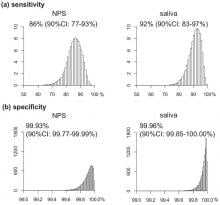
Testing self-collected saliva samples could offer an easy and effective mass testing approach for detecting asymptomatic COVID-19.
27 Sep 2020
Hiroshima University
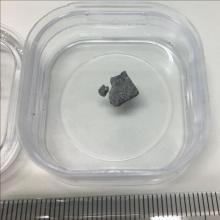
Researchers have shaken up a once accepted timeline for cataclysmic events in the early solar system. Geological and geochemical records indicate that the Earth-Moon system experienced a period of frequent and cataclysmic impacts from asteroids and other bodies. It was thought that this period had a relatively sudden onset, but the researchers have found evidence that this bombardment period may have started much earlier, and decreased in intensity over time.
25 Sep 2020
Osaka City University
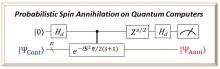
Researchers at Osaka City University create a quantum algorithm that removes spin contaminants while making chemical calculations on quantum computers. This allows for predictions of electronic and molecular behavior with degrees of precision not achievable with classical computers and paves the way for practical quantum computers to become a reality.
25 Sep 2020
Ehime University
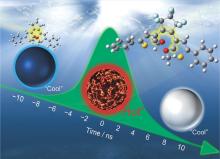
An Ehime University group led by Dr. Ishibashi and Prof. Asahi reported that when a nanosecond laser pulse was irradiated to diarylethene nanoparticles which show the photo-induced isomerization reaction from the colored closed-form to the colorless open-form, the ring-opening reaction was at most 80 times more effective than that in the solution phase. The amplification could be well explained as a ‘photosynergetic effect’ coupled with nanoscale photothermal conversion and a photochemical reaction. There are very few reports of such a nanosecond laser pulse induced amplified photochemical reaction in nanoparticles, indicating a new photoenergy conversion method.
24 Sep 2020
Hokkaido University
A comprehensive search of genetic variation databases has revealed no significant differences across populations and ethnic groups in seven genes associated with viral entry of SARS-CoV-2.
21 Sep 2020
Hiroshima University
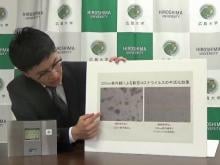
Researchers offer first proof that Ultraviolet C light with a 222 nm wavelength -- which is safer to use around humans -- effectively kills the SARS-CoV-2 virus.
18 Sep 2020
Hiroshima University
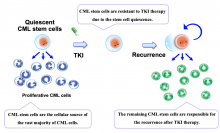
Drugs tackling chronic myelogenous leukemia have completely transformed prognoses of patients over the last couple of decades, with most cases going into remission. But drug resistance can occur, leading to relapses. Targeting the lipids involved in regulating part of a leukemia stem cell’s life span offers a potential second route to defeat the disease—and solid tumorous cancers as well.
17 Sep 2020
Hokkaido University
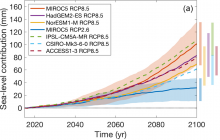
An international consortium of researchers under the aegis of CMIP6 has calculated new estimates for the melting of Earth’s ice sheets due to greenhouse gas emissions and its impact on sea levels, showing that the ice sheets could together contribute more than 40 cm by the end of 2100.
16 Sep 2020
Duke-NUS Medical School
Applying cutting-edge experimental and computational tools to basic science, researchers in Australia and Singapore have discovered a technique that could enable future cell therapies for placenta complications during pregnancy.
15 Sep 2020
Hokkaido University
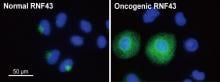
A team of scientists has unraveled the molecular mechanism behind one of the causes of colorectal cancer, and a treatment target.
14 Sep 2020
Ehime University
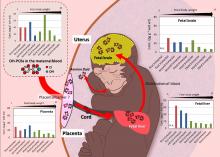
This study selected the Japanese macaque (Macaca fuscata) as a model animal for the fetal transfer of OH-PCBs in humans, and revealed OH-PCB concentrations and their relationships in the maternal and fetal brains. The key finding from this study is that OH-PCBs can reach the developing brain of the fetus as early as the first trimester of pregnancy. These OH-PCBs may exceed the levels that induce adverse effects on neurodevelopment.
08 Sep 2020
Hokkaido University
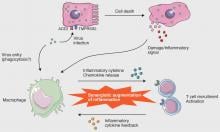
Scientists review macrophage activation syndrome — a feature of the cytokine storm that kills patients with severe cases of COVID-19, as well as possible treatments.
08 Sep 2020
Tohoku University
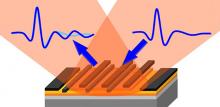
Tohoku University Professor Taiichi Otsuji has led a team of international researchers in successfully demonstrating a room-temperature coherent amplification of terahertz (THz) radiation in graphene, electrically driven by a dry cell battery.
07 Sep 2020
Kanazawa University
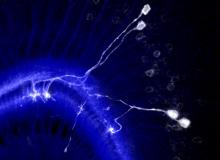
Researchers at Kanazawa University report in Nature Communications the discovery that in the developing fly brain, neurons stemming from the same parent cell experience repulsion. This lineage-dependent repulsion is regulated by a protein known as Dscam1.
07 Sep 2020
Institute for Integrated Cell-Material Sciences (iCeMS) at Kyoto University
Scientists are learning about species adaptation by comparing their stem cell-related genes.
04 Sep 2020
Hiroshima University
Pregnant mice fed diets high in omega-6 fats and low in omega-3 fats are shown in a new study to produce offspring whose brains had a higher level of dopamine-producing neurons—the neurological reward system. These mice went on to chase hyper-caloric diets, suggesting that the fats in a pregnant mother's diet may control the eating habits of her children, and potentially offering a new obesity-prevention strategy.

03 Sep 2020
Duke-NUS Medical School
Study by researchers at Duke-NUS Medical School, Duke University and SingHealth finds that dispatch-assisted CPR, training in CPR and use of an Automated External Defibrillator, and a volunteer first responder mobile app, increased the likelihood of laypeople performing CPR during out-of-hospital cardiac arrest, which was associated with increased survival rates.
01 Sep 2020
Tohoku University
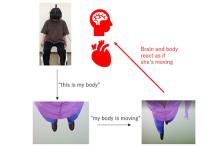
Researchers at the Smart-Aging Research Center (IDAC) at Tohoku University have developed an innovative training protocol that, utilizing immersive virtual reality (IVR), leads to real physical and cognitive benefits.
28 Aug 2020
Hokkaido University
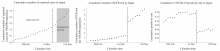
Scientists have reviewed reported cases and testing data of COVID-19 and have determined that changes in the testing rate may be masking the true growth rate and extent of the pandemic.
27 Aug 2020
Tohoku University
A team at Tohoku University have perfected a new heat treatment technique with rapid heating and asymmetrical cooling processes in metallic glass. This technique enabled the team to induce a gradient of local glassy structure, bringing an apparent work hardening behavior.
26 Aug 2020
Hokkaido University
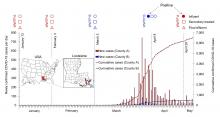
A group of scientists have detected genetic material from SARS-CoV-2 in untreated wastewater samples collected in April 2020 from two wastewater treatment plants in Louisiana, USA.
24 Aug 2020
Hokkaido University
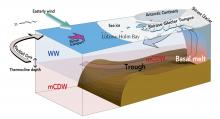
Ice is melting at a surprisingly fast rate underneath Shirase Glacier Tongue in East Antarctica due to the continuing influx of warm seawater into the Lützow-Holm Bay.
21 Aug 2020
Hokkaido University
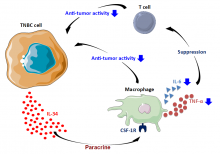
Hokkaido University scientists have shown that Interleukin-34 is a prognostic marker and drug target for Triple Negative Breast Cancer.

21 Aug 2020
Tohoku University
A team at Tohoku University has succeeded in growing large single crystals of tin monosulfide, a material used in next generation solar cells.
20 Aug 2020
Hokkaido University
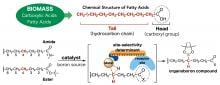
A new catalyst design enables unprecedented control over the modification of fatty acid derivatives that opens the door to creating useful substances in a green and efficient manner.
20 Aug 2020
Tohoku University
Researchers from Tohoku University’s Graduate School of Engineering have discovered a novel iron-based superelastic alloy capable of withstanding extreme temperatures—both high and low.
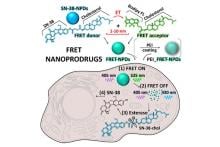
18 Aug 2020
Tohoku University
Nanoprodrugs have immense potential for cancer treatment, more so than conventional drug delivery systems. Researchers have, for the first time, developed a comprehensive study on the dynamics of the SN-38 nanoprodrug.
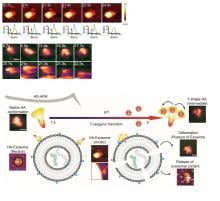
16 Aug 2020
Kanazawa University
Researchers in Kanazawa University has recently reported their study in Nano Letters regarding a high-speed atomic force microscopy study on a biological event that happens during flu virus enters infects its host cell. The real-time visualization of influenza A hemagglutinin (HA) has enhanced the understanding of fusogenic transition of HA and its interactions with host endosomes.
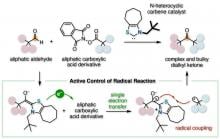
14 Aug 2020
Kanazawa University
In catalytic reactions with organocatalysts, it is difficult to control radical reactions. We designed a thiazolium-type N-heterocyclic carbene catalyst having an N-neopentyl group. This catalyst was found to actively control radical reactions and enabled production of more than 35 species of bulky dialkyl ketones from an aliphatic aldehyde and an aliphatic carboxylic acid derivative through a radical relay mechanism. This catalyst is expected to open the way for acceleration of drug discovery research.

12 Aug 2020
IOP Publishing
Researchers in China have taken the first step towards a new way of treating gastric wounds by using a microrobot combined with the new concept of “in situ in vivo bioprinting” to carry out tissue repair inside the body.
Events
Sorry, no events coming up for this topic.
Researchers
Sorry, no researchers coming up for this topic.
Giants in history
Sorry, no researchers coming up for this topic.