

Peer Reviewed
News
24 Dec 2020
Tohoku University
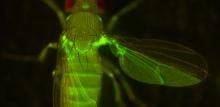
Tohoku University scientists have, for the first time, provided experimental evidence that cell stickiness helps them stay sorted within correct compartments during development. How tightly cells clump together, known as cell adhesion, appears to be enabled by a protein better known for its role in the immune system. The findings were detailed in the journal Nature Communications.

24 Dec 2020
Tohoku University
Researchers at Tohoku University have developed the first all-in-one miniature pH probe for real-time investigations of intrinsic extracellular pH dynamics in the deep brain structures.
23 Dec 2020
Hokkaido University
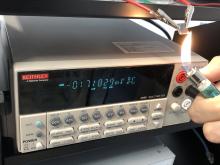
Scientists at Hokkaido University have developed a layered cobalt oxide with a record-setting thermoelectric figure of merit, which can be used to enhance thermoelectric power generation.
22 Dec 2020
Kanazawa University
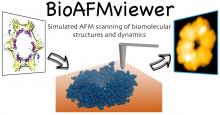
Atomic force microscopy (AFM) allows to obtain images and movies showing proteins at work, however with limited resolution. The developed BioAFMviewer software opens the opportunity to use the enormous amount of available high-resolution protein data to better understand experiments. Within an interactive interface with rich functionality, the BioAFMviewer computationally emulates tip-scanning of any biomolecular structure to generate simulated AFM graphics and movies. They greatly help in the interpretation of e.g., high-speed AFM observations.
21 Dec 2020
Hiroshima University
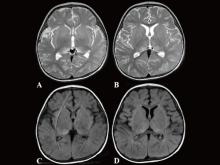
Researchers baffled by an infant’s rare encephalitis case unusual in children found unheard-of mutations and a new way to examine the “immunity gene.”

17 Dec 2020
Institute of Industrial Science, The University of Tokyo (UTokyo-IIS)
A researcher at The University of Tokyo develops a method for recharging used N95 masks with a van de Graaff generator, which may greatly alleviate the lack of high-quality personal protective equipment during the COVID-19 pandemic
16 Dec 2020
Daegu Gyeongbuk Institute of Science and Technology (DGIST)
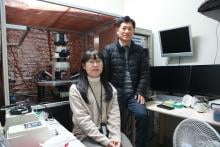
Daegu Gyeongbuk Institute of Science and Technology (DGIST) researchers gain deeper insight into a cell membrane channel, with potential implications for drug development.
16 Dec 2020
Tohoku University
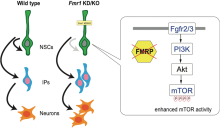
A research team used next-generation sequencing to illustrate the possible molecular mechanisms that cause the Fragile X syndrome in fetal brains.
16 Dec 2020
Ehime University
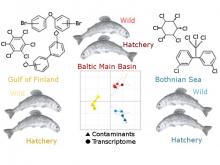
Researchers of Ehime University and the University of Helsinki measured hepatic organohalogen (OHC) concentrations and gene expression profiles in Atlantic salmon collected from three areas in the Baltic Sea. The results showed that OHCs and gene expression profiles were individually grouped in three areas and the covariation of the two datasets provided by a multivariate method was significantly similar. This suggests that the gene expression profiles in salmon are affected by OHC contamination.
15 Dec 2020
Seoul National University researchers build a non-volatile magnetic memory prototype.

15 Dec 2020
Hiroshima University
An AI might soon help stroke survivors get the right treatment by detecting a patient’s post-stroke depression type, a frequently seen neuropsychiatric manifestation after a stroke that could impair functional recovery.
14 Dec 2020
Institute of Industrial Science, The University of Tokyo (UTokyo-IIS)
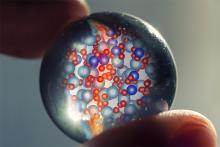
Scientists at The University of Tokyo study aluminosilicate glass to determine its complex local structure with unprecedented detail. This work may lead to tougher and more inexpensive glass for touchscreens and solar arrays
14 Dec 2020
Institute of Industrial Science, The University of Tokyo (UTokyo-IIS)
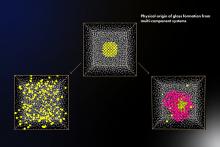
Scientists at The University of Tokyo use computer simulations to model the effects of elemental composition on the glass-forming ability of metallic mixtures, which may lead to tough, electroconductive glasses
11 Dec 2020
Tohoku University
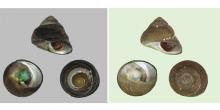
Recognizing species is important for understanding regional biodiversity and for environmental conservation. However, taxonomic identity is sometimes obscure even with the organisms that are closest to human life.
10 Dec 2020
Hokkaido University
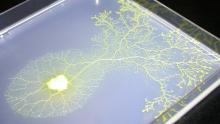
Researchers at Hokkaido University and Amoeba Energy in Japan have, inspired by the efficient foraging behavior of a single-celled amoeba, developed an analog computer for finding a reliable and swift solution to the traveling salesman problem — a representative combinatorial optimization problem.

10 Dec 2020
Daegu Gyeongbuk Institute of Science and Technology (DGIST)
A polymer electrode gets an electrical boost for use in E-skin devices.
09 Dec 2020
Hiroshima University
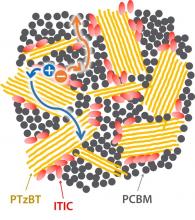
Researchers at Hiroshima University in Japan have blended together various polymer and molecular semiconductors as photo-absorbers to create a solar cell with increased power efficiencies and electricity generation.
07 Dec 2020
Hokkaido University
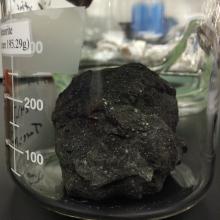
Scientists from Japan and the USA have confirmed the presence in meteorites of a key organic molecule which may have been used to build other organic molecules, including some used by life. The discovery validates theories of the formation of organic compounds in extraterrestrial environments.

07 Dec 2020
Tohoku University
A team of researchers understands more about the melting of the Greenland ice sheet. They discovered a flow of hot rocks, known as a mantle plume, rising from the core-mantle boundary beneath central Greenland that melts the ice from below.
07 Dec 2020
Tohoku University
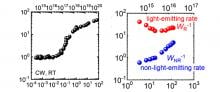
A recent study has measured the internal quantum efficiency (IQE) of Zinc-Oxide (ZnO) crystals in both the light-emitting process and non-light-emitting process.
04 Dec 2020
Hiroshima University
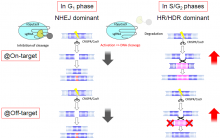
Turning off gene-editing until it reaches cell cycle phases where more accurate repairs are likely to happen offers a promising fix to CRISPR-Cas9’s problem with unwanted genetic changes.
03 Dec 2020
Hokkaido University
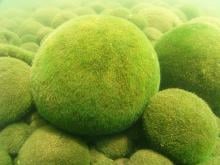
A team of scientists from Hokkaido University has suggested that marimo maintain their characteristic spherical shape due to the rarity of the formation of reproductive cells.
01 Dec 2020
Institute of Industrial Science, The University of Tokyo (UTokyo-IIS)
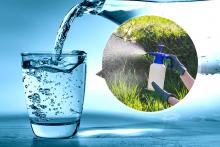
University of Tokyo researchers have fabricated a tiny electronic sensor that can detect very low levels of a commonly used weed killer in drinking water.
01 Dec 2020
Ehime University
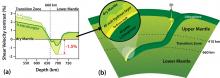
Researchers at Ehime University have recently measured the propagation speed of ultrasonic waves in an aluminum-rich hydrous mineral called Al-phase D at pressure conditions relevant to the Earth’s deep mantle. Their results suggest that seismic shear anomalies observed locally beneath subduction zones may reveal the presence of hydrous minerals in the uppermost lower mantle, which would have important implications for the Earth’s interior because hydrogen affects considerably the physical and chemical properties of mantle minerals.

30 Nov 2020
Tohoku University
A new sensing method has made tracking movement easier and more efficient. A research group from Tohoku University has captured dexterous 3D motion data from a flexible magnetic flux sensor array, using deep learning and a structure-aware temporal bilateral filter.

25 Nov 2020
Tohoku University
Materials that convert mechanical into electrical or magnetic energy could open the door to a future of wearable and structure-integrated virus sensors.
25 Nov 2020
Hokkaido University
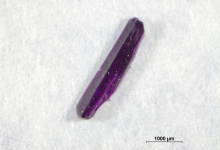
A team of scientists has succeeded in visualizing how carbon dioxide (CO2) behaves in an ionic liquid that selectively absorbs CO2. The finding is expected to help develop more efficient methods to capture CO2 in the atmosphere, one of the major factors causing global warming.
25 Nov 2020
Tohoku University
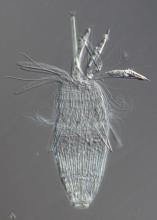
Scientist's understanding of this microscopic invertebrate has grown after the second discovery of Loricifera near Japan.
23 Nov 2020
Institute for Integrated Cell-Material Sciences (iCeMS) at Kyoto University
A chance discovery leads to a simple process that can introduce ‘oxygen-missing layers’ into perovskite oxynitrides, changing their properties.

20 Nov 2020
Ulsan National Institute of Science and Technology (UNIST)
A research team, affiliated with South Korea's Ulsan National Institute of Science and Technology (UNIST) has succeeded in patterning the two-dimensional (2D) metal electrode into desired shapes on the 4-inch diameter silicon substrate.
Events
Sorry, no events coming up for this topic.
Researchers
Sorry, no researchers coming up for this topic.
Giants in history
Sorry, no researchers coming up for this topic.