

Peer Reviewed
News
20 Nov 2020
Ulsan National Institute of Science and Technology (UNIST)
A recent study, affiliated with South Korea's Ulsan National Institute of Science and Technology (UNIST) has unveiled a novel technology that can improve the efficiency of quantum dot solar cells to 11.53% has been unveiled.

20 Nov 2020
Ulsan National Institute of Science and Technology (UNIST)
A recent study, affiliated with South Korea's Ulsan National Institute of Science and Technology (UNIST) has succeded in developing high-performance perovskite oxide catalysts, using late transition metal oxide materials.
20 Nov 2020
Ulsan National Institute of Science and Technology (UNIST)
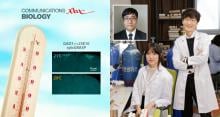
A research team, affiliated with South Korea's Ulsan National Institute of Science and Technology (UNIST) has succeeded in unveiling the principle behind the changing sleep patterns, according to the ambient temperature, through the use of Drosophila as a model of sleep.

20 Nov 2020
Tohoku University
By controlling the curvature, researchers have successfully retained the electrical properties of 2D graphene in a 3D structure.
20 Nov 2020
Duke-NUS Medical School
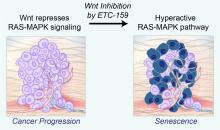
Cancer is a disease driven by mutations that alter the way biochemical signals control cell growth, division and migration. Scientists at Duke-NUS Medical School found out that, like Goldilocks, cancer is very picky about getting rapid growth just right.

19 Nov 2020
Ulsan National Institute of Science and Technology (UNIST)
A recent study, affiliated with South Korea's Ulsan National Institute of Science and Technology (UNIST) has unveiled a highly-flexible and durable electrode using the dream material, graphene.
19 Nov 2020
Ulsan National Institute of Science and Technology (UNIST)
A recent study, affiliated with South Korea's Ulsan National Institute of Science and Technology (UNIST) has unveiled a new technique that gives an enhanced hydrogen production yield by 5 times via the deposition of highly porous superaerophobichydrogels on a desired electrode surface.
19 Nov 2020
Ulsan National Institute of Science and Technology (UNIST)
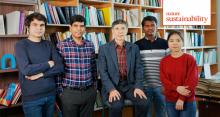
A recent study, affiliated with South Korea's Ulsan National Institute of Science and Technology (UNIST) has introduced a novel catalyst synthesis method, capable of generating hydrogen from yeasts, the main microorganisms involved in alcohol and bread fermentation.
19 Nov 2020
Ulsan National Institute of Science and Technology (UNIST)
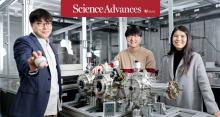
A research team, affiliated with South Korea's Ulsan National Institute of Science and Technology (UNIST) has discovered that when the rotational quantum states of non-polar molecules change under the influence of laser fields (non-resonant laser fields), so does their motion trajectories.
19 Nov 2020
Ulsan National Institute of Science and Technology (UNIST)
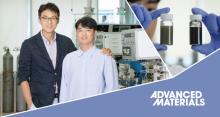
A research team, affiliated with South Korea's Ulsan National Institute of Science and Technology (UNIST) has succeeded in synthesizing 1T‐phase TMDs via molten‐metal‐assisted intercalation (MMI).
19 Nov 2020
Institute for Integrated Cell-Material Sciences (iCeMS) at Kyoto University
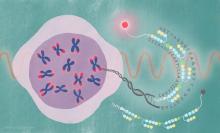
A repetitive DNA sequence that causes health risks when it malfunctions can now be watched inside living cells using a synthetic tool
19 Nov 2020
Daegu Gyeongbuk Institute of Science and Technology (DGIST)
Scientists devise a 2D-material–based stacked structure with applications in reducing computing power consumption
17 Nov 2020
Hokkaido University
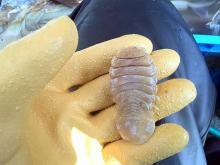
Scientists have discovered an extremely rare species of cymothoid from the mouth of a museum specimen of a deep-sea shark caught from the East China Sea, suggesting its wide distribution around the globe.

17 Nov 2020
Duke-NUS Medical School
A Duke-NUS Medical School study finds that new labels may be needed to help consumers make healthier food purchases.
17 Nov 2020
Daegu Gyeongbuk Institute of Science and Technology (DGIST)
Scientists explain how selective electrostatic doping can balance the charge in optoelectronic devices with 2D materials
13 Nov 2020
Kavli Institute for the Physics and Mathematics of the Universe (Kavli IPMU)
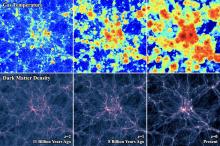
How hot is the Universe today? How hot was it before? A new study by an international team of researchers, including members of the Kavli Institute for the Physics and Mathematics of the Universe (Kavli IPMU), suggests that the mean temperature of gas in large structures of the Universe has increased about 3 times in the last 8 billion years, to reach about two million Kelvin today.

13 Nov 2020
Duke-NUS Medical School
A Singapore study finds patients with chronic kidney disease need tailored nutrition guidance, as well as better communication with doctors and family support, to empower them to manage their condition.

12 Nov 2020
Hokkaido University
Computational models suggest that melting water originating in the deep interior of Greenland could flow the entire length of a subglacial valley and exit at Petermann Fjord, along the northern coast of the island. Updating ice sheet models with this open valley could provide additional insight for future climate change predictions.
12 Nov 2020
Tohoku University
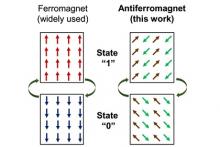
The quest for high throughput intelligent computing paradigms - for big data and artificial intelligence - and the ever-increasing volume of digital information has led to an intensified demand for high-speed and low-power consuming next-generation electronic devices. The "forgotten" world of antiferromagnets (AFM), a class of magnetic materials, offers promise in future electronic device development and complements present-day ferromagnet-based spintronic technologies (Fig. 1).
12 Nov 2020
Tohoku University
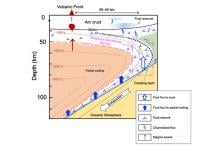
A team of researchers has discovered more about the grain-scale fluid connectivity beneath the earth's surface, shedding new light on fluid circulation and seismic velocity anomalies in subduction zones.
11 Nov 2020
Tohoku University
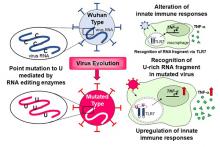
Our bodies could be inducing mutations in the COVID-19 virus that activate immune cells to increase the production of pro-inflammatory molecules.
10 Nov 2020
Tohoku University
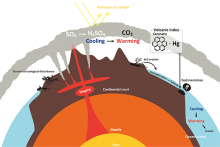
Researchers in Japan, the US and China say they have found more concrete evidence of the volcanic cause of the largest mass extinction of life. Their research looked at two discrete eruption events: one that was previously unknown to researchers, and the other that resulted in large swaths of terrestrial and marine life going extinct.
10 Nov 2020
Ehime University
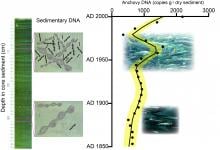
Far too little is known about the long-term dynamics of the abundance of most macro-organism species. We used sedimentary DNA technology to quantify marine fish DNA abundance in sediment sequences spanning the last 300 years. This study first shows the existence of fish DNA in the sequences and proves that fish abundance can be tracked using sedimentary DNA, highlighting the utility of sedimentary DNA for researchers to acquire lengthy records of macro-organism species abundance.
09 Nov 2020
Tohoku University
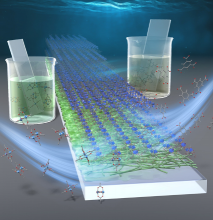
A research team has developed a new method for creating metal-organic framework (MOF) thin films that can be applied to sensors and electric devices.
06 Nov 2020
Duke-NUS Medical School
Testing for mutations in RNF43, a protein that affects key cancer cell-growth pathway Wnt, gives clinicians actionable insights to tailor treatments better.

05 Nov 2020
Institute of Industrial Science, The University of Tokyo (UTokyo-IIS)
Research shows that Japan’s noncompulsory state of emergency generally succeeded in reducing human movement. A study from The University of Tokyo Institute of Industrial Science used mobile phone location data for January–April 2020 to record and plot movement of people in metro Tokyo during the emergence and first wave of COVID-19. They found a movement reduction of over 50%, which in turn limited social contact and slowed infection spread.
04 Nov 2020
Institute of Industrial Science, The University of Tokyo (UTokyo-IIS)
The University of Tokyo introduced a system of gold nanorods that acts like a tiny light-driven motor, with its direction of motion is determined by the orientation of the motors. This work may lead to smaller and more precise nanomachines.
04 Nov 2020
Duke-NUS Medical School
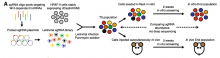
Innovative research by scientists at Duke-NUS Medical School has shed light on the mysterious role of long non-coding RNAs in the development of pancreatic cancer and suggests potential new targets for precision cancer therapies.

04 Nov 2020
Hokkaido University
Residents of Kabwe Town, Zambia, have very high blood levels of lead and cadmium, to such an extent that the symptoms of toxicity have been clinically observed.

03 Nov 2020
Ulsan National Institute of Science and Technology (UNIST)
A recent study, affiliated with South Korea's Ulsan National Institute of Science and Technology (UNIST) has developed a new nanocatalyst that recycles major greenhouse gases, such as carbon dioxide (CO2) and methane (CH4), into highly value-added hydrogen (H2) gas.
Events
Sorry, no events coming up for this topic.
Researchers
Sorry, no researchers coming up for this topic.
Giants in history
Sorry, no researchers coming up for this topic.