
Peer Reviewed
News
02 Apr 2021
Korea Advanced Institute of Science and Technology (KAIST)
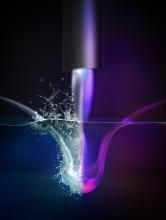
A study by KAIST researchers revealed that an ionized gas jet blowing onto water, also known as a ‘plasma jet’, produces a more stable interaction with the water’s surface compared to a neutral gas jet. This finding reported in the April 1 issue of Nature will help improve the scientific understanding of plasma-liquid interactions and their practical applications in a wide range of industrial fields in which fluid control technology is used, including biomedical engineering, chemical production, and agriculture and food engineering.
02 Apr 2021
Hokkaido University
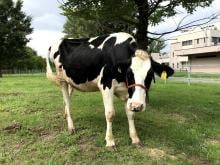
Scientists in Japan have developed and tested a novel probiotic formulation to control severe diarrhea in calves, ensuring their health and reducing mortality, and in turn reducing economic loss.
01 Apr 2021
Hong Kong Baptist University (HKBU)
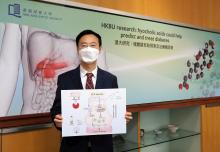
A series of studies led by HKBU researchers have revealed that hyocholic acid and its derivatives (collectively known as HCAs), a component of bile acids that facilitate fat digestion, are a promising risk indicator of type 2 diabetes. The strong efficacy of HCAs in regulating blood glucose levels and protecting against diabetes has also been uncovered.

01 Apr 2021
Tohoku University
COVID-19 has had a massive impact on both our physical health and psychological health. Using data from the 2011 Great East Japan Earthquake and Tsunami, researchers at Tohoku University have sought to find ways to mitigate the mental health impacts of COVID-19 on adolescents.
31 Mar 2021
Institute of Industrial Science, The University of Tokyo (UTokyo-IIS)
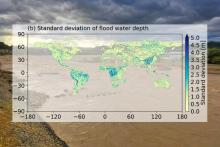
Researchers from the Institute of Industrial Science, The University of Tokyo calculate sources of uncertainty in flood risks to improve global flood predictions

31 Mar 2021
Tohoku University
Tokyo summers are notorious for their sweltering heat and humidity. Scientists have found that the meandering Kuroshio Current may be the cause of increasing hot and humid summers in the Kanto region.
31 Mar 2021
Hiroshima University
The younger generations are willing to put their money where their mouth is when it comes to sustainable living. In a study questioning both commitment to sustainable behaviors and willingness to trade better pay to work for a more sustainable-minded company, the surveyed young adults in Japan made their preferences clear.
30 Mar 2021
Hokkaido University
Human disturbance in urban environments makes some squirrels fail, but others perform better in novel problem-solving.
30 Mar 2021
Tohoku University
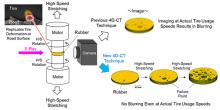
Sumitomo Rubber Industries, Ltd (SRI) and Tohoku University teamed up to increase the speed of 4-Dimensional Computed Tomography (4D-CT) a thousand-fold, making it possible to observe rubber failure in tires in real-time.
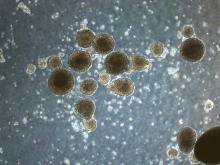
29 Mar 2021
Hokkaido University
A hydrogel, a type of soft matter, developed at Hokkaido University successfully reverted cancer cells back to cancer stem cells within 24 hours, in six different human cancer types. This could lead to the development of anti-cancer stem cell drugs and personalized medicines.
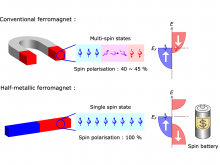
29 Mar 2021
National Institute for Materials Science (NIMS)
A review on the latest research of the various types of Heusler alloys summarizes the field’s main achievements up to 2020.
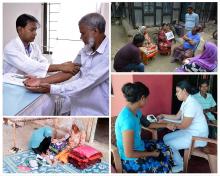
29 Mar 2021
Duke-NUS Medical School
Multi-country trial finds low-cost intervention to improve hypertension management in rural communities is cost-effective. Consisting of home visits by community healthcare workers, physician training and coordination with public health care infrastructure, the intervention can be scaled up in low- and middle-income countries.
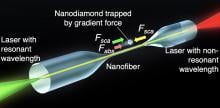
26 Mar 2021
Hokkaido University
Scientists have developed a method to use lasers to control the movement of nanodiamonds with fluorescent centers.
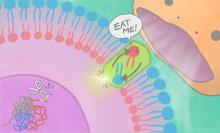
26 Mar 2021
Institute for Integrated Cell-Material Sciences (iCeMS) at Kyoto University
An ‘eat-me’ signal displayed on cell surfaces requires activation of a lipid-scrambling protein by a nuclear protein fragment.
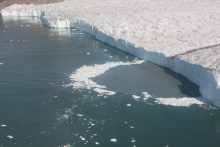
25 Mar 2021
Hokkaido University
For the first time, scientists have succeeded in continuous monitoring of a subglacial discharge plume, providing a deeper understanding of the glacier-fjord environment.
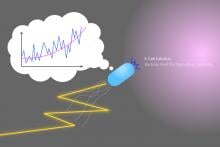
24 Mar 2021
Institute of Industrial Science, The University of Tokyo (UTokyo-IIS)
The University of Tokyo researchers use information theory to show that the accepted biochemical model of bacterial chemical sensing is mathematically equivalent to the optimal solution, with implications for microbiology and robotics
24 Mar 2021
Duke-NUS Medical School
Study shows that antibody longevity varies widely from 40 days to as long as several decades and not everyone who has recovered from COVID-19 is immune from reinfection. Individuals with low levels of neutralising antibodies may still be protected if they have robust T-cell immunity. Blood tests and a computer algorithm suggest annual vaccinations might be needed for some individuals to prevent future outbreaks of COVID-19.
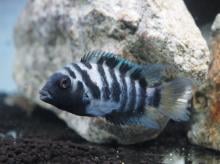
19 Mar 2021
Osaka City University
Through a series of prosocial choice tasks, researchers reveal prosocial and antisocial characteristics in male convict cichlid fish. The fish distinguish between female breeding partners, unknown females, and rival males by adjusting their actions to either provide food for both them and the females or avoid providing food for the rival males.
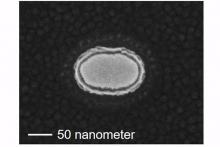
19 Mar 2021
Tohoku University
Tohoku University researchers have, for the first time, developed the technology for the nanosecond operation of the spintronics-based probabilistic bit (p-bit) - dubbed the poor man's quantum bit (q-bit).
18 Mar 2021
Institute for Integrated Cell-Material Sciences (iCeMS) at Kyoto University
A design concept changes how materials separate gaseous mixtures.
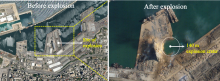
17 Mar 2021
Hokkaido University
A 2020 explosion in Lebanon’s port city of Beirut led to a southward-bound, high-velocity atmospheric wave that rivaled ones generated by volcanic eruptions.
16 Mar 2021
Duke-NUS Medical School
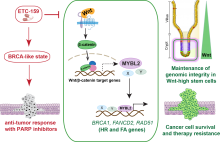
New research from Duke-NUS Medical School, and the Agency for Science, Technology and Research identifies chemotherapy-resistant cancers’ escape mechanism, which offers new anti-cancer treatment options.
11 Mar 2021
Hokkaido University
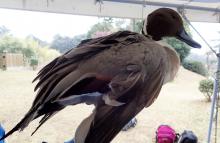
Scientists have discovered a route of introduction for High Pathogenicity Avian Influenza Virus (HPAIV) H5N8 into Japan and, in parallel, have investigated the potential of two human anti-influenza drugs for the control of HPAI in birds.
11 Mar 2021
Hiroshima University
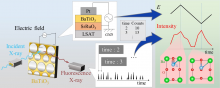
The fine structure of barium titanite, a potential alternative to lead titanite, has been revealed by researchers employing a novel technique over the extremely short time period that the ferroelectric phenomena experienced by these materials occur. The investigation should assist further exploration of how to replace lead titanate with other materials, so that its widespread applicability may be enjoyed while avoiding its role in lead pollution.
10 Mar 2021
National Institute for Materials Science (NIMS)
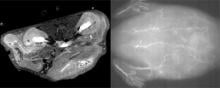
A nanoparticle’s size is fine-tuned to offer high-resolution images before and during surgical procedures.
10 Mar 2021
Institute of Industrial Science, The University of Tokyo (UTokyo-IIS)
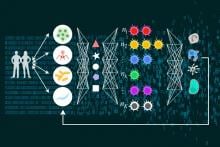
Researchers at The University of Tokyo use the mathematics of adaptive learning and artificial intelligence to describe how T helper cells adjust the response of the vertebrate immune system, which may lead to new vaccines and treatments for infections
08 Mar 2021
Hiroshima University
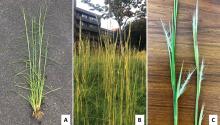
An international team of researchers has found that A. virginicus extracts appear to be effective against several human diseases, including diabetes and cancer. The results were published on Dec. 31, 2020, in a special issue of Plants, titled “Biological Activities of Plant Extracts.”
08 Mar 2021
Kavli Institute for the Physics and Mathematics of the Universe (Kavli IPMU)
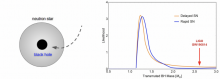
What is the origin of black holes and how is that question connected with another mystery, the nature of dark matter? Dark matter comprises the majority of matter in the Universe, but its nature remains unknown.
04 Mar 2021
Daegu Gyeongbuk Institute of Science and Technology (DGIST)
New approach to detect and recover from sophisticated cyberattacks in real time
04 Mar 2021
Tohoku University
Using data from the 1995 Kobe Earthquake, researchers have uncovered a better understand about radon concentration in the atmosphere before and after earthquakes. The findings move us closer to being able to predict when large earthquakes will occur.
Events
Sorry, no events coming up for this topic.
Researchers
Sorry, no researchers coming up for this topic.
Giants in history
Sorry, no researchers coming up for this topic.