

Peer Reviewed
News

02 Jun 2021
Tohoku University
A new nanometer-scale proximity labeling system can target histidine residues quicker than conventional methods thanks to the inorganic chemical singlet oxygen. The discovery generates a new chemical tool in protein chemical modification.
01 Jun 2021
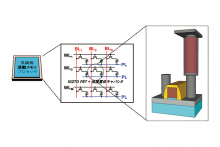
Researchers from the Institute of Industrial Science at The University of Tokyo, Kobe Steel, Ltd, and Kobelco Research Institute, Inc, develop high-density, energy-efficient 3D embedded RAM for artificial intelligence applications.
01 Jun 2021
Daegu Gyeongbuk Institute of Science and Technology (DGIST)
Researchers from Korea utilized LiNO3 pre-planted lithium particles to design a stable, long-lasting lithium metal battery
01 Jun 2021
Ehime University
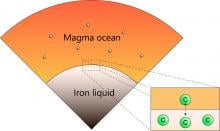
Carbon degassed from planetary mantles by volcanic activity plays an important role in the planetary surface environment. However, how the carbon content in the Earth’s mantle was established is still poorly understood. Here we show that the mantle of planetary embryos may have been nearly saturated with carbon by new high-pressure experiments and pointed out that the carbon solubility of magma is very consistent with the estimated carbon contents in terrestrial and lunar mantles.
31 May 2021
Institute for Integrated Cell-Material Sciences (iCeMS) at Kyoto University
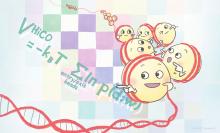
High-resolution genome structural analyses combined with large-scale simulations show the arrangements of the genome’s spool-like structures affecting gene expression.

31 May 2021
Hokkaido University
Scientists have shown that the population of the Yakushima sika deer has declined due to natural factors, suggesting that the population can be regulated without culling.

29 May 2021
Hiroshima University
A look at Japan’s mimamoru approach suggests that adults’ non-intervention in kids’ fights allows children to nurture social and interpersonal skills on their own. Is it worth a try in other countries?
28 May 2021
Ehime University
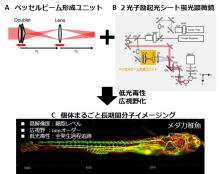
Contributing to embryogenesis and pathogenesis through long-term in vivo molecular imaging
1. Development of a two-photon excitation light-sheet microscope which achieves low phototoxicity, an extended field of view, and high resolution for the observation of the growth of living organisms
2. Applications of the microscope demonstrate long-term time-lapse observations for a three-day span of the embryonic development of medaka fish
28 May 2021
Daegu Gyeongbuk Institute of Science and Technology (DGIST)
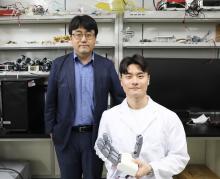
A reimagined robot hand combines strength with resilience, sidestepping the problems that accompany existing designs.
28 May 2021
Hokkaido University
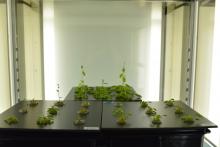
Scientists from Japan, Europe and the USA have described a pathway leading to the accelerated flowering of plants in low-nitrogen soils. These findings could eventually lead to increases in agricultural production.

27 May 2021
Tohoku University
The 2011 Great East Japan Earthquake and Tsunami devastated fishing communities along the Miyagi coast. A Tohoku University anthropologist carried field research in the small fishing community in Isohama. Here he found elements of competitive and collective behavior ensuing following the earthquake.
27 May 2021
Tohoku University
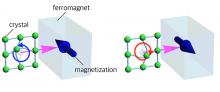
Schematic illustrations of magnetization control by the injection of phonon angular momentum.

25 May 2021
Institute of Industrial Science, The University of Tokyo (UTokyo-IIS)
Researchers at The University of Tokyo Institute of Industrial Science repurpose food waste to build materials with a bending strength comparable to concrete and that still taste good

24 May 2021
Tohoku University
The devastating Great East Japan Earthquake on March 11, 2011 displaced some 500,000 people to evacuation shelters. A research team that conducted regular visits to shelters to assess their status and inhabitants well-being have analyzed their data and found that about half of shelters had inadequate clean tap water and toilets, leading to worsening health outcomes for inhabitants.
22 May 2021
Hokkaido University
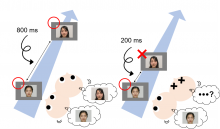
Chuo University and Hokkaido University researchers have found that infants take less than a second to completely process visual information and have the same temporal limitation in processing visual information as seen in adults.
21 May 2021
Duke-NUS Medical School
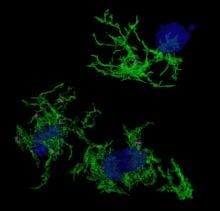
Single-cell gene studies are clarifying the roles of the brain’s specialised immune cell in Alzheimer’s disease and offer new avenues for treatment of this incurable condition.
21 May 2021
Tohoku University
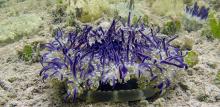
A group of researchers carried out eDNA sequencing on jelly fish in the Florida Keys using a newly developed Fieldable eDNA sequencing kit to identify species that may be endangered, invasive or dangerous.
21 May 2021
Tohoku University
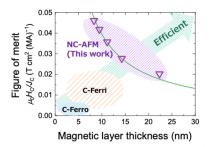
Researchers from Tohoku University and the Japan Atomic Energy Agency have discovered a new spintronic phenomenon: a persistent rotation of chiral-spin structure. The development paves the way for further application in oscillators, random number generators, and nonvolatile memory.
21 May 2021
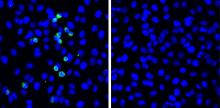
Hokkaido University
Scientists from Hokkaido University have discovered a novel defensive response to SARS-CoV-2 that involves the viral pattern recognition receptor RIG-I. Upregulating expression of this protein could strengthen the immune response in COPD patients.
21 May 2021
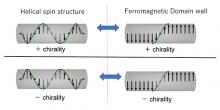
Tohoku University
Chirality, the lack of symmetry in matter, is an important issue in a myriad of scientific fields, ranging from high-energy physics to biology. Using magnets, a collaborative research group have furthered our understanding of how chiral information is transferred and memorized.
20 May 2021
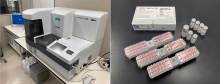
Hokkaido University
Scientists from Hokkaido University have shown that an antigen-based test for quantifying SARS-CoV-2 in saliva samples is simple, rapid, and more conducive for mass-screening.
19 May 2021
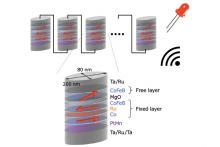
Tohoku University
Researchers at the National University of Singapore and Tohoku University have demonstrated that an array of electrically connected spintronic devices can harvest a 2.4 GHz wireless signal, which can be used to power and charge small electronic devices and sensors.
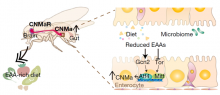
18 May 2021
Korea Advanced Institute of Science and Technology (KAIST)
Revelations from a fly study could improve our understanding of protein malnutrition in humans.
18 May 2021
Daegu Gyeongbuk Institute of Science and Technology (DGIST)
DGIST scientists have found a novel way to control magnetic spins in a localized space.
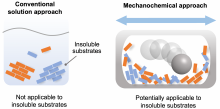
18 May 2021
Hokkaido University
Scientists from Hokkaido University have developed a rapid, efficient protocol for cross-coupling reactions, vastly expanding the pool of chemicals that can be used for the synthesis of useful organic compounds.
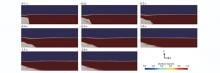
17 May 2021
Tohoku University
Landslide tsunamis are difficult to simulate because of the complex interaction between soil and water. But now, researchers from Tohoku University have come up with a hybrid numerical method that allows for relatively accurate simulations.
17 May 2021
Hokkaido University
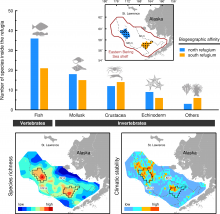
Scientists from Hokkaido University have used species survey and climate data to identify two marine biodiversity refugia in the Eastern Bering Sea – regions where species richness, community stability and climate stability are high.

14 May 2021
National Institute for Materials Science (NIMS)
Neurone-like junctions made of mixed oxide-based materials could reduce the massive energy consumption of artificial intelligence operations.
14 May 2021
Earth-Life Science Institute (ELSI), Tokyo Institute of Technology
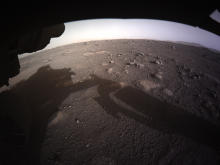
Upcoming Solar System exploration missions will search for extraterrestrial (ET) life, but ET life may not be like Earth life. A new mass spectrometry analysis technique may allow for process-based ways to find ET life that is compositionally alien.
13 May 2021
Hokkaido University
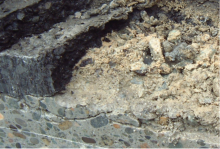
Scientists reveal that the deterioration of modern concrete and asphalt structures is due to the presence of trace quantities of organic matter in these structures.
Events
Sorry, no events coming up for this topic.
Researchers
Sorry, no researchers coming up for this topic.
Giants in history
Sorry, no researchers coming up for this topic.