
Peer Reviewed
News
28 Sep 2021
Kanazawa University
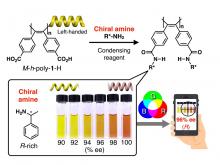
Researchers at Kanazawa University report in Science Advances a new method for distinguishing between enantiomers, molecules that are mirror images of each other. The procedure, relevant for the pharmaceutical industry, involves the chemical reaction of target enantiomers with color indicator compounds consisting of one-handed helical polymers, leading to solutions showing different colors in specific solvents between the enantiomers.
27 Sep 2021
Hiroshima University
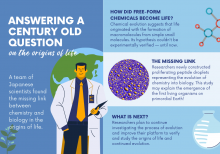
The missing link isn’t a not-yet-discovered fossil, after all. It’s a tiny, self-replicating globule called a coacervate droplet, developed by two researchers in Japan to represent the evolution of chemistry into biology.
24 Sep 2021
Tohoku University
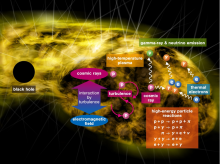
Energetic particles are ubiquitous across the universe but their origins are unexplained. Now, a research team has proposed that mellow black holes act as the source of high-energy cosmic particles.
24 Sep 2021
Singapore University of Technology and Design
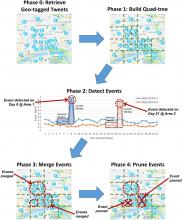
An algorithm that detects events occurring across different time and geographical scales on social media could enable a more timely response to emerging events.
23 Sep 2021
Ehime University
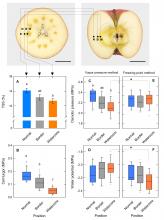
Single cell analyses reveal hidden turgor-associated metabolic changes and water flow across the flesh in watercored apples
23 Sep 2021
Tohoku University
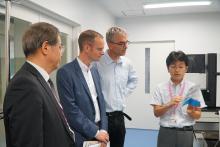
Examining spouses from Japan and the Netherlands, a new study suggests that couples have a high degree of commonality in body shape, blood pressure, and even incidences of some diseases.
21 Sep 2021
Hiroshima University
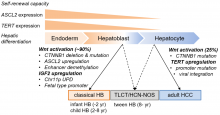
Genetic and epigenetic profiling of hundreds of hepatoblastoma tumors have revealed many of its secrets, long unknown to those researching and treating what is the most common type of liver tumor in children.

20 Sep 2021
Nagoya University
Twisting light that switches direction at room temperature could be the future of quantum information processing.
17 Sep 2021
Tohoku University
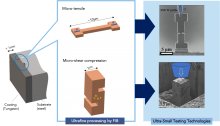
A research group has successfully used ultra-small testing technologies to measure the coatings on ferritic steel.
17 Sep 2021
Hokkaido University
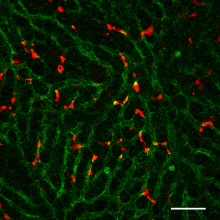
A specially designed lipid nanoparticle could deliver immune-signaling molecules into liver macrophage cells to overcome resistance to anti-tumor immunotherapy.
17 Sep 2021
Osaka Prefecture University
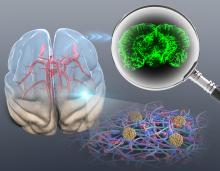
When it comes to cancer, clarity is key. The ability to visualize cancerous tumors and metastatic tissue three dimensionally (3D) can help clinicians diagnose the precise type and stage of cancer, while also informing the best treatment methods. To obtain an even clearer tissue for imaging, a research team based in Japan has tested the effectiveness of specialized hydrogels. Acting as a 3D molecular network, these hydrogels can rapidly remove fats from tissues, which are a factor in tissue opacification, without losing their structure. The material is used in several biomedical devices, including contact lenses.
![The chemical structure and solids crystals of calix[3]pyrrole (Photo: Inokuma Laboratory).](https://www.asiaresearchnews.com/sites/default/files/styles/medium/public/articles_images/P2136%20Fig1%20crystal%20photo.jpg?itok=NMWDp6vl)
16 Sep 2021
Hokkaido University
A new approach leads to the long-awaited formation of rings made of three pyrroles, which could be used to produce compounds with a host of interesting properties, and explains why they have not been observed before.
16 Sep 2021
Osaka City University
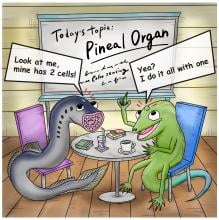
Using the lamprey, researchers from Japan analyzed the photosensory mechanism of the pineal organ, also called the pineal gland, in non-mammalian vertebrates and discovered a novel mechanism of pineal color discrimination (two-cell system) in which two types of photoreceptor cells, each containing two different opsins, are used to detect color. This discovery may provide insight into the evolution of color detection in other animals, including color vision in humans.
14 Sep 2021
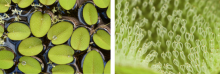
Researchers at Jilin University, China, reviewed recent progress in the study of Salvinia leaves and their artificial replicas.
14 Sep 2021
Institute of Industrial Science, The University of Tokyo (UTokyo-IIS)
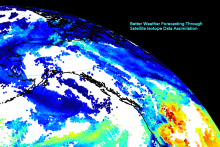
Researchers from The University of Tokyo assimilated satellite observations of water vapor isotopes into a weather forecasting model and found that forecast accuracy was improved by several percentage points
13 Sep 2021
Institute for Integrated Cell-Material Sciences (iCeMS) at Kyoto University
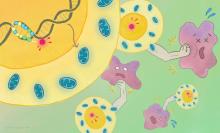
iCeMS scientists and colleagues have designed a molecular code that powers up cancer-fighting immune cells.
13 Sep 2021
Hokkaido University
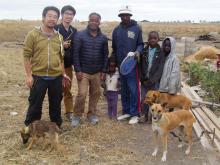
Abnormally high levels of DNA methylation have been identified in dogs exposed to high levels of lead near a mining area in Kabwe, Zambia, by a team of scientists from Japan and Zambia.
10 Sep 2021
Hiroshima University
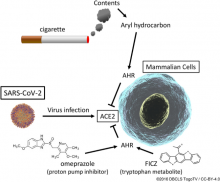
Researchers have identified a potential reason why lower numbers of COVID cases have appeared amongst smokers compared to non-smokers, even as other reports suggest smoking increases severity of the disease.
09 Sep 2021
Osaka City University
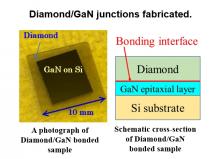
Researchers succeed in the direct bonding of diamond and gallium nitride (GaN) at room temperature and demonstrate that the bond can withstand heat treatments of 1,000℃, making it ideal for the high temperature fabrication process of GaN-based devices. GaN-on-diamond semiconductor material will allow for the next generation of high power, high frequency devices.
09 Sep 2021
International Institute for Integrative Sleep Medicine (WPI-IIIS), University of Tsukuba
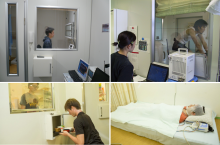
Researchers at the University of Tsukuba in Japan show that low metabolic flexibility is associated with reduced fat metabolism during sleep.
09 Sep 2021
International Institute for Integrative Sleep Medicine (WPI-IIIS), University of Tsukuba
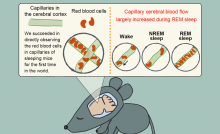
Researchers from the University of Tsukuba and Kyoto University find that capillary blood flow in the brain, which is important for delivering oxygen and nutrients and removing waste products, is increased in mice during the dream-active phase of sleep.

09 Sep 2021
International Institute for Integrative Sleep Medicine (WPI-IIIS), University of Tsukuba
Researchers from University of Tsukuba in collaboration with Yamagata University scientists find that exposure to light with less blue before sleep is better for energy metabolism. Extended exposure to light during nighttime can have negative consequences for human health. But now, researchers from Japan have identified a new type of light with reduced consequences for physiological changes during sleep.
08 Sep 2021
Hiroshima University
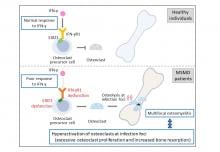
A research team led by Hiroshima University Professor Satoshi Okada has determined that enhanced bone resorption activity due to a faulty immune response may underpin multifocal osteomyelitis — painful, chronic bone infections — in children with MSMD, a rare genetic condition resulting from a range of immune system mutations.
08 Sep 2021
Tohoku University
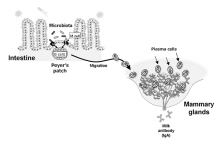
A research group has discovered an interorgan network between the mammary glands and the small intestine that plays an essential role in transferring antibodies via breastfeeding.
07 Sep 2021
Duke-NUS Medical School
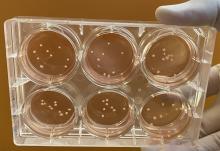
Recreating major pathological features of Parkinson’s disease in a lab-grown, human mini-brain will help researchers to explore new treatments. This is the first time that Lewy bodies, a hallmark of Parkinson’s disease in patients’ brains, have been produced in the laboratory, offering new insights into the disease.
06 Sep 2021
Kanazawa University
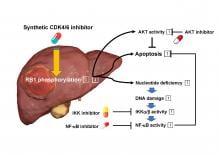
A synthetic CDK4/6 inhibitor exerts antitumor effects by forcing RB1 tumor-suppressor into an active status, but its single administration is not sufficiently effective. We find its combinatorial administration with an IKKβ inhibitor is significantly more effective in hepatocellular carcinoma treatment. Also, blockage of the IKK-NF-κB or AKT pathway enhances its effects on RB1-intact K-Ras mutated lung and colon cancers. CDK4/6 inhibitors have potential to treat various RB1-intact cancers when combined with an appropriate kinase inhibitor.
06 Sep 2021
Daegu Gyeongbuk Institute of Science and Technology (DGIST)
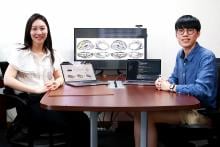
Neuroscientists develop a new approach to better understand the neural mechanism underlying deductive and inductive reasoning
06 Sep 2021
Osaka City University
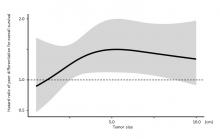
Using data from 1,107 patients dating back over 30 years, researchers have connected prognostic impact to poorly differentiated tumor size in hepatocellular carcinoma. Data confirmed previous findings that after resection, <2 cm sized tumors had excellent long-term outcomes. However, ≥2 cm and ≥5 cm sizes shared a risk of early recurrence with the latter size also at risk of early extrahepatic recurrence.
03 Sep 2021
Hokkaido University
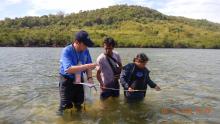
Social vulnerabilities of coastal communities and their reliance on blue carbon ecosystem services may be improved by addressing three major factors, according to a study led by Hokkaido University researchers.
03 Sep 2021
Hiroshima University
The COVID-19 pandemic has increased attention on links between public health and the planet’s health — areas traditionally addressed in separate science and policy circles. Now, an international research collaboration conducted the first comprehensive review of urban climate change responses and potential human health improvements.
Events
Sorry, no events coming up for this topic.
Researchers
Sorry, no researchers coming up for this topic.
Giants in history
Sorry, no researchers coming up for this topic.