
Peer Reviewed
News
15 Sep 2022
Duke-NUS Medical School
Cellular structures called mitochondria depend on microproteins to assist and control the assembly of a protein chain that extracts energy from nutrients, according to a new study by scientists in Singapore.

15 Sep 2022
Hiroshima University
Researchers develop a new integrated framework that factors in the many variables relevant to accurate carbon emissions modeling in the transportation sector, allowing for policymakers to choose the best path to achieve carbon neutrality.
15 Sep 2022
Tohoku University
Measuring the velocity field of a fluid flow, such as air or water, allows for greater feedback and control, something that could boost the performance and fuel-efficiency of aircraft. A research group has developed, and now successfully tested, a new method to measure fluid flow velocities.

15 Sep 2022
Osaka Metropolitan University
Demonstration of embodied cognition mechanisms in the brain could have implications for artificial intelligence.
14 Sep 2022
Tohoku University
Various approaches for treating lymph node metastasis exist. But now, a research team from Tohoku University has combined two forms of therapy to create a superior treatment method than conventional chemotherapy.
14 Sep 2022
Kavli Institute for the Physics and Mathematics of the Universe (Kavli IPMU)
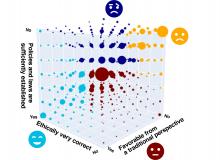
A team of researchers including Kavli IPMU has found people in Japan, US, and Germany show different concerns regarding Artificial Intelligence (AI) being used in entertainment, shopping services, or to help find criminals.

13 Sep 2022
Duke-NUS Medical School
A commentary in Nature Medicine advocates the proper application of artificial intelligence in healthcare and warns of the dangers when machine learning algorithms are misused.
13 Sep 2022
Hokkaido University
An estimated 1208 excess suicide deaths for men and 1825 for women were recorded during the COVID-19 Pandemic in Japan through December 2021, with the impact being greatest in women and younger age groups.
13 Sep 2022
Osaka Metropolitan University
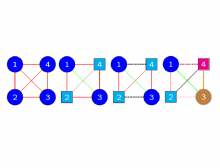
An international research team led by scientists from Osaka Metropolitan University has developed a method to identify symmetries in multi-dimensional data using Bayesian statistical techniques. Bayesian statistics has been in the spotlight in recent years due to improvements in computer performance and its potential applications in artificial intelligence. However, this statistical approach requires complex calculations of integrals, which are often considered approximations only. In their new study, the research team successfully derived new exact integral formulas. Their findings contribute to improving the accuracy of methods to identify data symmetries, possibly extending their applications to wider areas of interest, such as genetic analysis.

13 Sep 2022
Hiroshima University
Research shows that natural catastrophes may trigger or exacerbate attacks of incapacitating migraine in disaster victims.
12 Sep 2022
Tohoku University
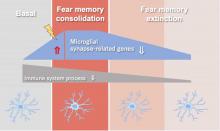
Microglia acts as the first line of defense in the central nervous system, constantly scanning for pathogens and abnormalities. Now, Tohoku University scientists have demonstrated that microglial genes associated with the synapse—structures that allow neurons to pass signals to one another—undergo changes in response to the brain processing traumatic memories.
12 Sep 2022
Institute of Industrial Science, The University of Tokyo (UTokyo-IIS)
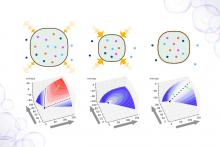
Researchers at The University of Tokyo create a geometric representation of thermodynamic systems and apply it to self-replicating processes, which may help improve our understanding of the physical constraints of living organisms
12 Sep 2022
Osaka Metropolitan University
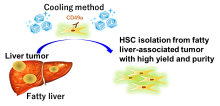
Osaka Metropolitan University scientists developed a new method to isolate hepatic stellate cells (HSCs), which play a significant role in liver cancer progression. With enzymatic cold perfusion and utilization of an antibody against CD49a, a reliable HSC surface marker, the new method allows HSC isolation with high yield and purity from livers with various conditions, be they normal or fatty tumor-prone, from both mice and humans. The findings are expected to contribute to the development of efficient tools for characterizing NASH- or fatty liver-based liver cancer.

09 Sep 2022
Duke-NUS Medical School
While the primary site of SARS-CoV-2 infection is in the nose, most antiviral immunity studies have been performed with peripheral blood. T-cell analysis of nasal swab samples suggests getting infected with SARS-CoV-2 following vaccination could confer potentially more robust, nasal-based immunity.
09 Sep 2022
Hiroshima University
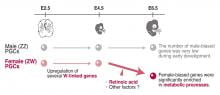
Researchers study sex-determination in birds using primordial germ cells and RNA-sequencing analysis.
09 Sep 2022
Hiroshima University
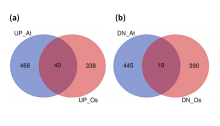
Researchers at Hiroshima University are closer to identifying the molecular processes underlying how floods deprive plants of oxygen — and how to engineer hardier crops.
08 Sep 2022
The University of Osaka
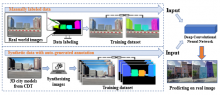
To automatically generate data for training deep convolutional neural network models to segment building facades, researchers from Osaka University used a three-dimensional model and game engine to generate digital city twin synthetic training data. They found that a model trained on these data mixed with some real data was competitive with a model trained on real data alone, revealing the potential of digital twin data to improve accuracy and replace costly manually annotated real data.
07 Sep 2022
Hokkaido University
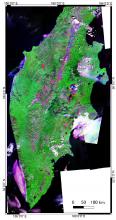
Scientists have quantified the glacier mass loss on the Kamchatka Peninsula; the accelerated loss in the region since the turn of the millennium is likely to increase in the short term.
06 Sep 2022
The University of Osaka
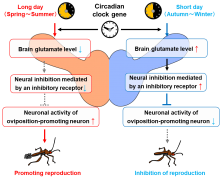
Researchers from Osaka University have found that photoperiod variation in bean bugs is regulated by genes involved in maintaining circadian rhythm via the neurotransmitter glutamate. The discovery of this mechanistic link between the biological clock and seasonal variation may have important implications for seasonal adaptation in other animals, given the conservation of glutamate across many species.
05 Sep 2022
Tohoku University
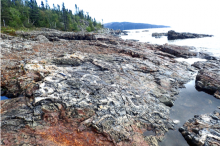
The Gunflint Formation, which straddles Lake Superior’s northwestern shore, contains a treasure trove of geological clues about the evolution of life. After a recent geological reassessment of this area, a research team has unearthed new types of microfossils dating 1.9 billion years. The landmark discovery will help scientists pinpoint the timing and factors that ushered in the evolution of prokaryotes to eukaryotes.
05 Sep 2022
Ehime University
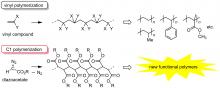
The research team directed by H. Shimomoto and E. Ihara in Ehime University successfully developed a new Pd-based initiating system affording carbon–carbon main-chain polymers bearing end-functional groups. This achievement will contribute to progress in the field of polymer chemistry and will allow us to develop new types of functional polymers.

02 Sep 2022
Duke-NUS Medical School
Even a small temperature drop in the tropical climate of Singapore increases the risk of heart attack among people aged 65 and above, say researchers from Duke-NUS Medical School, Singapore’s National Environment Agency and collaborators.
01 Sep 2022
The University of Osaka
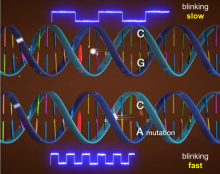
Researchers from Osaka University and collaborating partners detected unique fluorescence blinking patterns in experiments of electron transfer to single DNA molecules. They used these patterns to identify mRNA glioma point mutations in cell culture. The results of this work could help simplify surgical biopsies, enable real-time targeted therapy, and advance scientific understanding of cancer progression.
31 Aug 2022
The University of Osaka
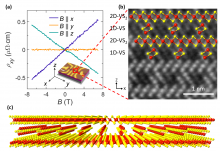
Researchers from Osaka University and collaborating partners used common nanofabrication procedures to fabricate versatile metal semiconductor superlattices. These superlattices exhibit a long-sought physical phenomenon—the anisotropic anomalous Hall effect at room temperature. This research will help improve the density of data storage, as well as the functionality of other technologies that also depend on advances in the microelectronics industry.
31 Aug 2022
National Institute for Materials Science (NIMS)
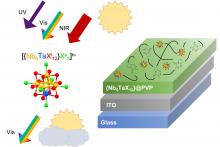
An international collaboration is developing coating materials that could make windows better insulators.
31 Aug 2022
Tohoku University
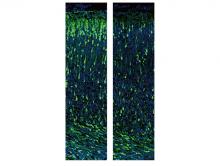
Scientists understand genes related to intellectual disabilities, but are often unsure of how mutations in these genes cause developmental disorders. Now, a research group led by two Tohoku University researchers has uncovered the role of CHAMP1—a gene whose mutations are associated with intellectual disability—in neuronal development.
30 Aug 2022
Tohoku University
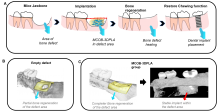
Tohoku University scientists in Japan have made a scaffold that supports the growth of new bone in large jaw defects in mice. Their findings, published in the journal PNAS Nexus, bring scientists one step closer to addressing the issues currently facing the treatment of large jaw bone defects, especially in the elderly.

30 Aug 2022
Osaka Metropolitan University
Researchers at Osaka Metropolitan University have observed "baby stars" in the Small Magellanic Cloud, having an environment similar to the early universe. Toward one of the baby stars, they found molecular outflow, which has similar properties to those seen in the Milky Way galaxy, giving a new perspective on the birth of stars.
26 Aug 2022
Osaka Metropolitan University
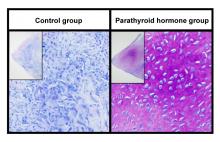
The meniscus—a cartilage cushion in the knee—can be damaged by sports injuries or aging, but rarely heals on its own. A torn meniscus is often treated with resection, which is doomed to degeneration of the articular cartilage. For knees that have had the meniscus resected, meniscus reconstruction using autologous tendons has been performed in some countries, including Japan, but the results have not been consistent. A research group at the Department of Orthopedic Surgery, Graduate School of Medicine, Osaka Metropolitan University discovered an extra step that changes transplanted tendon tissue to make it similar to the original meniscus, providing better knee cartilage protection. They found that parathyroid hormone, a drug used to treat osteoporosis, acted on tendon-derived cells to promote chondrogenic differentiation, which recreated a meniscus-like tissue.
26 Aug 2022
Osaka Metropolitan University
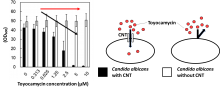
Osaka Metropolitan University researchers have clarified that an adenosine analog—the antibiotic toyocamycin—is taken up into cells by a concentrative nucleoside transporter (CNT) in Candida albicans, an opportunistic yeast fungus that causes candidiasis infections. This was also true of the human CNT3 protein. They found that C. albicans CNT and human CNT3 proteins take up similar molecules at different rates depending on their molecular size and structure. These results are expected to lead to the development of new antifungal drugs that are effective only against C. albicans and safe for humans.
Events
Sorry, no events coming up for this topic.
Researchers
Sorry, no researchers coming up for this topic.
Giants in history
Sorry, no researchers coming up for this topic.