

Peer Reviewed
News
26 Apr 2022
Tohoku University
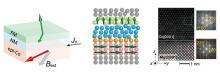
Researchers have established a low-cost method of magnetization reversal on perpendicularly magnetized ferromagnets. Not needing an external magnetic field, the method brings reverse magnetization closer to commercial viability.
25 Apr 2022
Hokkaido University
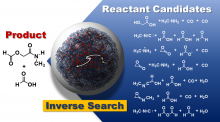
Researchers overcome computational limitations to predict the starting materials of multi-step reactions using only information about the target product molecule.
25 Apr 2022
Institute for Integrated Cell-Material Sciences (iCeMS) at Kyoto University
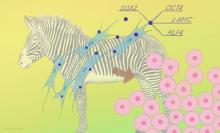
Examination of endangered species’ stem cells unveils ancient genetic links between mammals.
25 Apr 2022
Hokkaido University
A recent infant study suggests that the visual experience in daily life contributes to the emergence of upper visual field bias for faces.
25 Apr 2022
Daegu Gyeongbuk Institute of Science and Technology (DGIST)
Coconut husk (CH), a solid biowaste derived from coconut, is typically used in household items, such as doormats. Recent studies have shown that CH is rich in lignocellulose, which can make for energy-related applications of CH. To this end, a global team of researchers, in a new study, make use of CH to develop self-powered energy storage and harvesting devices, achieving high energy density and output performance, and opening doors to a circular economy.

22 Apr 2022
Osaka Metropolitan University
Scientists discovered that intramuscular fat levels are indicative of heart health. Measurements of intramuscular fat in 93 heart failure patients’ thighs showed patients with high intramuscular fat levels were at greater risk of rehospitalisation, despite no significant differences in conventional heart health criteria. These findings enable new approaches for treating heart failure, a growing concern in Japan’s ageing society.
22 Apr 2022
Daegu Gyeongbuk Institute of Science and Technology (DGIST)
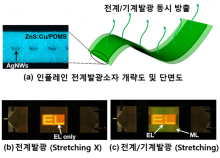
Scientists at Daegu Gyeongbuk Institute of Science and Technology (DGIST) in Korea have fabricated a flexible material that lights up brightly when stretched and/or when an electric field is applied. The results were published in the journal Applied Physics Reviews and show promise for the development of bright, sustainable, stretchable devices for use, for example, as interactive skin displays and in soft robotics.
22 Apr 2022
Institute for Integrated Cell-Material Sciences (iCeMS) at Kyoto University
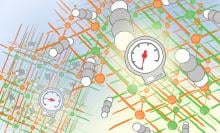
A porous material, which opens to receive highly flammable acetylene and closes to release it, sidesteps the flaws of the existing storage method.
21 Apr 2022
Osaka Metropolitan University
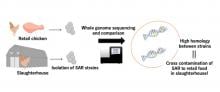
Genome profiling of Staphylococcus argenteus strains unveiled cross-contamination among Japanese retail foods and slaughterhouses.
20 Apr 2022
Hokkaido University
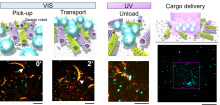
In a global first, scientists have demonstrated that molecular robots are able to accomplish cargo delivery by employing a strategy of swarming, achieving a transport efficiency five times greater than that of single robots.

18 Apr 2022
Hiroshima University
In disaster mitigation planning for future large earthquakes, seismic ground motion predictions are a crucial part of early warning systems. The way the ground moves depends on how the soil layers amplify the seismic waves (described in a mathematical site “amplification factor”). However, geophysical explorations to understand soil conditions are costly, limiting characterization of site amplification factors to date. Using data on microtremors in Japan, a neural network model can estimate site-specific responses to earthquakes based on subsurface soil conditions.
14 Apr 2022
Tohoku University
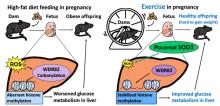
Exercising during pregnancy bestows a wealth of benefits upon a child. New research suggests that exercise may also help reduce the offspring’s chances of getting type 2 diabetes. Researchers uncovered how SOD3, a key protein released by the placenta after exercise, improves the metabolic health of offspring and negates the impacts of maternal obesity and poor diets.

14 Apr 2022
Osaka Metropolitan University
Osaka City University* study suggests memories are formed through an integration across brain regions via burst activity in amygdala-prefrontal neuronal ensembles during memory acquisition, and then hippocampal-prefrontal synchrony during post-experience sleep. (Osaka City University has now changed its name as Osaka Metropolitan University)

14 Apr 2022
Ehime University
• Effects of gestational bisphenol A exposure were compared between rat dams and their offspring.
• Bisphenol A affected the dams' circadian rhythm, immune response, and insulin resistance.
• Nevertheless, at the multi-omics levels (transcriptome and lipidome), the impact on the dams was less than on their offspring.
• Multi-variates analysis successfully differentiated the multi-omics effects between dams and their offspring.

13 Apr 2022
Institute of Industrial Science, The University of Tokyo (UTokyo-IIS)
Researchers at The University of Tokyo used a hybrid of Monte Carlo and molecular dynamics simulations to predict the self-assembly of charged Janus particles, which may lead to biomimetic nanostructures that can assemble like proteins
12 Apr 2022
Hiroshima University
Milling rice to separate the grain from the husks, produces about 100 million tons of rice husk waste globally each year. Scientists searching for a scalable method to fabricate quantum dots have developed a way to recycle rice husks to create the first silicon quantum dot LED light. Their new method transforms agricultural waste into state-of-the-art light-emitting diodes in a low-cost, environmentally friendly way.
11 Apr 2022
Tohoku University
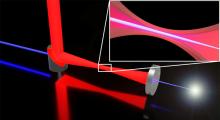
Researchers from Tohoku University have proposed a new method to form an electron lens that will help reduce installation costs for electron microscopes with atomic resolution, proliferating their use. Instead of the electrostatic and magnetic fields employed in conventional electron lenses, they utilized a light field electron-lens.
11 Apr 2022
Tohoku University
Researchers recently discovered the protein inhibiting the formation of organic nitrogen compounds in plants. This protein, if manipulated, could potentially be used to encourage plant growth and improve crop harvests.

07 Apr 2022
Singapore University of Technology and Design
With the enhancement of Freeform Liquid 3D Printing, engineers and designers are now able to fabricate more intricate, yet stronger 3D printed soft robots.
07 Apr 2022
Hokkaido University
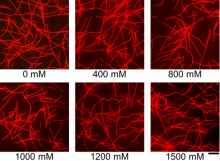
The molecule trimethylamine N-oxide (TMAO) can be used to reversibly modulate the rigidity of microtubules, a key component of molecular machines and molecular robots.
06 Apr 2022
Hokkaido University
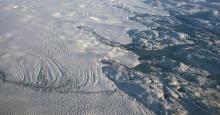
Climate changes in the tropical Pacific have temporarily put the brakes on rapid warming and ice melting in Greenland.
05 Apr 2022
Kavli Institute for the Physics and Mathematics of the Universe (Kavli IPMU)
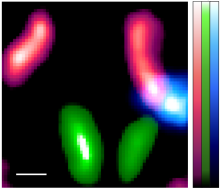
Researchers have captured images of cells in mice using astronomy technology

04 Apr 2022
Tohoku University
Scientists have found a common substance that can reversibly and rapidly store and release relatively large amounts of low-grade heat without decomposing. The research could lead to more efficient reuse of industrial waste heat.
31 Mar 2022
Hokkaido University
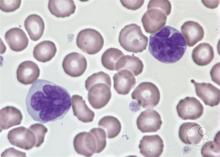
Gene editing technology has been used to pinpoint new molecular targets for treating an aggressive form of leukemia in adults.
31 Mar 2022
Institute of Industrial Science, The University of Tokyo (UTokyo-IIS)
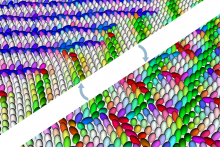
A team led by a Institute of Industrial Science, The University of Tokyo researcher has created a model to probe the role of emergent elastic fields in chiral molecular crystals
30 Mar 2022
Tohoku University
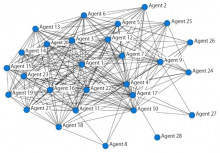
A simulation of stakeholder interactions around geothermal development in Japan provides an agent-based modeling tool for understanding how achieving community consensus is achieved.
30 Mar 2022
Hokkaido University
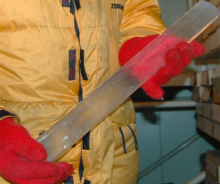
Researchers have discovered argon trapped in air-hydrate crystals in ice cores, which can be used to reconstruct past temperature changes and climate shifts.
30 Mar 2022
Hiroshima University
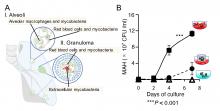
Mycobacteria are a group of pathogenic bacteria that cause diseases like leprosy and tuberculosis in humans. Now, a new study by scientists at Hiroshima University finds that mycobacteria are associated with red blood cells at lung infection sites, an interaction that has escaped scientific notice for 140 years since the discovery of the organism causing tuberculosis.
29 Mar 2022
Tohoku University
Chemotherapy is known for its painful side-effects. It also has limitations when the cancer has metastasized to the lymph nodes. The lymphatic drug delivery system, where anticancer drugs are injected directly into the sentinel lymph nodes under ultrasound guidance, offers an alternative to conventional chemotherapy. Researchers from the Tohoku University Graduate School of Medical Engineering found the optimal osmotic pressure and viscosity ranges, significantly improving the antitumor effect.
Events
Sorry, no events coming up for this topic.
Researchers
Sorry, no researchers coming up for this topic.
Giants in history
Sorry, no researchers coming up for this topic.