
Peer Reviewed
News
06 Oct 2022
Tohoku University
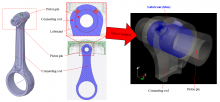
Wear and tear in engines contributes to a lot of wasted fuel and can be dangerous for operators. Now, a collaborative group has created a way to computationally predict wear and tear in piston engines, allowing for enhanced safety measures in automobiles and industrial machinery.

06 Oct 2022
The University of Osaka
Researchers from Osaka University have found that serum albumin interferes with β2m amyloid fibril formation through macromolecular crowding. Monitoring serum albumin concentrations could therefore help prevent patients from developing dialysis-related amyloidosis, a serious complication of long-term dialysis.
06 Oct 2022
Hokkaido University
Low concentrations of cetylpyridinium chloride, an antimicrobial agent present in mouthwashes, inhibit the infectivity of four variants of SARS-CoV-2.
05 Oct 2022
The University of Osaka
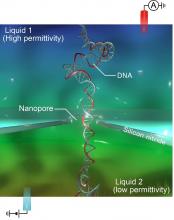
Researchers from Osaka University and collaborating partners enhanced DNA detection in silicon nitride nanopores by means of a water–glycerol viscosity gradient. Use of common chemistry under electrochemical flow enabled straightforward detection of individual DNA molecules. With further development, the results of this work could dramatically speed up and lower the cost of genomic sequencing, and facilitate unprecedented integration with compact electronics.
04 Oct 2022
Osaka Metropolitan University
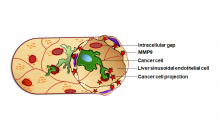
Metastasis—when cancer spreads to form new tumors—causes approximately 90% of cancer-related deaths. Because metastatic cancer cells circulate in the blood, the liver—which filters the blood—is considered the most vulnerable organ, so treatments that prevent liver metastasis are urgently needed. A team of Osaka Metropolitan University researchers discovered a mechanism that allows metastatic cancer cells to infiltrate the liver, and how that infiltration can be blocked by inhibiting a related protein.
03 Oct 2022
Tohoku University
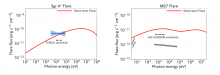
Supermassive black holes can launch fast-moving plasma, which emit strong radio signals known as radio jets. Despite being discovered over 40 years ago, much remains unknown about how radio jets are produced. Now, a research team, led by Tohoku University astrophysicists, has attempted to clarify how plasma gets loaded into radio jets.
03 Oct 2022
Osaka Metropolitan University
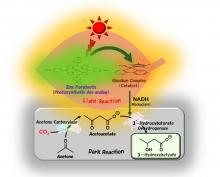
Osaka Metropolitan University scientists have successfully synthesized 3-hydroxybutyrate, a raw material for poly-3-hydroxybutyrate (PHB)—a strong, water-insoluble, biodegradable plastic used for packaging materials—from acetone and CO2. With a visible light-driven catalytic system utilizing sunlight and two biocatalysts, the researchers achieved a high conversion yield of about 80%. Mimicking natural photosynthesis, this study artificially reproduced a light reaction involving sunlight and a dark reaction fixing CO2 to synthesize the raw material for PHB. The finding is expected to contribute to solving the plastic waste problem and to reducing CO2.
03 Oct 2022
The University of Osaka
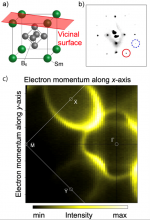
Researchers from Osaka University revealed that the surface electronic structure of topological insulators varies according to its surface atomic structure, even though it was believed to have been protected by the symmetry of the electronic structure inside the crystal and is therefore unaffected by differences in surface atomic structure. This work offers a new means of minimizing the power consumption and increasing the speed of next-generation technology.
30 Sep 2022
Hiroshima University
Research performed on human blastoids, a research model of an early embryo built out of stem cells, may allow scientists to understand better what causes birth defects and lost pregnancies, and so prevent them. But such research is also ethically fraught, warn bioethicists, due to differing beliefs on whether the blastoid possesses sentience or has the potential to do so.

29 Sep 2022
Hokkaido University
A simple and economical method of detecting SARS-CoV-2 viral loads in wastewater with high sensitivity has been developed, expanding the use of wastewater-based epidemiology for tracking the virus in populations.

28 Sep 2022
Hiroshima University
Researchers analyzed how the specific components of peace and environmental sustainability — concepts known to be intrinsically related but often investigated separately — influence each other to better inform policy and decision-making.
28 Sep 2022
The University of Osaka
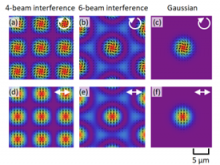
Osaka University researchers showed how to use laser beam interference to construct chiral structures. By using computer simulations, they were able to predict the final light pattern and optical radiation force distribution of any collection of light sources. This work may lead to cheaper optical devices and sensors.

27 Sep 2022
Duke-NUS Medical School
Scientists have pinpointed a protein in lysosomes that is involved in recycling a crucial fatty component of cell membranes to keep cells healthy.

27 Sep 2022
Daegu Gyeongbuk Institute of Science and Technology (DGIST)
- The low-cost, high-energy, long-life lithium-sulfur battery is based on a novel silica/sulfur interlayer.
- The battery is expected to be used in next-generation mobile phones, drones, and electric vehicles owing to its high energy density and improved lifespan.
27 Sep 2022
Daegu Gyeongbuk Institute of Science and Technology (DGIST)
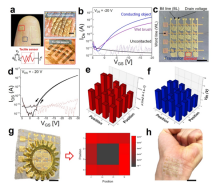
- A research team led by Professor Lee Sungwon from DGIST succeeded in developing the world’s first mesh (nanomesh) structured electronic skin device (organic field-effect transistor)
- An electronic skin device comprising only a mesh (nanomesh) structure that can measure and process bio-signals for a prolonged period indicates a big step toward integrated systems for electronic skin devices.
27 Sep 2022
Daegu Gyeongbuk Institute of Science and Technology (DGIST)
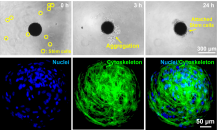
-Microrobots disintegrate in the body after delivering stem cells to the target point, and the delivered stem cells are verified to be capable of normal proliferation and differentiation.
-Expected to contribute to increasing the efficiency of regenerative medicine such as stem cell delivery.

26 Sep 2022
Hokkaido University
Hokkaido University researchers find a new way of producing the industrially important propylene that is more energy efficient than existing approaches—and in the process turns carbon dioxide into another usable resource. Their pioneering catalyst design thus contributes to the carbon neutralization of the petrochemical industry.
26 Sep 2022
Hiroshima University
New research shows that consumers are willing to pay extra for products that give them more to feel.
22 Sep 2022
Hokkaido University
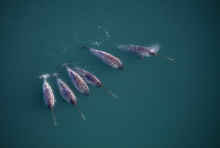
Chaos theory improves understanding of Arctic narwhal behavior, with the aim of helping efforts to protect this vulnerable species.
22 Sep 2022
The University of Osaka
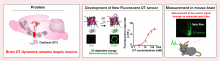
Researchers led by Osaka University developed a novel fluorescent sensor to detect and monitor levels of the neuropeptide oxytocin, also known as the “happy hormone.” The OT sensor facilitated the successful measurement of OT dynamics in the brains of living animals and may serve as a foundation for the development of therapeutics for the treatment of neurological disorders such as autism and schizophrenia.

22 Sep 2022
Institute of Industrial Science, The University of Tokyo (UTokyo-IIS)
Researchers at The University of Tokyo grow a nanoscale layer of a superconducting material on top of a nitride-semiconductor substrate, which may help facilitate the integration of quantum qubits with existing microelectronics
22 Sep 2022
Duke-NUS Medical School
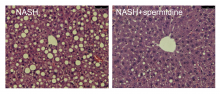
A pathway that malfunctions in advanced non-alcoholic fatty liver disease could be fixed with the aid of spermidine, a compound naturally found in bodily cells and certain whole foods.
22 Sep 2022
Duke-NUS Medical School
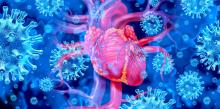
Scientists have uncovered how Coxsackievirus B3, the most common cause for viral heart inflammation, takes advantage of a specific heart sensor to trigger chronic inflammation that can lead to heart failure.
22 Sep 2022
Hiroshima University
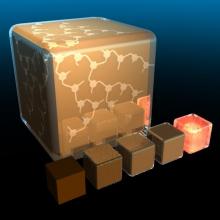
Researchers found a new way to reduce carbon dioxide (CO2) emissions by wrapping copper nanocubes with an organic layer, solving instability and selectivity problems with copper nanocubes in catalysis, and improving how this electrocatalyst converts CO2 into organic molecules.
21 Sep 2022
Horizon Journals
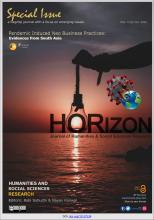
A special issue of Horizon Journal of Humanities & Social Sciences Research (JHSSR Vol.4 (S) Oct. 20212) is now published. This issue includes papers on the Covid-19 pandemic, developments in business and digital practices, changes in social media behavior in South Asia.
20 Sep 2022
Institute of Industrial Science, The University of Tokyo (UTokyo-IIS)
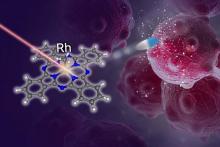
Researchers from The Institute of Industrial Science, The University of Tokyo have developed a streamlined photo-uncaging system for photodynamic cancer therapy, using a pulse of light for tumor-specific activation of a cancer-fighting agent

20 Sep 2022
Institute of Industrial Science, The University of Tokyo (UTokyo-IIS)
A research group led by the Institute of Industrial Science, The University of Tokyo, finds that sensory neurons in human skin modulate melanocytes via the secretion of Repulsive Guidance Molecule B
20 Sep 2022
Ehime University
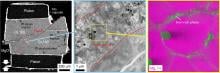
The activity of deep-focus earthquakes, which increases with depths from ~400 km to a peak at ~600 km, is enigmatic because conventional brittle failure is unlikely to occur at elevated pressures. Our experiments showed that formation of thin weak layers filled with nano-crystalline olivine/wadsleyite, upon the pressure-induced phase transition of olivine, is the major cause of deep-focus earthquakes on the metastable olivine wedge in deep slabs.
20 Sep 2022
The University of Osaka
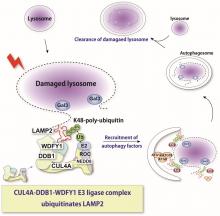
Osaka University researchers identified the specific protein complex that recognizes when cellular organelles called lysosomes become damaged. When this occurs, the CUL4A protein complex transfers a molecular tag, called polyubiquitin, to a lysosomal protein known as LAMP2. WDFY1, another protein in the complex, is able to recognize and interact with LAMP2. These initial steps are critical to beginning a process called lysophagy, in which these damaged lysosomes are cleared away by the cell.
16 Sep 2022
Osaka Metropolitan University
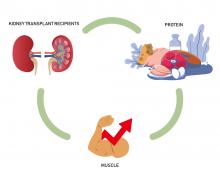
It is commonly believed that patients with chronic kidney disease should limit their protein intake given that excessive protein worsens kidney function. However, a new study by Osaka Metropolitan University scientists indicates that changes in skeletal muscle mass are positively correlated with protein intake, suggesting the necessity of adequate protein intake to improve muscle mass after kidney transplantation.
Events
Sorry, no events coming up for this topic.
Researchers
Sorry, no researchers coming up for this topic.
Giants in history
Sorry, no researchers coming up for this topic.