
Peer Reviewed
News
22 Jul 2022
Hokkaido University
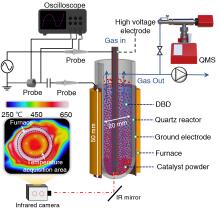
Nonthermal plasma (NTP) is used to activate CO2 molecules for hydrogenation into alternative fuels at low temperatures, also enabling the conversion of renewable electricity to chemical energy. Researchers from Tokyo Tech combined experimental and computational methods to investigate the hydrogenation pathway of NTP-promoted CO2 on the surface of Pd2Ga/SiO2 catalysts. The mechanistic insights from their study can help improve the efficiency of catalytic hydrogenation of CO2 and allows the engineers to design new concept catalysts.
21 Jul 2022
Tohoku University
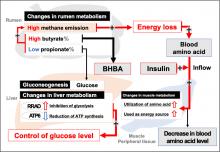
Methane emitted from cows is a significant source of greenhouse emissions. Now, a collaborative project has used biomarkers to tell us more about the metabolic and nutritional characteristics linked to enteric methane emissions in Japanese Black cattle.
20 Jul 2022
Institute of Industrial Science, The University of Tokyo (UTokyo-IIS)
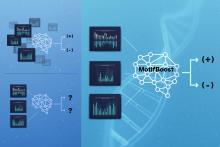
Researchers at the Institute of Industrial Science at The University of Tokyo introduce a machine learning method to help predict past infection from receptor sequences of immune T-cells even when little data is available, which may help improve human health and our understanding of adaptive immunity

20 Jul 2022
Hiroshima University
The quest for the ideal COVID-19 policies to contain outbreaks without border closures that harm the travel industry led researchers to one protocol.
19 Jul 2022
Tohoku University
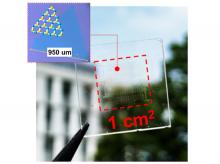
Solar panels often get a bad rap for spoiling the appearance of homes and businesses. Yet, a research group has fabricated a highly transparent solar cell with a 2D atomic sheet. These near-invisible solar cells achieved an average visible transparency of 79%, meaning they can, in theory, be placed everywhere—building windows, the front panel of cars, and even human skin.
19 Jul 2022
Osaka Metropolitan University
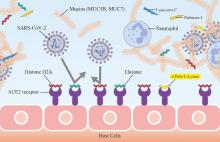
Saliva and oral cells are important routes for transmission and infection by the novel coronavirus COVID-19. A research group led by Associate Professor Misako Matsubara and Specially Appointed Professor Katsutoshi Yoshizato of Osaka Metropolitan University hypothesized that the body's innate immune system may protect against SARS-CoV-2 infection. The onset and severity of COVID-19 are age-dependent, as are parts of the innate immune system like saliva production and quality, which are significantly reduced in the elderly. They found that saliva from healthy individuals prevented the binding of the SARS-CoV-2 spike protein S1 on the viral envelope to the angiotensin-converting enzyme 2 (ACE2) receptor present on the plasma membrane of human cells in a concentration-dependent manner.
19 Jul 2022
Tohoku University
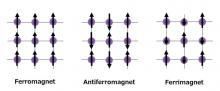
A research group has successfully synthesized a ‘half-metal’ material, achieving a rare feat in the pursuit of zero magnetization. The new material will enhance the performance of electronic devices thanks to the unique behavior of its spin.

15 Jul 2022
Osaka Metropolitan University
A research group led by Dr. Soichi Sano, a specially appointed lecturer in the Department of Cardiovascular Medicine, Graduate School of Medicine, Osaka Metropolitan University, revealed that men with hematopoietic mosaic loss of Y chromosome (mLOY) — meaning men with an increase, in the blood, of cells that have lost the male sex chromosome — have a worse prognosis for heart failure due to fibrosis progression in the heart. Furthermore, in experiments using mice, which, like humans, have an increased mortality rate with age, they found that the presence of mLOY causes overproduction of fibrosis-promoting substances, which leads to the progression of cardiac fibrosis, a mechanism directly related to a worse prognosis for heart failure.
15 Jul 2022
Hiroshima University
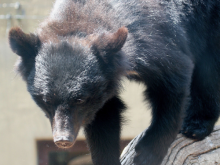
Cultured human skeletal muscle cells infused with serum from hibernating bears exhibited “muscle gain” confirming that these creatures’ ability to avoid muscular damage despite months of inactivity is in their blood.
15 Jul 2022
Osaka Metropolitan University
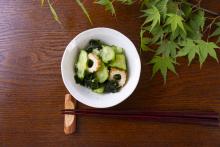
Fresh vegetables in vinegar, similar to pickles, are a perfect side dish, commonly served with Japanese cooking. One traditional side dish called sunomono, a cool cucumber or seaweed salad, provided a unique opportunity as a source of dietary vinegar. This new observational study from Osaka Metropolitan University noted that men over 40 who eat sunomono at least once a month were significantly more likely to be in lower blood pressure categories.
12 Jul 2022
The University of Osaka
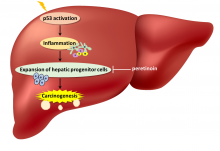
Osaka University researchers identified a novel mechanism by which expression of the tumor suppressor p53 paradoxically promotes liver cancer development in patients with chronic liver disease. By generating a mouse model with constant p53 expression in its liver cells, the team observed increased numbers of hepatic progenitor cells (HPCs) and liver cancer incidence. These HPCs could induce cancer when injected into certain mice. This did not occur with p53 deleted, demonstrating its critical significance.
11 Jul 2022
Hokkaido University
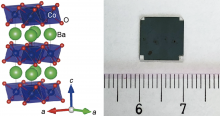
A thermoelectric metal oxide film with a thermoelectric figure of merit of ~0.55 at 600°C has been discovered, opening new avenues towards the widespread use of thermoelectric converters.
11 Jul 2022
Hokkaido University
A novel molecular pathway involving cell signalling proteins in the brain may explain how stress affects neuropsychiatric lupus with diffuse neuropsychological manifestations.
11 Jul 2022
The University of Osaka
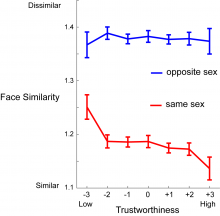
Researchers from Osaka University found that when viewing photos of strangers, ratings of trustworthiness were correlated with facial similarity as calculated by an artificial neural network. However, facial similarity was only a factor in trustworthiness when the observer and stranger were the same sex.
11 Jul 2022
The University of Osaka
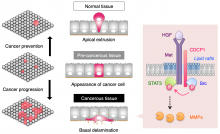
Researchers from Osaka University have shown that the oncogene-encoded molecule Src is responsible for epithelial cells developing invasive potential and overcoming the normal cellular defense of apical extrusion, but only when Src is located in lipid rafts in the cell membrane. Src is recruited and activated into lipid rafts by a molecule called CDCP1, which forms a molecular scaffold within the lipid rafts. CDCP1 could therefore be a promising new drug target for early-stage cancers.

07 Jul 2022
Hiroshima University
New research reveals what kind of employees headhunters contact, how they find them, and why relying on them to fill vacancies can drive up resignations.
07 Jul 2022
Hong Kong Baptist University (HKBU)
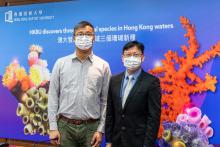
Biologists from Hong Kong Baptist University (HKBU) have discovered in Hong Kong waters three new species of hard coral which have never been identified anywhere else in the world. The findings come shortly after their discovery of one new coral and two new nudibranch species, which was announced last year under their research project on coral health in Hong Kong.
06 Jul 2022
The University of Osaka
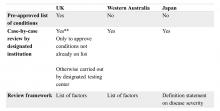
Researchers from Osaka University examined how disease severity is evaluated in the context of preimplantation genetic testing for single-gene diseases (PGT-M) by conducting case studies of the regulatory frameworks governing PGT-M in Japan, the United Kingdom, and Western Australia through analysis of relevant policy documents. Results of their study showed that how policies define the standard for disease severity that would justify PGT-M and how decisions are made regarding the eligibility of individual cases have important social and ethical implications.
06 Jul 2022
Osaka Metropolitan University
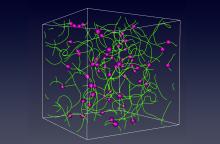
A research group of Professor Makoto Tsubota and Specially Appointed Assistant Professor Satoshi Yui, both from the Graduate School of Science and the Nambu Yoichiro Institute of Theoretical and Experimental Physics, Osaka Metropolitan University, in cooperation with their colleagues from Florida State University and Keio University, revealed that there are laws of vortex diffusion in superfluid helium-4 (He II) at extremely low temperatures, near absolute zero (−273°C). In this study, by conducting a systematic numerical study and comparing the results with experimental observations, the research group found that quantum vortices cause "superdiffusion" over short periods of time and "normal diffusion" over longer periods of time, similar to the movement of pollen in still water.
06 Jul 2022
Kanazawa University
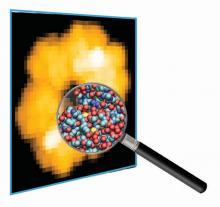
Atomic force microscopy (AFM) allows to visualize the dynamics of single biomolecules during their functional activity. All observations are, however, restricted to regions accessible by a fairly big probing tip during scanning. Hence, AFM images only the biomolecular surface with limited spatial resolution, missing important information required for a detailed understanding of the observed phenomena.

06 Jul 2022
The University of Osaka
Osaka University researchers described a novel effect in which the voltage generated by photovoltaic devices can change based on the color of incidence light. They show how this feature is due to random energy states that exist inside the antimony sulfiodide devices. This work may lead to more robust renewable energy generated by solar cells.
05 Jul 2022
Hokkaido University
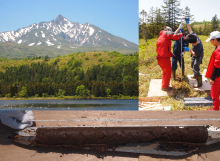
Scientists from Hokkaido University have reconstructed the climate of Hokkaido over the past 4400 years and have revealed that changes in the climate influenced changes in historic cultures during that time.
05 Jul 2022
The University of Osaka
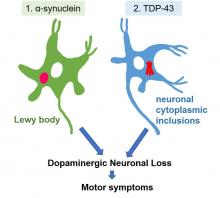
Researchers from Osaka University have described a case of clinically typical Parkinson’s disease with unusual changes in the brain. As well as the expected findings of cell loss and inflammation in disease-related brain regions, there were accumulations of the protein TDP-43 instead of the usual alpha-synuclein inclusions. This report suggests that TDP-43 accumulation can cause Parkinson’s disease-like symptoms and brain changes, which may be important for developing new treatments for this currently uncurable disease.
01 Jul 2022
Institute of Industrial Science, The University of Tokyo (UTokyo-IIS)
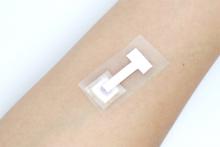
Researchers report a new, minimally invasive, antibody-based detection method for SARS-CoV-2 that could lead to the blood sample-free detection of many diseases

01 Jul 2022
Duke-NUS Medical School
Specialised physician training, nurse-led motivational conversations and follow-up with patients, and subsidy on combination medication significantly lowered BP among patients with uncontrolled hypertension, according to findings from Singapore.
01 Jul 2022
Daegu Gyeongbuk Institute of Science and Technology (DGIST)
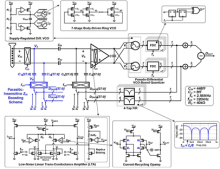
- DGIST Professor Lee Jung-hyup's team develops an 'analog-digital signal conversion system' based on semiconductor IC technology that can measure ultra-fine signals generated in the body
- Capable of taking precise measurements of fine signals amidst strong external noise, application to next-generation brain-machine interface technology, and ultra-small high-performance medical devices expected
01 Jul 2022
Daegu Gyeongbuk Institute of Science and Technology (DGIST)
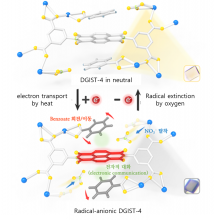
- Professor Park Jin-hee's team at DGIST develops new metal-organic frameworks (MOFs) that respond to various stimuli and visualizes unstable radical states
- Expected to be used for designing and applying materials in various fields such as eco-friendly sensors, catalysts, and batteries
01 Jul 2022
Daegu Gyeongbuk Institute of Science and Technology (DGIST)
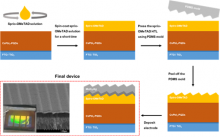
- DGIST Department of Energy Science & Engineering Research Team Led by Choi Jong-min Develops Nano-structured Electrodes Capable of Enhancing Light Absorption Capacity and Photocurrent of Perovskite Quantum Dot Solar Cells
- Proposes a universal and easy method that can be applied to various photoelectric devices using organic charge transport layers, including solar cells
01 Jul 2022
Daegu Gyeongbuk Institute of Science and Technology (DGIST)
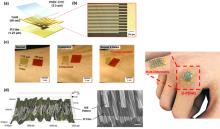
- A research team led by Professor Lee Sung-won and Jang Gyeong-in at DGIST succeeds in developing a high-efficiency power generator using small human movements in daily life.
- Takes a step closer to the realization of a health diagnosis system that can monitor vital signs for a long time without batteries by using small but continuous energy accumulation
30 Jun 2022
The University of Osaka
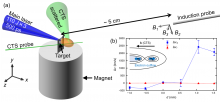
A research team led by Osaka University realized magnetic reconnection driven by electron dynamics in laser-produced plasmas and measured the pure electron outflows. Their findings will be applied not only to space and astrophysical plasmas, but also to magnetic propulsion and fusion plasmas.
Events
Sorry, no events coming up for this topic.
Researchers
Sorry, no researchers coming up for this topic.
Giants in history
Sorry, no researchers coming up for this topic.