

Peer Reviewed
News
02 Dec 2022
Tohoku University
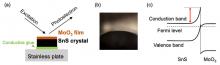
Tin sulfide (SnS) solar cells have shown immense promise in the rush to develop more environmentally friendly thin-film solar cells. Yet for years SnS solar cells have struggled to achieve a high conversion efficiency. To overcome this, a SnS interface exhibiting large band bending was necessary, something a research group has recently achieved.

01 Dec 2022
National Institute for Materials Science (NIMS)
Machine learning and robotic process automation combine to speed up and simplify a process used to determine crystal structures.
01 Dec 2022
Tohoku University
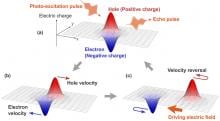
Precise control of quantum systems, such as quantum computers, is of great importance for modern quantum science. One way this has been done is via spin echoes. A research group has discovered a new type of echo, labelling them “energy-band echoes.”
01 Dec 2022
Hokkaido University
Automated reaction path search method predicts accurate stereochemistry of pericyclic reactions using only target molecule structure.
30 Nov 2022
Osaka Metropolitan University
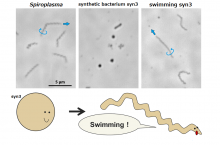
Osaka Metropolitan University researchers introduced seven proteins, thought to let bacteria swim by switching the direction that their helical bodies spiral, into a strain of synthetic bacterium with minimal genetic information. As a result, they confirmed that the synthetic bacterium named syn3, which is normally spherical, formed a helix that could swim by spiraling. Further investigation revealed that only two of these newly added proteins were required to make syn3 capable of minimal swimming. This swimming synthetic bacterium can be said to be the smallest mobile lifeform genetically, as it contains the fewest number of genes.
30 Nov 2022
Ehime University
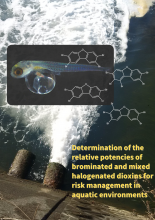
Some mixed halogenated dioxins are more toxic than TCDD
29 Nov 2022
Osaka Metropolitan University
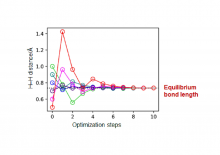
Using a quantum computer, Osaka Metropolitan University researchers utilized quantum logic circuits to directly calculate, in a single calculation, the energy difference between two molecular geometries. The developed method was then applied to execute the molecular geometry optimization of typical molecular systems. On a classical computer, calculations based on the finite difference method require at least two evaluations of the energy for one-dimensional systems, but previous research has shown that a quantum computer can be used to calculate the energy derivatives based on this method in a single calculation. However, quantum circuits relevant to quantum algorithms capable of performing the energy derivative calculations had not been implemented. The research group has successfully created a quantum circuit to calculate the energy derivatives by modifying the quantum circuit used in the previously developed quantum phase difference estimation algorithm.
29 Nov 2022
Osaka Metropolitan University
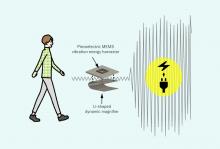
A research team at Osaka Metropolitan University has developed a microelectromechanical system (MEMS) piezoelectric vibration energy harvester, which is only about 2 cm in diameter with a U-shaped metal vibration amplification component. The device allows for an increase of approximately 90 times in the power generation performance from impulsive vibration. Since the power generation performance can be improved without increasing the device size, the technology is expected to generate power to drive small wearable devices from non-steady vibrations, such as walking motion.
28 Nov 2022
Hokkaido University
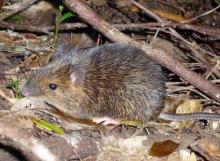
The Sox9 gene is upregulated in the absence of sex-determining Y chromosome and Sry gene in Amami spiny rat.
28 Nov 2022
Osaka Metropolitan University
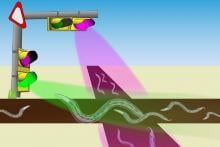
A research group at the Osaka Metropolitan University Graduate School of Science has revealed a new system that allows them to control the behavior of the nematode worm Caenorhabditis elegans, using two different animal opsins, a type of light-sensitive protein. The first opsin was expressed in the worms’ sensory cells responsible for triggering avoidance behavior, making the worms move. This opsin was found to be approximately 7,000 times more sensitive to white light than the commonly used optogenetic protein channelrhodopsin-2. Likewise, a UV-sensitive opsin was expressed in the worms’ motor neurons, causing the worms to stop when exposed to UV light and start moving again when exposed to green light. Both opsins tested can be switched on and off repeatedly without breaking down, making them robust tools for future research, including the field of drug discovery.
28 Nov 2022
Hong Kong Baptist University (HKBU)
A Hong Kong Baptist University (HKBU) collaborative research team has synthesised a nanoparticle named TRZD that can perform the dual function of diagnosing and treating glioma in the brain. It emits persistent luminescence for the diagnostic imaging of glioma tissues in vivo and inhibits the growth of tumour cells by aiding the targeted delivery of chemotherapy drugs. The nanoparticle offers hope for the early diagnosis and treatment of glioma, especially cerebellar glioma, which is even harder to detect and cure with existing methods.
28 Nov 2022
Tohoku University
We don’t know much about the Earth’s inner core because recreating its conditions in a laboratory setting remains fraught with difficulties. Based on tracking seismic waves, scientists theorize that the area in and around the core comprises mostly of iron. But the values extracted from these indicators differ from how pure iron typically behaves. Now, a collaborative research group has succeeded, for the first time, in measuring the speed of sound of pure iron under pressures similar to the Earth’s inner core boundary.
28 Nov 2022
Tohoku University
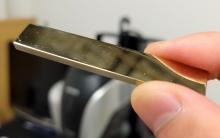
Most metal and alloys possess a high elastic strain rate at the micro level. But this changes when they are in their bulk shape, as they are for everyday engineering applications. Now, a research group has developed a bulk copper-based alloy boasting the largest tensile elastic strain at room temperature to date.
28 Nov 2022
The University of Osaka
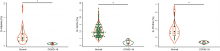
The research team investigated the role of D-amino acids in severe viral infection. Mouse models of influenza A and COVID-19 infection and patients with severe COVID-19 demonstrated reduced D-amino acid levels in the blood. Supplementation with D-alanine mitigated body weight reduction in IAV model mice and improved survival in COVID-19 model mice. D-amino acids may represent potential biomarkers and therapeutic agents for the treatment of severe viral infection.
28 Nov 2022
The University of Osaka
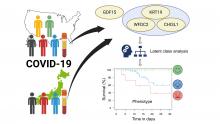
Researchers led by Osaka University identified plasma proteins associated with critical pathogenesis in COVID-19. Using a novel blood proteomics method, the researchers evaluated two discovery cohorts and one validation cohort of patients with COVID-19 and healthy volunteers. Cell adhesion proteins WFDC2, GDF15, CHI3L1, and KRT19 were shown to be associated with disease severity in patients with COVID-19, and may serve as potential targets for therapies to treat COVID-19 infection.
25 Nov 2022
Tohoku University
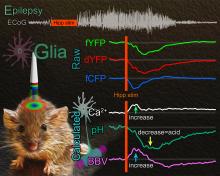
Researchers at Tohoku University have shown that astrocytes in the mouse brain exhibit an acid response with intensified epileptic seizures. The astrocytes’ acid response could lead to the amplification of excitatory neuronal signals and be the underlying drive for generating plasticity for epileptogenesis.
24 Nov 2022
Hokkaido University
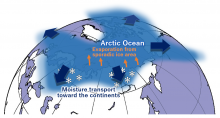
A new model explains that water evaporating from the Arctic Ocean due to a warming climate is transported south and can lead to increased snowfall in northern Eurasia in late autumn and early winter. This information will allow for more accurate predictions of severe weather events.

24 Nov 2022
Duke-NUS Medical School
Understanding how bats tolerate viral infections without developing symptoms may lead to better ways of combatting human disease.

22 Nov 2022
Osaka Metropolitan University
An Osaka Metropolitan University study found that differences in culture affect when Japanese and American university students feel comfortable providing social support. The researchers found that Japanese university students were less likely than American students to offer assistance to a close friend or family member unless they had been explicitly asked for help, even when they knew that the person needed assistance. There were no differences in providing assistance between Japanese and American students when requests for help were explicitly stated.

22 Nov 2022
Hiroshima University
New study finds that "HUG Your Baby" — a program developed to help parents understand their baby’s behavior — could help reduce postpartum depression in mothers.
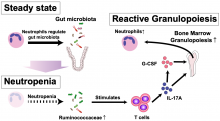
21 Nov 2022
Hokkaido University
Intestinal bacteria composition is crucial to driving the recovery of neutrophils counts in the blood of mice following treatments such as stem cell transplants or chemotherapy.

21 Nov 2022
Hokkaido University
Theory-guided development of an easier, more versatile process for synthesizing unsymmetric ligands provides new avenues of exploration in transitional metal catalysis.
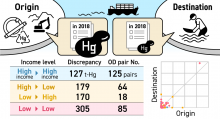
21 Nov 2022
Hiroshima University
Study can help to assess effectiveness of Minamata Convention on Mercury
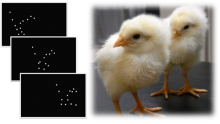
18 Nov 2022
Hokkaido University
Disturbed transmission via nicotinic acetylcholine receptors in chick fetuses impairs the hatchlings’ preference for animate objects—similar to what is seen in autism spectrum disorder in humans.
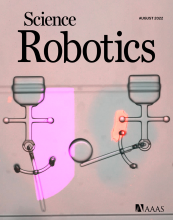
17 Nov 2022
The University of Osaka
Osaka University researchers simplified the process of producing soft microrobots powered by biomolecular motor muscles by 3D-printing the constituent modules, including actuators and grabbers, in situ. This work may lead to significant advances in scalable production and microsurgery.
17 Nov 2022
The University of Osaka
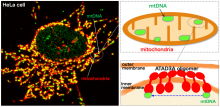
Researchers led by Osaka University have shown that a molecule known as ATAD3A is essential for the movement of genetic material inside cellular substructures called mitochondria. Appropriate distribution of this DNA, organized into “nucleoid” structures, is key for the generation of energy by the “respiratory chain” protein complex. This study opens up opportunities for developing new methods to alter nucleoid movement and affect mitochondrial function, thereby providing potential therapies against mitochondrial diseases.

17 Nov 2022
Ehime University
Microplastics already at the bottom of Beppu Bay by 1960!
16 Nov 2022
The University of Osaka
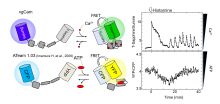
Researchers from SANKEN (The Institute of Scientific and Industrial Research) at Osaka University have genetically engineered a protein to emit the shortest-wavelength fluorescence light reported to date. They did this by optimizing the interactions between the fluorescence center (chromophore) and its surroundings, in a manner that differs from previous reports. The resulting fluorescence emission was bright and stable over a useful range of pH values. This work will aid basic and applied research, such as understanding the behavior of healthy and diseased cells.
16 Nov 2022
Daegu Gyeongbuk Institute of Science and Technology (DGIST)
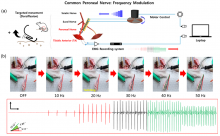
- Preclinical trial results show real-time physiological response to neural stimulation via stimulus parameter modulation. Their paper is published in a high-ranking journal in materials and energy, Nano Energy.
16 Nov 2022
Daegu Gyeongbuk Institute of Science and Technology (DGIST)
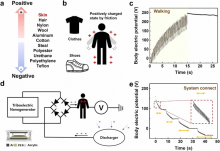
- A technique to decrease the body electric potential using a triboelectric nanogenerator is discovered and developed into a static prevention technology
- This work is published in “Nano Energy” as a study on technology that is easier to apply and more effective than existing static removal methods
Events
Sorry, no events coming up for this topic.
Researchers
Sorry, no researchers coming up for this topic.
Giants in history
Sorry, no researchers coming up for this topic.