
Peer Reviewed
News
11 Jul 2022
Hokkaido University
A novel molecular pathway involving cell signalling proteins in the brain may explain how stress affects neuropsychiatric lupus with diffuse neuropsychological manifestations.
11 Jul 2022
The University of Osaka
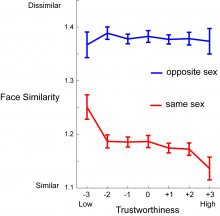
Researchers from Osaka University found that when viewing photos of strangers, ratings of trustworthiness were correlated with facial similarity as calculated by an artificial neural network. However, facial similarity was only a factor in trustworthiness when the observer and stranger were the same sex.
11 Jul 2022
The University of Osaka
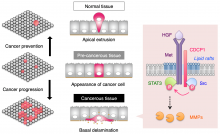
Researchers from Osaka University have shown that the oncogene-encoded molecule Src is responsible for epithelial cells developing invasive potential and overcoming the normal cellular defense of apical extrusion, but only when Src is located in lipid rafts in the cell membrane. Src is recruited and activated into lipid rafts by a molecule called CDCP1, which forms a molecular scaffold within the lipid rafts. CDCP1 could therefore be a promising new drug target for early-stage cancers.

07 Jul 2022
Hiroshima University
New research reveals what kind of employees headhunters contact, how they find them, and why relying on them to fill vacancies can drive up resignations.
07 Jul 2022
Hong Kong Baptist University (HKBU)
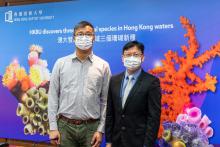
Biologists from Hong Kong Baptist University (HKBU) have discovered in Hong Kong waters three new species of hard coral which have never been identified anywhere else in the world. The findings come shortly after their discovery of one new coral and two new nudibranch species, which was announced last year under their research project on coral health in Hong Kong.
06 Jul 2022
The University of Osaka
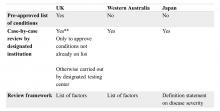
Researchers from Osaka University examined how disease severity is evaluated in the context of preimplantation genetic testing for single-gene diseases (PGT-M) by conducting case studies of the regulatory frameworks governing PGT-M in Japan, the United Kingdom, and Western Australia through analysis of relevant policy documents. Results of their study showed that how policies define the standard for disease severity that would justify PGT-M and how decisions are made regarding the eligibility of individual cases have important social and ethical implications.
06 Jul 2022
Osaka Metropolitan University
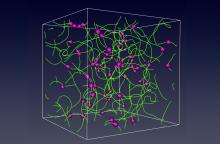
A research group of Professor Makoto Tsubota and Specially Appointed Assistant Professor Satoshi Yui, both from the Graduate School of Science and the Nambu Yoichiro Institute of Theoretical and Experimental Physics, Osaka Metropolitan University, in cooperation with their colleagues from Florida State University and Keio University, revealed that there are laws of vortex diffusion in superfluid helium-4 (He II) at extremely low temperatures, near absolute zero (−273°C). In this study, by conducting a systematic numerical study and comparing the results with experimental observations, the research group found that quantum vortices cause "superdiffusion" over short periods of time and "normal diffusion" over longer periods of time, similar to the movement of pollen in still water.
06 Jul 2022
Kanazawa University
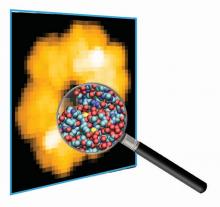
Atomic force microscopy (AFM) allows to visualize the dynamics of single biomolecules during their functional activity. All observations are, however, restricted to regions accessible by a fairly big probing tip during scanning. Hence, AFM images only the biomolecular surface with limited spatial resolution, missing important information required for a detailed understanding of the observed phenomena.

06 Jul 2022
The University of Osaka
Osaka University researchers described a novel effect in which the voltage generated by photovoltaic devices can change based on the color of incidence light. They show how this feature is due to random energy states that exist inside the antimony sulfiodide devices. This work may lead to more robust renewable energy generated by solar cells.
05 Jul 2022
Hokkaido University
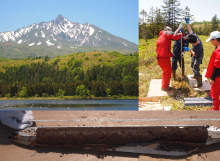
Scientists from Hokkaido University have reconstructed the climate of Hokkaido over the past 4400 years and have revealed that changes in the climate influenced changes in historic cultures during that time.
05 Jul 2022
The University of Osaka
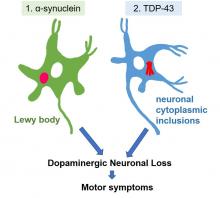
Researchers from Osaka University have described a case of clinically typical Parkinson’s disease with unusual changes in the brain. As well as the expected findings of cell loss and inflammation in disease-related brain regions, there were accumulations of the protein TDP-43 instead of the usual alpha-synuclein inclusions. This report suggests that TDP-43 accumulation can cause Parkinson’s disease-like symptoms and brain changes, which may be important for developing new treatments for this currently uncurable disease.
01 Jul 2022
Institute of Industrial Science, The University of Tokyo (UTokyo-IIS)
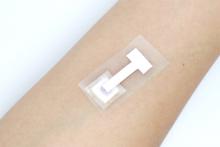
Researchers report a new, minimally invasive, antibody-based detection method for SARS-CoV-2 that could lead to the blood sample-free detection of many diseases

01 Jul 2022
Duke-NUS Medical School
Specialised physician training, nurse-led motivational conversations and follow-up with patients, and subsidy on combination medication significantly lowered BP among patients with uncontrolled hypertension, according to findings from Singapore.
01 Jul 2022
Daegu Gyeongbuk Institute of Science and Technology (DGIST)
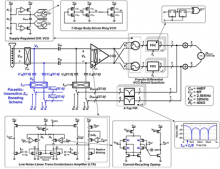
- DGIST Professor Lee Jung-hyup's team develops an 'analog-digital signal conversion system' based on semiconductor IC technology that can measure ultra-fine signals generated in the body
- Capable of taking precise measurements of fine signals amidst strong external noise, application to next-generation brain-machine interface technology, and ultra-small high-performance medical devices expected
01 Jul 2022
Daegu Gyeongbuk Institute of Science and Technology (DGIST)
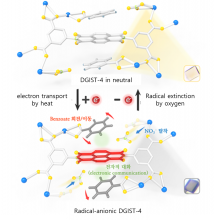
- Professor Park Jin-hee's team at DGIST develops new metal-organic frameworks (MOFs) that respond to various stimuli and visualizes unstable radical states
- Expected to be used for designing and applying materials in various fields such as eco-friendly sensors, catalysts, and batteries
01 Jul 2022
Daegu Gyeongbuk Institute of Science and Technology (DGIST)
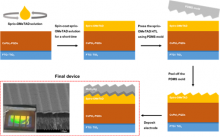
- DGIST Department of Energy Science & Engineering Research Team Led by Choi Jong-min Develops Nano-structured Electrodes Capable of Enhancing Light Absorption Capacity and Photocurrent of Perovskite Quantum Dot Solar Cells
- Proposes a universal and easy method that can be applied to various photoelectric devices using organic charge transport layers, including solar cells
01 Jul 2022
Daegu Gyeongbuk Institute of Science and Technology (DGIST)
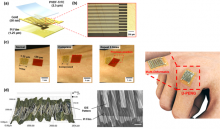
- A research team led by Professor Lee Sung-won and Jang Gyeong-in at DGIST succeeds in developing a high-efficiency power generator using small human movements in daily life.
- Takes a step closer to the realization of a health diagnosis system that can monitor vital signs for a long time without batteries by using small but continuous energy accumulation
30 Jun 2022
The University of Osaka
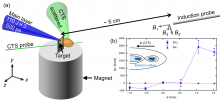
A research team led by Osaka University realized magnetic reconnection driven by electron dynamics in laser-produced plasmas and measured the pure electron outflows. Their findings will be applied not only to space and astrophysical plasmas, but also to magnetic propulsion and fusion plasmas.
30 Jun 2022
Hiroshima University
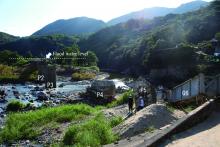
Researchers analyze the collapse of the Misasa Railroad Bridge in Japan — an infrastructure failure caused by unprecedented flooding back in 2018 — to inform future flood-resistant designs.
29 Jun 2022
Hokkaido University
The skin’s top layer contains a diverse set of hundreds of lipid molecules called ceramides with varying chain lengths that play a vital role in its barrier function.
29 Jun 2022
Osaka Metropolitan University
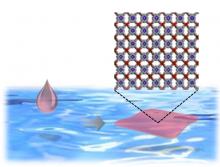
Rie Makiura, Associate Professor at the Graduate School of Engineering, Osaka Metropolitan University has published a review article on the facile synthesis of nanosheet materials with precise regular nanoscale pores. In 2010, Professor Makiura’s research group succeeded in fabricating the world's first MOF (metal-organic framework) nanosheets on the surface of water using a simple low-energy process. The procedure, which involved adding drops of suitably chosen molecular components to the water surface took advantage of the same phenomenon that causes the formation of oil films and led to the creation of nanosheets of exceptional integrity and stability. In the present review article, Professor Makiura describes the MOF nanosheets developed by her group so far and provides a detailed description of their characteristics and comparison with other MOF nanosheets reported around the world. In addition, she describes the formation mechanism of the MOF nanosheets on the water surface.
29 Jun 2022
Kanazawa University
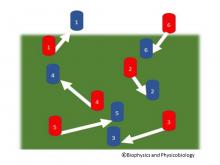
Researchers at Kanazawa University report in Biophysics and Physicobiology how to optimize high-speed atomic force microscopy experiments on live cell membranes, so that moving objects like molecules can be properly followed from frame to frame.
29 Jun 2022
Institute of Industrial Science, The University of Tokyo (UTokyo-IIS)
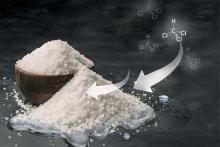
Researchers from the Institute of Industrial Science, The University of Tokyo, find that organic vapors can induce dissolution of molecular salts (i.e., organic deliquescence), similar to water vapor-induced deliquescence
28 Jun 2022
Horizon Journals
I am pleased to announce that a Regular Issue, JUL 2022 of the Journal of Humanities & Social Sciences Research, Vol. 4 (1) Jul. 2022 has been published ahead of time on 15 Jun 2022 and is now live at the Journal’s webpage. Explore this Issue at https://www.horizon-jhssr.com/current-issue.php
27 Jun 2022
The University of Osaka
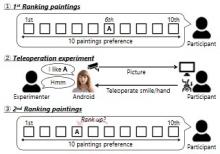
Osaka University researchers studied the effect of the “attitudes” of a semi-autonomous telepresence robot on its human operator. They found that when a person controlled only a part of the body of a semi-autonomous robot, its expressed opinions affected him or her. This work may help assist in the development of new semi-autonomous robots to perform labor more efficiently.

27 Jun 2022
National Institute for Materials Science (NIMS)
Scientists at Tokyo Medical and Dental University have discovered a new type of bone repairing material that could be used to more precisely fix bone defects.
27 Jun 2022
Tohoku University
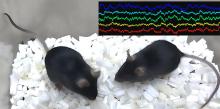
A collaborative research group has discovered electrical brain-wave patterns given off during social interactions in mice. They also observed that mice showing signs of stress, depression, or autism lacked these brain waves. The results reveal more about the mechanics underlying brain activity when socializing.
27 Jun 2022
Ehime University
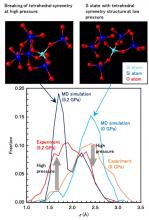
Understanding the structural origin of the anomalous properties of SiO2 liquid and glass is of great interest in a wide range of scientific fields. The fraction of the S state with tetrahedral symmetry structure is considered to be the controlling parameter of the anomalous properties of SiO2 liquid in theoretical studies. However, it has not been well identified in experiments. In this work, we find experimental evidence of tetrahedral symmetry breaking in SiO2 glass under pressure.
27 Jun 2022
The University of Osaka
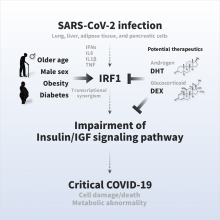
Researchers from Osaka University have found that infection with SARS-CoV-2 activates the expression of IRF1, a key regulator of insulin/IGF signaling in multiple tissues, leading to disruption of blood sugar metabolism and, in some cases, new onset of diabetes. Treating infected cells with hormonal factors that decreased IRF1 expression enhanced insulin/IGF signaling, suggesting that this approach could be used to mitigate some of the more severe side effects of COVID-19 in the future.

27 Jun 2022
The University of Osaka
Osaka University researchers develop a novel microfluidic chip that can detect very small concentrations of dissolved contaminants using just 100-picoliter sized samples. By using a terahertz point source, the detection area can be made very small. This work may lead to lab-on-a-chip technology for environmental and health care monitoring.
Events
Sorry, no events coming up for this topic.
Researchers
Sorry, no researchers coming up for this topic.
Giants in history
Sorry, no researchers coming up for this topic.