

Peer Reviewed
News

05 Jul 2021
Osaka Prefecture University
Osaka Prefecture University develops a method to design and control the path of electron flow in a polycrystalline material. Using epitaxial growth approach, researchers address the electrical conductivity problem of thin film materials by realizing a highly conductive in-plane orientation of a metal-organic framework. Furthermore, they show that it is possible to fabricate oriented thin film patterns by integration with UV lithography technology.
05 Jul 2021
Daegu Gyeongbuk Institute of Science and Technology (DGIST)
Scientists used digital circuitry to manipulate and store label-free matters in order to study their unique characteristics

01 Jul 2021
Hokkaido University
Scientists show that an ocean-bottom seismometer deployed close to the calving front of a glacier in Greenland can detect continuous seismic radiation from a glacier sliding, reminiscent of a slow earthquake.

30 Jun 2021
Institute of Industrial Science, The University of Tokyo (UTokyo-IIS)
Researchers from The University of Tokyo Institute of Industrial Science and Fudan University experimentally interrogate a phenomenon that bridges diverse fields of science and engineering

30 Jun 2021
Hokkaido University
Japanese and Zambian scientists have shown that environmental lead poisoning in children affects not only their own health and wellbeing, but the vitality and mental health of their mothers, as well.
29 Jun 2021
National Institute for Materials Science (NIMS)
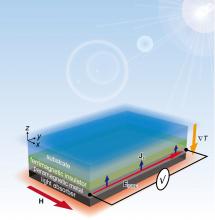
Magnetic layers interact with sunlight differently, creating a temperature gradient that generates electricity day and night.
29 Jun 2021
Tohoku University
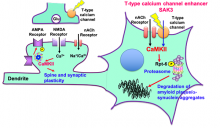
Researchers have identified a new treatment candidate that appears to not only halt neurodegenerative symptoms in mouse models of dementia and Alzheimer’s disease, but also reverse the effects of the disorders. The treatment candidate has been declared safe by Japan’s governing board, and the researchers plan to begin clinical trials in humans in the next year.
28 Jun 2021
Hiroshima University
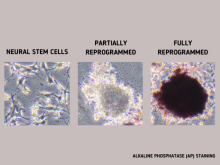
A new non-invasive technique scans “chemical fingerprints” to see if ordinary cells’ reprogramming into stem cells is on track and verify transformation success by matching “print” patterns.

25 Jun 2021
Lingnan University
Many waterbird species which travel across hemispheres are affected by a wide range of environmental and anthropogenic factors. A first-of-its-kind study along the China coast, jointly conducted by the Science Unit of Lingnan University in Hong Kong (LU) and the Hong Kong Bird Watching Society (HKBWS), quantified the 20-year wintering population trends of 42 waterbirds species in the Deep Bay area to evaluate the impacts of different threats along the East Asian-Australasian flyway (EAAF), providing important baseline information and recommendations on conservation.

25 Jun 2021
Daegu Gyeongbuk Institute of Science and Technology (DGIST)
Perovskite colloidal quantum dots (Pe-CQDs) are highly promising nanocrystals for optoelectronic applications. However, the size of the crystals should ideally be equal to ensure a consistent energy landscape. In a recent study, scientists clarified the relationship between differences in particle size—polydispersity—and the optoelectronic characteristics of Pe-CQDs. They showed that using equally sized, or ‘monodisperse,’ quantum dots results in markedly better performance in Pe-CQD solar cells, paving the way for future optoelectronic devices.
![Selective Synthesis of Cyclo[9]pyrroles Based on an Oxidative Coupling](https://www.asiaresearchnews.com/sites/default/files/styles/medium/public/articles_images/image1_7.jpg?itok=JpWY_x68)
25 Jun 2021
Ehime University
A ring-expanded porphyrin with no meso-bridges comprised of an odd number of pyrroles was successfully synthesized via the oxidative coupling of the corresponding terpyrrole. This porphyrin showed a 34pi aromatic character and an intense absorption at the near-infrared region. We analyzed the optical and electronic structures using magnetic circular dichroism spectroscopy and time-dependent density functional theory calculations.
24 Jun 2021
City University of Hong Kong (CityUHK)
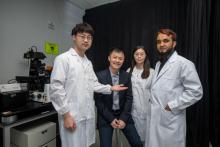
It is generally agreed that sperms “swim” by beating or rotating their soft tails. However, a research team led by scientists from City University of Hong Kong (CityU) has discovered that ray sperms move by rotating both the tail and the head. The team further investigated the motion pattern and demonstrated it with a robot. Their study has expanded the knowledge on the microorganisms’ motion and provided inspiration for robot engineering design.
24 Jun 2021
Tohoku University
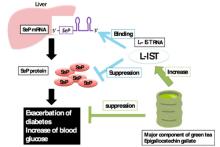
A research group has discovered a new gene that aids in the fight against type 2 diabetes. The gene, known as L-IST, reduces Selenoprotein P, too much of which increases insulin resistance, and can be increased through drinking tea.
21 Jun 2021
Daegu Gyeongbuk Institute of Science and Technology (DGIST)
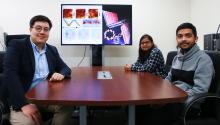
A tiny device incorporates a compound made from starch and baking soda to harvest energy from movement.

18 Jun 2021
Tohoku University
Japan recorded a whopping 3459 #landslides in 2018. To reduce the risks of landslides, researchers have developed a new #mapping system that accurately predicts their damage.
18 Jun 2021
Osaka Prefecture University
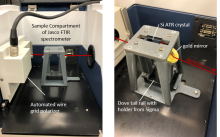
Researchers at Osaka Prefecture University have established an approach to identify the orientation of molecules and chemical bonds in crystalline organic-inorganic hybrid thin films deposited on substrates using Fourier transform infrared spectroscopy (FT-IR) and polarized infrared light with a 3D-printed attenuated total reflectance (ATR) unit. This inexpensive method with laboratory-grade equipment quickly reaches the crystal-structure model of even extremely thin films of less than 10 nm.
18 Jun 2021
Institute of Industrial Science, The University of Tokyo (UTokyo-IIS)
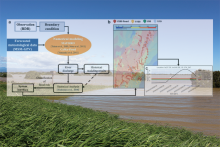
Researchers from The University of Tokyo Institute of Industrial Science develop a flood forecasting system that could help protect people and property during typhoons
18 Jun 2021
Duke-NUS Medical School
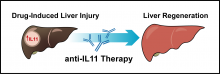
A signalling protein thought to be able to treat liver damage in paracetamol toxicity could actually worsen it. Instead, Singapore scientists discovered, blocking its effects could be the way forward.

17 Jun 2021
Duke-NUS Medical School
Cryo-electron microscopy and computer simulations uncover how a cellular protein helps transport omega-3 fatty acids to the brain and eye, with implications for drug development.
17 Jun 2021
Hiroshima University
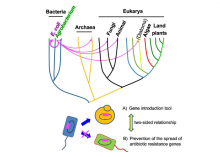
Researchers from Hiroshima University now have a better understanding of the mechanism underlying how certain bacteria can transfer genetic material across taxonomic kingdoms, including to fungi and protists. Their work, published in Frontiers in Microbiology, could have applications in changing how bacteria perform certain functions or react to changes in their environment.
16 Jun 2021
Institute of Industrial Science, The University of Tokyo (UTokyo-IIS)
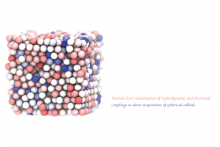
Researchers from The University of Tokyo Institute of Industrial Science report colloidal spheres that can be used to determine the rotational dynamics of dense suspensions
11 Jun 2021
Tohoku University
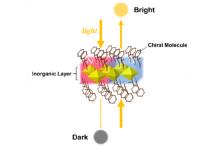
A multi-institutional Japanese team has developed new magnetic design that has magic mirror-like properties. Based on organic-inorganic hybrid perovskite type compounds, the brightness of transmitted light changes depending on whether the material is viewed from the front or the back.
11 Jun 2021
Hokkaido University
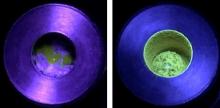
Hokkaido University researchers have developed a simple method that converts existing generic polymers into luminescent polymers using mechanical force.
09 Jun 2021
Hiroshima University
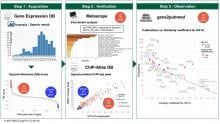
Publication bias, or the tendency of researchers and journals to not publish uninteresting findings, plagues much of the natural sciences and especially biomedical research. Hiroshima University researchers have developed a meta-analytic technique exploiting publicly available transcriptome databases that avoids the problem—and in so doing, discovered four genes previously unknown to be associated with responding to low-oxygen stress.

09 Jun 2021
Hiroshima University
Chemical rings of carbon and hydrogen atoms curve to form relatively stable structures capable of conducting electricity and more — but how do these curved systems change when new components are introduced? Researchers based in Japan found that, with just a few sub-atomic additions, the properties can pivot to vary system states and behaviors, as demonstrated through a new synthesized chemical compound.

08 Jun 2021
Hiroshima University
The chances of restoring fertility through sperm stem cell transplant are as random as a coin toss. But a team of scientists developed a new strategy that serves as a “weighted coin” that can favorably rig the odds to achieve outcomes where fertility is successfully restored.
08 Jun 2021
Kavli Institute for the Physics and Mathematics of the Universe (Kavli IPMU)
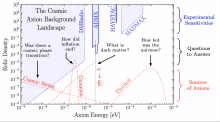
No one knows what happened in the Universe for its first 400,000 years, but a new paper suggests discovering the hypothetical particle axion could shed light on the early history of the Universe. What's more, current dark matter experiments may have already detected it in its data.

04 Jun 2021
Hokkaido University
Coral insights into 1,000 years of seasonal changes in the Arabian Sea warn of significant impacts caused by global warming.

02 Jun 2021
Institute for Integrated Cell-Material Sciences (iCeMS) at Kyoto University
Scientists have found a way to make hydrogen move faster through a solid material at cooler temperatures, paving the way for more sustainable and practical energy storage devices.
02 Jun 2021
Hokkaido University
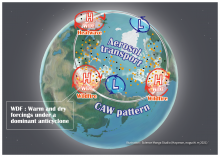
Scientists have uncovered a summertime climate pattern in and around the Arctic that could drive co-occurrences of European heatwaves and large-scale wildfires with air pollution over Siberia and subpolar North America.
Events
Sorry, no events coming up for this topic.
Researchers
Sorry, no researchers coming up for this topic.
Giants in history
Sorry, no researchers coming up for this topic.