
Peer Reviewed
News

23 May 2022
Osaka Metropolitan University
The antibiotic rifampicin is shown as a potential medicine for preventing Amyotrophic Lateral Sclerosis (ALS) and Frontotemporal dementia (FTD).
19 May 2022
Hokkaido University
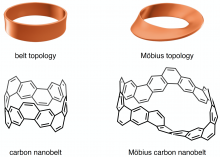
Scientists have synthesized the first belt-shaped molecular nanocarbon with a twisted Möbius band topology—a Möbius carbon nanobelt—that paves the way for the development of nanocarbon materials with complex topological structures.
19 May 2022
Institute for Integrated Cell-Material Sciences (iCeMS) at Kyoto University
Structural color printing creates new pathways for medical diagnostics and miniaturized sensors
19 May 2022
Tohoku University
Thought to enhance muscle recovery, compression garments are commonly worn by athletes and people engaging in exercise. Yet, an international research team’s systematic review provides evidence to the contrary.
18 May 2022
Hiroshima University
A study by Japanese researchers showed that getting a mild case of COVID-19 doesn’t translate to lower chances of becoming a long-hauler. And that sex and the presence of long-term symptoms are risk factors for post-COVID psychological distress.
17 May 2022
Hokkaido University
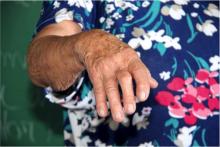
Adenosine triphosphate (ATP) secreted from sensory neuron-interneuron crosstalk is key to the spreading of inflammation across joints, acting as a neurotransmitter and inflammation enhancer.

16 May 2022
Osaka Metropolitan University
Researchers from the Osaka Metropolitan University Graduate School of Engineering have successfully developed a new technique allowing them to observe gas molecules packing into metal-organic frameworks (MOF) using infrared spectroscopy. Their innovation was to measure polarized light absorption of guest molecules in a MOF film to deduce molecule alignment using this common piece of lab equipment. This method is the first to show guest alignment and does so in real-time, while using an accessible and easily adoptable experimental setup. A short video (4 min) recreating their spectrometer modifications can be found in the Reference section.
13 May 2022
Institute of Industrial Science, The University of Tokyo (UTokyo-IIS)
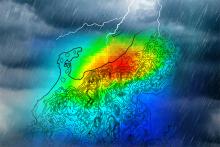
Researchers from the Institute of Industrial Science, The University of Tokyo, develop a novel method for more accurate prediction of local rainfall patterns
13 May 2022
Osaka Metropolitan University
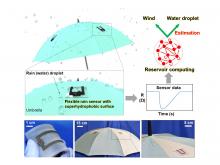
The new multi-tasking weather sensor simultaneously measures rain volume and wind speed. Incorporating machine learning to analyze the output data, a single sensor can provide localized weather data in a timely manner, improving disaster preparedness.
13 May 2022
Daegu Gyeongbuk Institute of Science and Technology (DGIST)
Division of Electronics & Information System Principal Researcher (and guest professor at Seoul National University) Jinhyo Joseph Yun’s team at DGIST conducted joint research with the Nanjing University of Science and Technology’s Professor Lei Ma’s team and the UK Cardiff Metropolitan University’s Professor Zheng Liu’s team on the delivery platform industry, which is becoming a new issue for the 21st century market economy. The teams published an international joint research paper in the ‘European Planning Studies,’ which will be out in May of 2022 in the UK.
12 May 2022
Osaka Metropolitan University
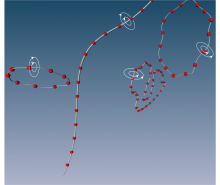
Researchers at Osaka Metropolitan University and Osaka University used numerical simulations to confirm observations of quantized vortices in superfluid helium using silicon nanoparticles, improving understanding of quantum fluids and superconductors.
11 May 2022
Osaka Metropolitan University
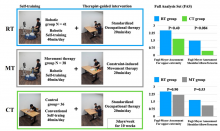
Strokes have a debilitating effect on quality of life; the combination of cognitive and physical effects can be especially devastating. A new study from Osaka Metropolitan University Graduate School of Rehabilitation Science showed that moderate to severe hand and arm paralysis was dramatically improved with the use of robotic therapy, for chronic stroke patients with upper extremity hemiplegia in Japan, as reported in the journal Stroke.
06 May 2022
National Institute for Materials Science (NIMS)
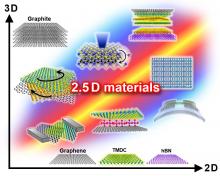
2.5-dimensional materials promise new applications for artificial intelligence, electronics, automobiles and the energy sector.

06 May 2022
The Education University of Hong Kong (EdUHK)
Recent studies have demonstrated that character strengths, including a group of individual characteristics that have moral value and lead to ‘good virtues,’ play a crucial role in students’ participation in society and achievement of success. Kindness, which is a significant aspect of character strength, has been considered essential for school programmes to improve students’ mental health and foster positive well-being. As a key social context, schools influence students’ academic, psychological, and social well-being, providing mastery of knowledge and shaping their whole-person development. Numerous studies have highlighted the social aspects of school functions and recognised the effects of schooling on students’ academic and psychological outcomes.
03 May 2022
Hong Kong Baptist University (HKBU)
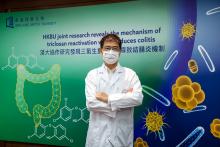
A Hong Kong Baptist University (HKBU) collaborative research study has revealed that certain gut microbial enzymes mediate the reactivation of triclosan (TCS) from its inactive glucuronide metabolite. TCS is an antimicrobial agent commonly used in a wide range of consumer products, and it is associated with the development of colitis.
03 May 2022
Daegu Gyeongbuk Institute of Science and Technology (DGIST)
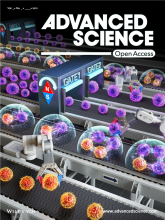
A new platform effectively sorts and clusters single cells according to their physical properties and could provide clues for understanding individual cell interactions.

28 Apr 2022
Tohoku University
Lithium-ion batteries power our everyday products, from laptops to vehicles, because of their safety, longevity, and charging speeds. Yet their production relies on rare metals such as cobalt and nickel. Now, a research group has unearthed a potential method for incorporating more common and cheaper elements as synthesizing electrode materials.
27 Apr 2022
Hokkaido University
Hokkaido University researchers have shown how chronic pain leads to maladaptive anxiety in mice, with implications for treatment of chronic pain-related psychiatric disorders in humans.
26 Apr 2022
Hiroshima University
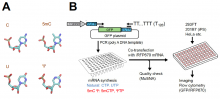
Researchers set out to find new ways to artificially induce mRNA to respond in ways that could eventually lead to therapeutic outcomes, expanding on the success of the mRNA-based COVID-19 vaccines and opening up new possibilities across a host of possible genetic therapies.
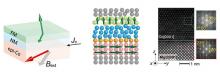
26 Apr 2022
Tohoku University
Researchers have established a low-cost method of magnetization reversal on perpendicularly magnetized ferromagnets. Not needing an external magnetic field, the method brings reverse magnetization closer to commercial viability.
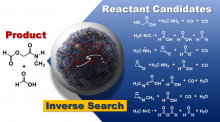
25 Apr 2022
Hokkaido University
Researchers overcome computational limitations to predict the starting materials of multi-step reactions using only information about the target product molecule.
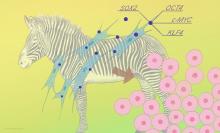
25 Apr 2022
Institute for Integrated Cell-Material Sciences (iCeMS) at Kyoto University
Examination of endangered species’ stem cells unveils ancient genetic links between mammals.
25 Apr 2022
Hokkaido University
A recent infant study suggests that the visual experience in daily life contributes to the emergence of upper visual field bias for faces.
25 Apr 2022
Daegu Gyeongbuk Institute of Science and Technology (DGIST)
Coconut husk (CH), a solid biowaste derived from coconut, is typically used in household items, such as doormats. Recent studies have shown that CH is rich in lignocellulose, which can make for energy-related applications of CH. To this end, a global team of researchers, in a new study, make use of CH to develop self-powered energy storage and harvesting devices, achieving high energy density and output performance, and opening doors to a circular economy.

22 Apr 2022
Osaka Metropolitan University
Scientists discovered that intramuscular fat levels are indicative of heart health. Measurements of intramuscular fat in 93 heart failure patients’ thighs showed patients with high intramuscular fat levels were at greater risk of rehospitalisation, despite no significant differences in conventional heart health criteria. These findings enable new approaches for treating heart failure, a growing concern in Japan’s ageing society.
22 Apr 2022
Daegu Gyeongbuk Institute of Science and Technology (DGIST)
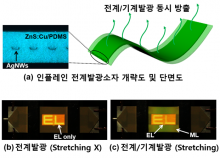
Scientists at Daegu Gyeongbuk Institute of Science and Technology (DGIST) in Korea have fabricated a flexible material that lights up brightly when stretched and/or when an electric field is applied. The results were published in the journal Applied Physics Reviews and show promise for the development of bright, sustainable, stretchable devices for use, for example, as interactive skin displays and in soft robotics.
22 Apr 2022
Institute for Integrated Cell-Material Sciences (iCeMS) at Kyoto University
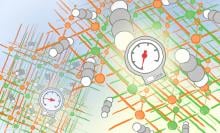
A porous material, which opens to receive highly flammable acetylene and closes to release it, sidesteps the flaws of the existing storage method.
21 Apr 2022
Osaka Metropolitan University
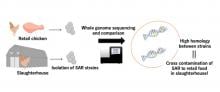
Genome profiling of Staphylococcus argenteus strains unveiled cross-contamination among Japanese retail foods and slaughterhouses.
20 Apr 2022
Hokkaido University
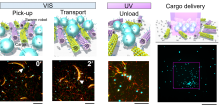
In a global first, scientists have demonstrated that molecular robots are able to accomplish cargo delivery by employing a strategy of swarming, achieving a transport efficiency five times greater than that of single robots.
18 Apr 2022
Hiroshima University
In disaster mitigation planning for future large earthquakes, seismic ground motion predictions are a crucial part of early warning systems. The way the ground moves depends on how the soil layers amplify the seismic waves (described in a mathematical site “amplification factor”). However, geophysical explorations to understand soil conditions are costly, limiting characterization of site amplification factors to date. Using data on microtremors in Japan, a neural network model can estimate site-specific responses to earthquakes based on subsurface soil conditions.
Events
Sorry, no events coming up for this topic.
Researchers
Sorry, no researchers coming up for this topic.
Giants in history
Sorry, no researchers coming up for this topic.