
Peer Reviewed
News
13 May 2021
Tohoku University
Researchers from Tohoku University have unveiled an ion-selective smart porous membrane that can respond to outer stimuli. Until now, scientists had struggled to apply smart porous membranes to porous thin films of below 10 nm. The developed membranes, however, are applicable to porous thin films with a thickness of 8 nm, paving the way for new applications in molecular separation and sensing applications.
13 May 2021
Institute of Industrial Science, The University of Tokyo (UTokyo-IIS)
Researchers from the Institute of Industrial Science, The University of Tokyo have shown how glasses that apparently look frozen can crystallize, which could contribute to the improvement of the stability of glassy materials
12 May 2021
Hiroshima University
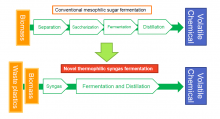
Acetone, a volatile solvent used for everything from removing nail polish and cleaning textiles to manufacturing plastics, could get a sustainability boost from a new strain of bacteria engineered by a research team based in Japan.
07 May 2021
Tohoku University
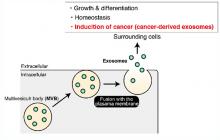
A group of researchers have discovered that the cells that line the surfaces of organs or specific tissues – epithelial cells – asymmetrically release two types of exomes with distinct protein compositions. Their discovery could help understand how cancer spreads.
06 May 2021
Ehime University
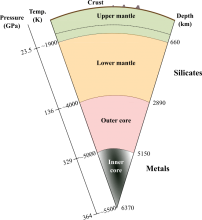
A stable isotope of helium, 3He, was produced by the Big Bang and a remnant of the solar nebula.
3He is included in ocean island basalts, such as in Hawaiian volcanos, indicating it has been stored somewhere in the deep Earth and carried up to the surface in upwelling plumes.
New computer simulations demonstrate that even in small amounts, helium can be dissolved in liquid iron at ultrahigh-pressure conditions, suggesting that there is a reservoir in the Earth’s core.
04 May 2021
Daegu Gyeongbuk Institute of Science and Technology (DGIST)
New algorithms are much better at estimating the security level of encrypted data.
30 Apr 2021
Tohoku University
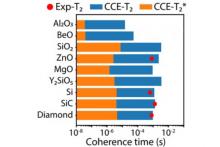
Quantum supremacy is now one step closer to realization thanks to a new comprehensive guideline for the solid-state spin qubit. The breakthrough was made by a research group from the University of Chicago, the Budapest University of Technology and Economics, Ajou University, and Tohoku University.
28 Apr 2021
Tohoku University
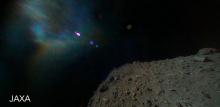
Scientists have recreated the reaction by which carbon isotopes made their way into different organic compounds, challenging the notion that organic compounds, such as amino acids, were formed by isotopically enriched substrates. Their discovery suggests that the building blocks of life in meteorites were derived from widely available substrates in the early solar system.
27 Apr 2021
Tohoku University
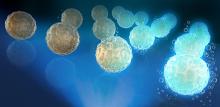
Cells breathe, to an extent, exchanging gases, taking in energy sources from the environment and processing it. Now, researchers from Tohoku University have shone a light on the process in a new way.

27 Apr 2021
Hokkaido University
A team of scientists has found that women’s football was common across Japan between the Meiji restoration and the start of the Second World War. In the process, they also uncovered the oldest known photograph of women playing football in Japan, from 1916.
27 Apr 2021
Ehime University
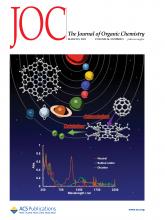
A facile synthesis of two types of pyrrole-fused azacoronene with planar and double-concave π-structures was achieved.
The two electron-rich azacoronenes were found to interact with electron-deficient π-electron compounds depending on their three-dimensional structures.
Azacoronene with a curved structure was found to be less aromatic than those with a planar one based on macrocyclic π-conjugation.
22 Apr 2021
Tohoku University
An international research team has unearthed more about the crustal growth history of the Central African shield—one of the oldest continental pieces on the planet that formed part of the supercontinent Columbia.
22 Apr 2021
Tohoku University
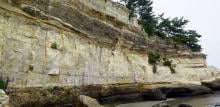
A research team, led by researchers from Tohoku University, has defined the events that punctuated the crustal history Northeast Japan. Their study has revealed the main ages of the events that shaped the geological roots of Japan.
22 Apr 2021
Hokkaido University
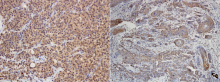
Scientists have shown that the biological molecule PD-L1 is a potential target for the treatment of metastasized oral malignant melanoma in dogs.

22 Apr 2021
Duke-NUS Medical School
A mitochondrial peptide called MOCCI has a surprising sidekick, and they work together to regulate inflammation and immunity, Singapore researchers reveal.
20 Apr 2021
Hiroshima University
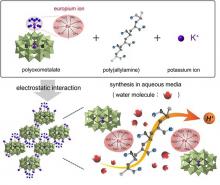
Protons are the next big thing when it comes to fuel cell technology. The subatomic exchange produces power on a scale that challenges contemporary solid-state fuel cell technology, used to help power space shuttles. To realize the proton-based technology sooner, an international team of researchers have developed a hybrid material that effectively transports protons at high temperatures and humidity — two major challenges in past attempts.
16 Apr 2021
National Institute for Materials Science (NIMS)
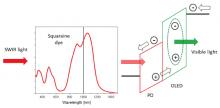
Devices that can see shortwave infrared light, which is invisible to the naked eye, could soon become cheaper and more accessible to a broader consumer base.
16 Apr 2021
Hiroshima University
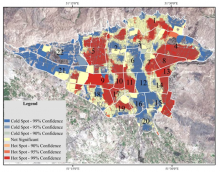
A person who owns a car or who has a college education may be less vulnerable to COVID-19, according to an analysis of cases in Tehran, Iran, one of the early epicenters of the pandemic. While such variables do not inherently lower a person’s risk, they do indicate an infrastructure of protection that persists despite how densely populated a person’s district might be.

16 Apr 2021
Tohoku University
Rapid and accurate flood mapping following a disaster is crucial for accelerating relief and response decisions. With news crews often the first on the scene, Tohoku University researchers have created a machine learning model that harnesses the power of media photos. The model helps quickly identify flooded buildings within 24 hours of the disaster.

15 Apr 2021
The Agency for Science, Technology and Research (A*STAR)
A five-year study in Singapore has highlighted that chronic wounds among patients with diabetic foot ulcers and bed sores led to longer hospital stays.
15 Apr 2021
Tohoku University
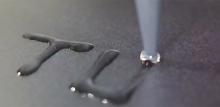
A research team based at Tohoku University has 3D printed the first proton exchange membrane, a critical component of batteries, electrochemical capacitors and fuel cells.
15 Apr 2021
Tohoku University
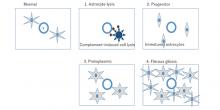
Researchers from the Department of Neurology at Tohoku University have developed a new taxonomy for a rare autoimmune disease known as neuromyelitis optica spectrum disorder. The disease was previously thought to be a form of multiple sclerosis (MS) and had, until now, borrowed its taxonomy from MS.
15 Apr 2021
Institute of Industrial Science, The University of Tokyo (UTokyo-IIS)
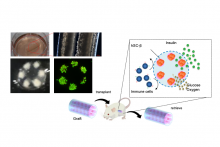
Researchers from The University of Tokyo develop a novel device for the safe and effective transplantation of human induced pluripotent stem cell (iPSC)-derived pancreatic beta-cells in type I diabetes mellitus
14 Apr 2021
Institute of Industrial Science, The University of Tokyo (UTokyo-IIS)
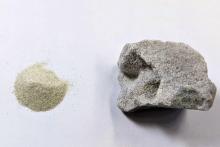
Researchers at the Institute of Industrial Science at The University of Tokyo examined a new method of producing concrete via direct bonding of sand particles, which may help reduce greenhouse emissions and even construct a Moon base.
13 Apr 2021
Hokkaido University
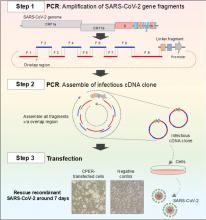
Researchers from Osaka University and Hokkaido University develop a system for analyzing mutations in SARS-CoV-2 that is much simpler and faster than existing methods.
13 Apr 2021
Hiroshima University
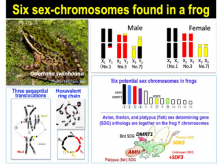
The O. swinhoana frog species is the first vertebrate known to retain descendant genes that now determine sex in mammals, birds, and fishes inherited from a common ancestor.
13 Apr 2021
Hokkaido University
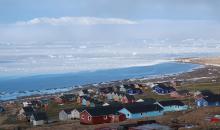
Hokkaido University researchers have clarified different causes of past glacial river floods in the far north of Greenland, and what it means for the region’s residents as the climate changes.
13 Apr 2021
Daegu Gyeongbuk Institute of Science and Technology (DGIST)
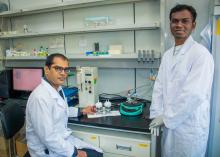
Scientists develop high performing electrocatalyst to synthesize ammonia in an effort to replace conventional eco-unfriendly methods
09 Apr 2021
Tohoku University
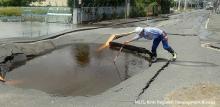
Elevated levels of radon in the atmosphere before and after earthquakes is a commonly recorded phenomenon. However, Tohoku University researchers have discovered an anomaly: The 2018 Northern Osaka Earthquake. Analyzing data before and after the quake, they discovered that atmospheric radon concentration decreased. The discovery paints a more complicated picture surrounding radon and crustal movements.
06 Apr 2021
Tohoku University
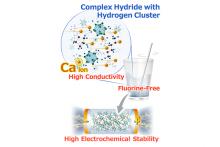
Scientists from Tohoku University have developed a new fluorine-free calcium (Ca) electrolyte based on a hydrogen (monocarborane) cluster that could potentially realize rechargeable Ca batteries.
Events
Sorry, no events coming up for this topic.
Researchers
Sorry, no researchers coming up for this topic.
Giants in history
Sorry, no researchers coming up for this topic.