The UNU Hub on Humanitarian Innovation and Technology at Lingnan University will open officially in October 2025. This image shows the conceptual design of the Hub.

Prof Tshilidzi Marwala, Rector of United Nations University and Under-Secretary-General of the United Nations.
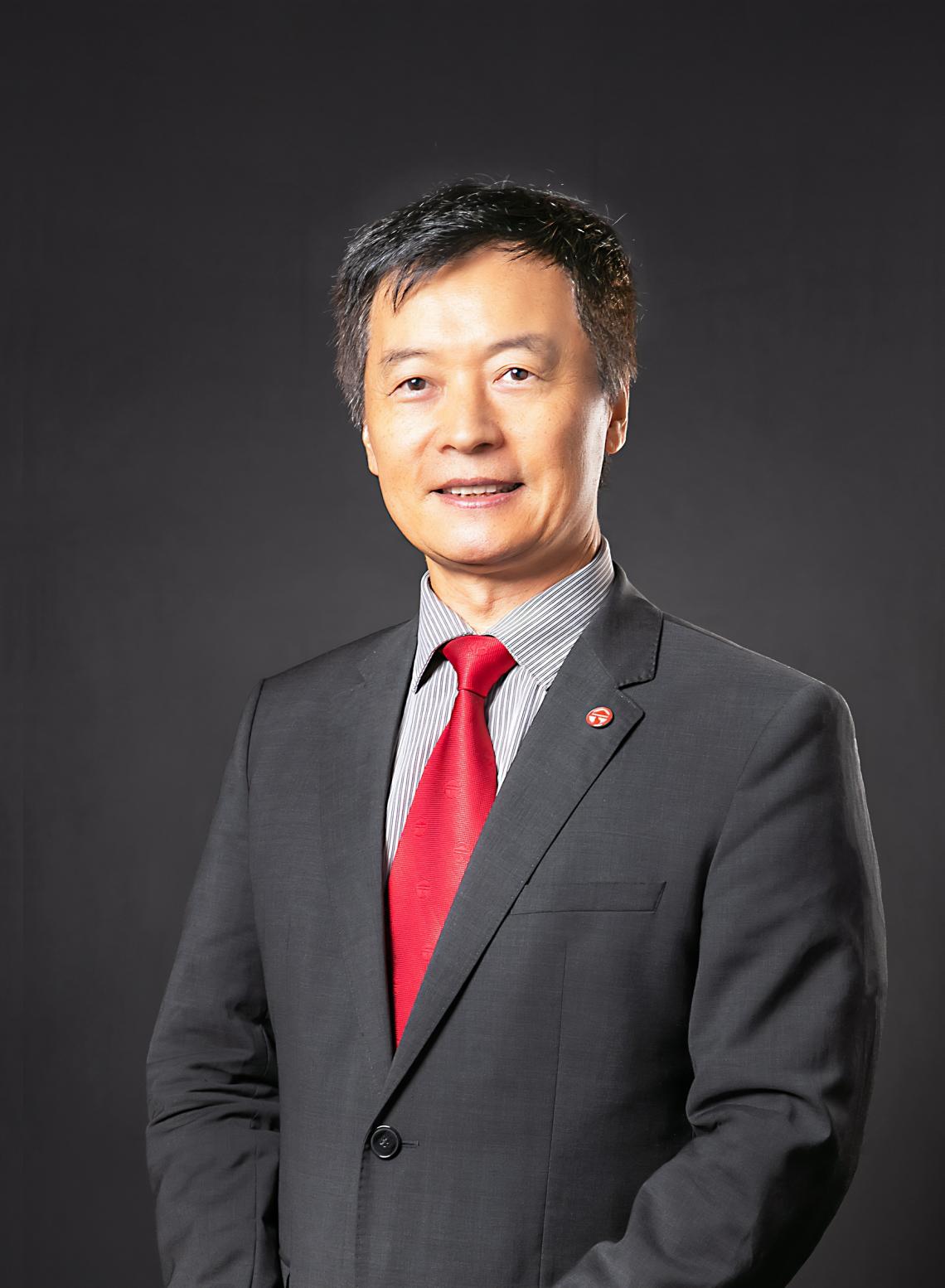
Prof S. Joe Qin, President and Wai Kee Kau Chair Professor of Data Science of Lingnan University.
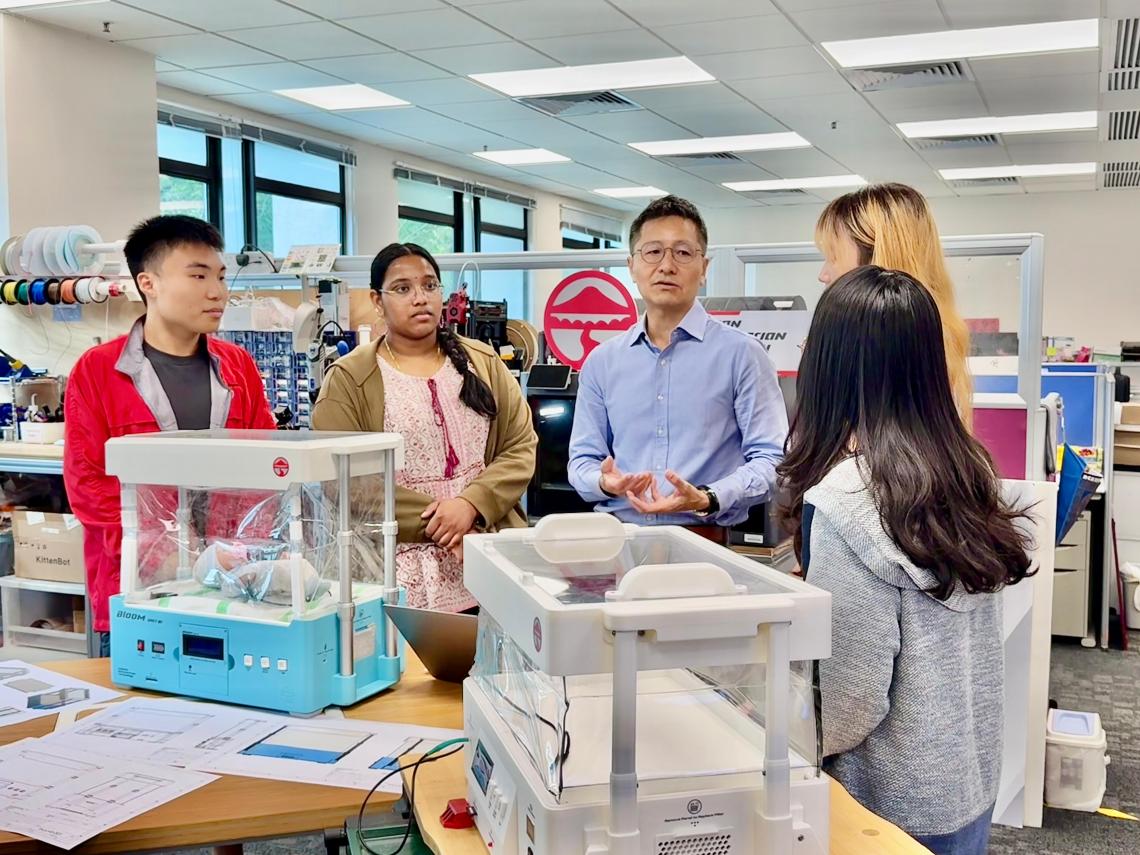
One of the Hub’s key projects is the Incuvia - Modular portable foldable affordable baby incubator designed for remote mountainous islands in the Philippines, which provides emergency protection for newborns until medical personnel arrive or the infant can be transferred to hospital.
On 19 August, World Humanitarian Day, Lingnan University announced the signing of an Agreement of Cooperation with the United Nations University (UNU) to establish the UNU Hub on Humanitarian Innovation and Technology at Lingnan University (UNU Hub at Lingnan University), making it the first higher education institution in Asia to set up a UNU Hub. The Hub is scheduled to open officially in October 2025 and will have an annual operating budget of over HK$8 million. Its Humanitarian Innovation and Technology Laboratory (HIT Lab) will spearhead research and design initiatives, education and training programmes, and international collaborations, and improve living conditions in developing countries and regions of the Global South by leveraging innovative and cutting-edge technologies. Scholarships will be awarded to encourage local youth to fulfil their ambitions through knowledge and innovation.
The Agreement was signed by Prof Tshilidzi Marwala, Rector of the United Nations University and Under-Secretary-General of the United Nations, and Prof S. Joe Qin, President and Wai Kee Kau Chair Professor of Data Science at Lingnan University, on behalf of both parties.
Prof Qin said this collaboration marks a new chapter in the history of Hong Kong’s higher education. As a developed city, Hong Kong’s establishment of the Hub will leverage its research strengths and international networks to swiftly transform technological innovations into solutions for social challenges, extending their impact across the Asia-Pacific region and countries in the Global South. This will effectively translate research outcomes into tangible socio-economic benefits for developing countries. “Hong Kong boasts world-class universities, leading researchers, and extensive international connections, while being geographically close to many developing countries in Asia. Establishing the UNU Hub at Lingnan University will foster cross-regional collaboration and accelerate the application of research outcomes where they are most urgently needed. Through this platform, we aspire to nurture a new generation of leaders equipped with both research capabilities and humanitarian compassion, driving technological development to serve human well-being and create a more sustainable future,” said President Qin.
He added that Lingnan is ranked first globally in the “United Nations Sustainable Development Goal (SDG) 4: Quality Education” and first in Hong Kong for “SDG 1: No Poverty” in the Times Higher Education (THE) Impact Rankings 2025, which is a testament to its internationally recognised achievements. The University has also excelled in humanitarian technology design, exemplified by the interdisciplinary “PureAura – the Portable Mini Energy-saving Air Purifier” project developed by staff and students, which won 14 international design awards including the prestigious iF Gold Award, Red Dot Design Award, Good Design Best 100, and the IDEA Gold Medal in 2024. This alignment with UNU’s development goals laid a solid foundation for the partnership.
Prof Marwala praised Lingnan University’s leading role in promoting the Sustainable Development Goals across Asia, and pointed out that Lingnan’s research integrates design, innovative technology, and social needs to develop low-cost humanitarian technologies suitable for remote areas, which benefit the populations of the Global South. “Asia is home to a substantial share of the Global South’s population, and faces many of its most complex challenges. The UNU Hub at Lingnan University - the first of its kind in Asia - represents a significant advancement in the UNU’s global mission. Lingnan University offers strong expertise in data science and extensive experience in humanitarian technology design that will foster synergies with the UNU Macau and other UNU institutes. Through this UNU Hub, we are creating an anchor that harnesses Asia’s innovation capacity, deepens South-South collaboration, and accelerates inclusive solutions that can be scaled globally,” he said.
The UNU Hub at Lingnan University will be coordinated by Prof Albert Ko, Director of the Office of Service-Learning and the Lingnan Entrepreneurship Initiative (LEI), who will serve as the Founding Director, and Dr Georgina Curto Rex, Senior Researcher and Team Lead at UNU Macau. An engineer with extensive international humanitarian relief experience, Prof Ko specialises in the research and design of humanitarian technologies. He is also the Founding Director of the Master of Science in Humanitarian Technology and Inclusive Business.
Key flagship projects initiated by the UNU Hub at Lingnan University include:
1. Research and Design — Combining UNU and Lingnan data science research capabilities, the Hub will develop high-performance, low-cost humanitarian technologies to address urgent social needs in the Global South. One of the first projects, in collaboration with the University of Toronto, is a remote monitoring rainwater harvesting system designed for isolated islands in the Philippines. This system collects and analyses data on rainfall, and water usage, quality, and timing. Data analysis will enable more effective prediction and management of water distribution and consumption. Another project, also for the Philippines, is the Incuvia - Modular portable foldable affordable baby incubator, which recently won a Silver Medal at the Silicon Valley International Inventions Festival 2025 (SVIIF). It gives newborns in remote mountainous islands lacking medical facilities and accessible only by motorcycle emergency protection until medical personnel arrive or the infant can be transferred to a hospital in an urban area.
2. Education and Capacity Building — Lingnan has long offered “Inclusive Business” short training courses to help university students and researchers in the Philippines and Hong Kong become drivers of social innovation. The UNU Hub at Lingnan University will continue to promote humanitarian technology education by organising dual-degree master’s programmes and short training courses with the UNU, as well as offering scholarships to students from the Global South in order to cultivate leaders skilled in data science and technological innovation, and to enable more young people to realise their dreams through knowledge and innovation.
3. Practice and Advocacy — The Hub aims to generate tangible positive social impact. Research and design outcomes emphasise user participation and frontline practice models, and collaboration with universities and institutions in the Global South means the projects are designed for sustainable development and long-term knowledge transfer. The Hub will also organise workshops and exhibitions to promote humanitarian technology, broaden Hong Kong’s innovation ecosystem, and inspire local youth to contribute more to global sustainable development.